
-
-
 Alleged failure to report
 Crime: 1960s, 1970s, 1980s, 1990s,
 Crime city:
ID - Rexburg,
Crime city:
ID - Rexburg,  Crime state:
Idaho,
Crime state:
Idaho,
-
 Positions: Bishopric counselor, Stake high council,
 - During crime: Bishopric counselor, Stake high council,
- Mission:
 no
no
 Alleged:
10 or more victims, 100 or more victims, Multiple victims,
Alleged:
10 or more victims, 100 or more victims, Multiple victims,  Alleged crime scenes:
Health appointment,
Alleged crime scenes:
Health appointment,  Criminal case(s): Admitted guilt, Convicted, Jail, Plea deal, Pleaded guilty, Probation,
 - AKA Dr. Withers
 updated Aug 6, 2026 - request update | add info


In 1996, LaVar Withers was charged with misdemeanor battery. He pleaded guilty and was sentenced to 30 days in prison. He was also ordered to serve two months probation. He paid $15,500 in fines in lieu of a suspended four-month jail term.
“Over 125 women and children (some as young as 13 years old) came forward to the Rape Crisis Response Center to tell of abuse by Dr. LaVar Withers over a thirty year period, from the 1960s to the 1990s.
Numerous women had told their Mormon bishops of Withers’ abuse through the years.
Some victims alleged that Mormon Church officials ignored their pleas for help or actually discouraged them from pursuing charges against the doctor.
—
Withers attended grade school in Rexburg, Idaho and Jackson Hole, Wyoming. Graduating from Madison High School, Class of 1955, Ricks College and Brigham Young University, he received his medical degree from Temple University in Philadelphia, Pennsylvania.
In 1970, Withers began serving as first counselor in a Mormon bishopric in the Blackfoot, Idaho Ninth Ward in the South Blackfoot LDS stake.
—
Withers was on the high council and there were complaints that the local church authorities were protecting him.
“Following Miller’s advice, she that same day called Young, a dentist. Stake presidents sit above bishops in the Mormon hierarchy; Young’s great-great-grandfather was the Mormon pioneer Brigham Young.
“I’m not going to mince words,” Andrew began. Then she told her story, and offered to take a polygraph test. According to Andrew, Young mainly expressed his sorrow and appreciation for her call, right up until she told him she meant to notify the police.
“I wish you wouldn’t do that now,” Young responded. “I’d appreciate you letting me take care of things from my end.”
In an interview months later with the Idaho Statesman newspaper, Young didn’t dispute this account. Yes, he agreed, he “may have said do not go to the police immediately,” because Mormon doctrine stresses forgiveness. “When people have a hurt, they should leave it alone. Put it away and look for the good.”
Andrew wasn’t happy with Young’s request. But in the end–“being a co-dependent Mormon female” she later observed wryly–she agreed to wait.
Only for a month though. Having not heard from Young–she never would–Andrew in mid-February visited the police and prosecutor Steve Clark, who was still evaluating the Withers case. She also started talking to other women.
One contact led to another; the stories multiplied. At a meeting with Clark, Andrew was stunned to learn that since she’d filed her formal complaint, Withers had apparently molested yet another woman, a Ricks College student named Katherine Proctor.”
—
Idaho criminal court case: CR-1996-531
Idaho civil class-action court case: CV-1996-979 – dismissed without prejudice
Have any info on this case? Contact FLOODLIT.
Reader-funded investigative journalism
Help us raise money
FLOODLIT needs to raise funds to cover immediate operating bills and keep our independent newsroom running.
If this case report, our source documents, or our database have been useful to you, please help us.
Donate now →FLOODLIT is 100% reader-funded. Every amount helps.
Sources
- [accused was a bishopric counselor in 1970],
- DID REXBURG IGNORE TALK OF ABUSE BY M.D.?,
- Allegations against bishop investigated,
- JAILED EX-DOCTOR ALSO UNDER LDS DISCIPLINE,
- issue #91, November 1996,
- Shame and Silence in Rexburg,
- pp. A1, A14, A15,
- death notice - LaVar Withers,
- Retired Rexburg Doctor Named In Class Action Molestation Lawsuit,
- RETIRED MD ADMITS 30 YEARS OF MOLESTATIONS,
-
1. [accused was a bishopric counselor in 1970]
-
2. DID REXBURG IGNORE TALK OF ABUSE BY M.D.?
Numerous reports from women saying they were sexually molested by Rexburg Dr. LaVar Withers over the past 32 years went essentially unheeded by authorities, The Idaho Statesman reports.
In a copyright series of stories, the newspaper indicated Sunday it was only after a flood of complaints to the state Board of Medicine - a half dozen in a year's time - that the board finally forced Withers to surrender his license.The board's action was taken without explanation or acknowledgment of the claims against Withers, 59, who categorically denied the allegations.
In its Sunday edition, The Post Register in Idaho Falls quoted Board Chairman Donald Bjornson as saying the board believed forcing Withers to give up his license in a negotiated agreement was the fastest way to close his practice down, especially since the board has authority only to regulate licensure, not penalize licensees.
"It was a way to handle things to get compliance quicker than through the hearing," Bjornson told the newspaper. "It seemed like a good thing for him and a good thing for us."
A yearlong investigation by the Madison County prosecutors' office and the state attorney general's office ended last month with a decision not to prosecute.
"It's not an opinion that it didn't happen but that they're not winnable," Steve Clark, who was named special prosecutor for Madison County, told The Post Register. "This decision is not a finding that it did not occur but that they can not be proven beyond a reasonable doubt."
Prosecutors have just one year to bring charges against someone who fondles a woman's breast, which constituted the bulk of the allegations against Withers.
Without physical evidence, such cases often pit one person's word against another's, and both the attorney general and a special prosecutor decided it would be next to impossible to win a guilty verdict against the Rexburg doctor. Withers will not be tried in criminal court.
More than 80 women have come forward in recent months to accuse Withers of more than three decades of abuse. The Statesman based its stories on interviews with 25 of those women.
"They just did not believe me," Carol Hannah, 54, told The Statesman when she recalled the complaint she filed with Rexburg police in 1965. She accused the doctor of fondling her breasts and genitals during a prenatal examination.
"They belittled me about it because I was a pregnant woman," she said. "Men think sometimes pregnant women make things up."
The only legal action pending is a $255,000 claim filed by Utahn Katherine Proctor of Midway, Wasatch County, against the Madison Memorial Hospital in Rexburg, where she says she was repeatedly molested by Withers while she was a patient there last March.
The claim, a prelude to a formal lawsuit, accuses hospital officials of allowing Withers unsupervised hospital privileges even though they were aware of allegations against him.
The Statesman quoted a number of women as saying they had told other doctors about their experiences with Withers but nothing was done. Doctors acknowledged to the newspaper having heard rumors about Withers but denied ever being told of specific instances.
In 1993, translator Sherri Fullmer said she reported to both Madison Memorial Hospital administrator Keith Steiner and Fremont County prosecutor Penny Stanford that she saw Withers molesting a 25-year-old Hispanic woman who lived in Fremont County.
Stanford said she did not remember the report, although she, too, was aware of the rumors about Withers. Steiner referred questions to his attorney, who declined comment.
The newspaper also said officials in the predominant Church of Jesus Christ of Latter-day Saints were told of allegations against Withers, a member of the LDS Church.
A woman identified by the newspaper only as "Joan" said she reported to LDS Stake President G. Farrell Young last July that Withers had molested her.
"He told me not to go to the police until he had a chance to deal with it," she said.
But after a month without a response, "Joan" said she contacted an official at church headquarters in Salt Lake City, which in turn prompted a response from Young on Aug. 23.
"We have followed up with this matter in very prayerful consideration," Young wrote. "We have pursued the course of action that was deemed most appropriate."
On Oct. 12, church officials confirmed Withers was placed on probation and at least temporarily stripped of the privilege to enter the church's temples or fully participate in some church rituals.
"If that is definitely all they have done, I am disappointed," the woman told the newspaper. "His membership should be taken away."
The Statesman said Young was perplexed at the criticism of his handling of the matter. He said he had no authority to prohibit "Joan" from contacting police and was only asking for time to gather more information.
View CommentsYoung said he wrote the brief letter to the woman because he believed she was "owed a comment" and emphasized he was not required to do even that.
The newspaper reported that additional complaints likely would have been lodged against Withers had it not been for the cloistered, small-town mentality of rural Rexburg, which is home to Ricks College.
Another woman, identified as "Jeanette," 46, said Withers molested her in 1977 while she was a student at Ricks. She feared reprisals, however, and didn't come forward until now.
"There is no way my husband's business would have survived," she said. "This is such a small community."
-
3. Allegations against bishop investigated
-
4. JAILED EX-DOCTOR ALSO UNDER LDS DISCIPLINE
Last week, Dr. LaVar Withers started a 30-day jail sentence, part of the punishment the former Rexburg physician received when he pleaded guilty to misdemeanor battery after being accused of a 30-year pattern of sexually abusing female patients.
But that isn't his only punishment, an eastern Idaho newspaper reported.For at least a year, Withers has been under censure by The Church of Jesus Christ of Latter-day Saints. Before Withers went to court last week and pleaded guilty to the battery charge, the church placed him on probation, according to a church source who spoke to the Post Register on condition of anonymity.
The source added that Withers also does not hold a temple recommend.
Withers' case is one example of how, in heavily LDS eastern Idaho, justice meted out by the church and the legal system can intermingle. There have been cases in which criminal defendants have mentioned to police that they are being disciplined by the church.
The church sometimes encourages offenders to admit their crimes to police, and a criminal conviction can warrant church discipline.
It is unclear when the church discipline of Withers took place or whether the discipline was decided by a disciplinary council or by Withers' bishop. The church has acknowledged as early as one year ago it took some action against Withers.
Withers, who started serving a 30-day jail sentence last week, could not be reached for comment. He will serve an additional 30 days, if a judge rules it is warranted.
The official church line has continued to be only that Withers was "disciplined."
Church rules forbid officials from revealing decisions made by disciplinary councils. They can range from no action, probation, disfellowshipment to excommunication (loss of church membership).
Following the court plea bargain, the church issued a statement saying the matter was between Withers and Idaho authorities.
"The Church of Jesus Christ of Latter-day Saints has long expressed its abhorrence for any form of abuse, whether the victims be children or adults. When such incidents occur, it is right and proper that the perpetrator be subject to the course of the law," it said.
"This is an essential step not only in the rehabilitation of the victims but in the repentance of the abuser. The church expresses its hope that this court decision will be the beginning of a healing process for all concerned."
View CommentsFarrell Young, president of the Rexburg East Stake, in which Withers 6th Ward is located, said it was a private matter, between Withers and the church. Young said the church also protects the confidentiality of victims in such cases.
The source who informed the Post Register of Withers' discipline said the stake president did not announce it to church members.
Elizabeth Stephenson, who testified at the sentencing hearing for Withers, said she is sure that the earlier disciplinary actions taken by the church were appropriate, based on information church officials had at the time.
-
5. issue #91, November 1996
Utah Lighthouse Ministry
1358 S. West Temple, Salt Lake City, UT 84115
Edited by Jerald and Sandra Tanner
Salt Lake City Messenger
November 1996
ANOTHER FREE BOOK!
Issue No. 91
Stan Larson, who was a scriptural exegete for Translation
Services of the Church of Jesus Christ of Latter-day Saints (the
Mormons), has recently published a book entitled, Quest for the
Gold Plates: Thomas Stuart Ferguson’s Archaeological Search
for the Book of Mormon.
In this book Dr. Larson dealt with the vexing question of
whether Thomas Stuart Ferguson, who organized the New World
Archaeological Foundation and devoted himself to proving the
authenticity of the Book of Mormon, had eventually lost faith in
that book and in Joseph Smith, the Mormon prophet. As many
of our readers may know, Ferguson wrote the well-known book,
One Fold and One Shepherd.
FERGUSON AND ARCHEOLOGY
In the introduction to his book, pages XIII-XIV, Larson
noted:
In the fall of 1977 I first heard from a fellow church
employee in the LDS Translation Services Department
in Salt Lake City that Ferguson no longer believed in the
historicity of the Book of Mormon. To me this unfounded
rumor — for so I considered it — seemed absolutely
unbelievable, for I had over the years faithfully followed
Ferguson’s writings on the Book of Mormon. . . . I
decided to verify or falsify this assertion by contacting
Ferguson himself. . . . I first talked about my having read
Cumorah — Where?, Ancient America and the Book
of Mormon and One Fold and One Shepherd — and
then I hesitantly mentioned that I had heard that he had
reached some very critical conclusions concerning the
Book of Mormon. With no bitterness but with a touch of
disappointment, Ferguson agreed with this statement and
openly discussed with me his present skepticism about
the historicity of the Book of Mormon, the lack of any
Book of Mormon geography that relates to the real world,
and the absence of the long-hoped-for archaeological
confirmation of the Book of Mormon.
After Ferguson’s death in 1983, a controversy developed
with regard to whether he really lost faith in Joseph Smith’s
work. His son, Larry Ferguson, insisted that his father
maintained a testimony to the Book of Mormon up until the
time of his death. On page 4 of his book, Stan Larson reported:
On the other side, Jerald and Sandra Tanner . . .
presented a completely different image of Ferguson.
First of all, the Tanners reproduced Ferguson’s
study of problems in Book of Mormon geography
and archaeology that he had prepared for a written
symposium on the subject. The Tanners entitled this
1988 publication Ferguson’s Manuscript Unveiled.
At the same time the Tanners published an article . . .
in the September 1988 issue of their Salt Lake City
Messenger. . . . the principal interest of the Tanners is in
documenting his purported disillusionment and loss of
faith by recounting his visit to their home in December
1970 and by quoting from seven letters which Ferguson
allegedly wrote from 1968 to 1979.
Like Stan Larson, we were very surprised when we
learned that Thomas Stuart Ferguson had doubts about
Mormonism. We also had a copy of his book, One Fold
and One Shepherd. A believer in the Book of Mormon
had recommended it as containing the ultimate case
QUEST FOR THE GOLD PLATES
STAN LARSON’S NEW BOOK
SOME SPECIAL OFFERS
OFFERS GOOD UNTIL JANUARY 31, 1997
(Mail orders add 10% - Minimum postage $1.50)
QUEST FOR THE GOLD PLATES
By Stan Larson
Deals with Thomas Stewart Ferguson’s futile attempt to
prove the authenticity of the Book of Mormon. The regular
price in bookstores is $25.00. Our special price is only $21.00.
CASE REPORT OF THE MORMON ALLIANCE
A very important book detailing a serious problem of sexual
abuse in the Mormon Church. the regualr price in bookstores
is $20.00. Our special price is only $16.00.
With every order of $25.00 or more we will send a free
copy of Occultic Ritual Abuse, by Jerald and Sandra Tanner.
This book normally sells for $6.95. It contains important
information on sexual and ritual abuse in Mormonism.
NOTICE: You must tell us if you want the free book.
Extra Newsletters Free at the Bookstore – By Mail: 5 for $1.00 - 25 for $3.00
Salt Lake City Messenger2Issue 91
for the authenticity of the Book of Mormon. The first indication
we had that Mr. Ferguson was losing faith occurred almost
a decade before Stan Larson questioned Ferguson about his
skepticism regarding the Book of Mormon.
This was just after Joseph Smith’s Egyptian Papyri were
rediscovered. As we mentioned in the 1972 edition of our book,
Mormonism—Shadow or Reality? in 1968 Ferguson wrote us
a letter saying that we were “doing a great thing — getting
out some truth on the Book of Abraham.” This, of course,
was a significant statement since we were presenting strong
evidence that Joseph Smith’s Book of Abraham was not a correct
translation of the papyri.
Later we heard a rumor that Ferguson had given up the
Book of Abraham. This, however, hardly prepared us for his
visit to our home on December 2, 1970. At that time, Mr.
Ferguson told us frankly that he had not only given up the
Book of Abraham, but that he had come to the conclusion that
Joseph Smith was not a prophet and that Mormonism was not
true! Ferguson told us that our work was important and that it
should be subsidized. He also told us that he had spent twenty-
five years trying to prove Mormonism, but had finally come to
the conclusion that all his work in this regard had been in vain.
He said that his training in law taught him how to weigh
evidence and that the case against Joseph Smith was absolutely
devastating and could not be explained away. Speaking of
Joseph Smith’s First Vision, Ferguson commented that when
Cheesman and Brigham Young University Studies made
available the strange accounts of the vision (accounts coming
from the lips of Joseph Smith that had been suppressed by the
church for about 130 years) they completely destroyed his faith
in Mormonism. He felt that instead of helping the cause, these
contradictory accounts caused serious confusion. He stated that
the Mormon scholars had shot the bird, plucked out its feathers
and left it “dead and naked on the ground.”
Ferguson referred to Dr. Hugh Nibley’s defense of the Book
of Abraham as “nonsense,” and told us that just before coming
to visit us he had discussed the Book of Abraham with Hugh
B. Brown (Brown served as a member of the First Presidency
under church president David O. McKay). According to Mr.
Ferguson, Brown had also come to the conclusion that the Book
of Abraham was false and was in favor of the church giving it
up. A few years later Hugh B. Brown said he could “not recall”
making the statements Ferguson attributed to him. Ferguson,
however, was apparently referring to the same incident in a
letter dated March 13, 1971, when he stated:
I must conclude that Joseph Smith had not the remotest
skill in things Egyptian-hieroglyphics. To my surprise one
of the highest officials in the Mormon Church agreed with
that conclusion . . . privately in one-to-one [c]onversation.
About thirteen years after Thomas Stuart Ferguson informed
us that Hugh B. Brown did not believe in the authenticity of the
Book of Abraham, he told the same story to Ronald O. Barney
who worked at the LDS Historical Department:
Ferguson said that the thing that first led him to
seriously question the church was the papyri purported
to be the source of the Book of Abraham. He said he took
a photograph of the papyri to a couple of friends of his
that were scholars at Cal., Berkeley. They described the
documents as funeral texts. This bothered Ferguson in a
serious way! Later he said that he took the evidence to Hugh
B. Brown. . . . After reviewing the evidence with Brother
Brown he [Ferguson] said that Brother Brown agreed with
him that it was not scripture. He did not say or infer [imply]
that it was his evidence that convinced Brother Brown of
this conclusion. But nevertheless, he did say that Hugh B.
Brown did not believe the Book of Abraham was what the
church said it was. (Quest for the Gold Plates, page 138)
On page 165, footnote 13, Stan Larson gave additional
information regarding this matter:
Barney, interview with Ferguson, typed on 19 April
1984. Barney then recorded his own reaction to Ferguson’s
recounting of this episode with Brown: “I felt as Ferguson
was telling me this that he was not making up the story.
It appeared that he really believed what he was telling me.”
When Ferguson visited us he was adamant in his claim
that President Brown did not believe in the Book of Abraham.
He was very stirred up over this matter, and we felt that the
conversation he had with Brown probably disturbed him to the
point that he decided to visit us.
From what we know from other sources, Hugh B. Brown
had a very difficult time accepting the Mormon teaching that
blacks could not hold the priesthood nor be married in Mormon
temples. Since this doctrine was chiefly derived from Joseph
Smith’s Book of Abraham, it seems likely that Brown acquired
serious doubts about the book even before the papyri were
rediscovered and translated. It was not until 1978 that President
Spencer W. Kimball claimed to receive a revelation which
removed the curse from the blacks.
One matter which we discussed with Mr. Ferguson was the
possibility that he might write something about his loss of faith
in the Book of Mormon. He was deeply grieved by the fact that
he had wasted twenty-five years of his life trying to prove the
Book of Mormon. He informed us that he had, in fact, been
thinking of writing a book about the matter.
Stan Larson wrote the following concerning this matter:
After going through all this internal turmoil, Ferguson
decided to publish his new ideas concerning the origin of
the Book of Mormon in a final book. A tantalizing string
of evidence exists, showing that Ferguson had indeed
researched and written another book-length manuscript and
had decided to move ahead with publishing it. He had
told Jerald and Sandra in December 1970 that “he had been
thinking of writing a book about the matter and that it would
be a real ‘bombshell.’ ” Throughout the 1970s and the early
1980s Ferguson spent an immense amount of his spare time
working on this new project. His basic assumption during
this period was that the Book of Mormon was not an ancient
document, but a product of the nineteenth century. . . .
In February 1983 Ferguson . . . told Pierre Agrinier
Bach, a longtime friend and archaeologist, that ‘he
was working on a project, a manuscript which would
(according to him) expose Joseph Smith as a fraud’ and
that his manuscript was almost completed. It would be
a bombshell on the Book of Mormon, showing both
positive and negative evidence from Mesoamerican
archaeology, but concluding that the Book of Mormon was
Issue 91 Salt Lake City Messenger3
produced through Joseph Smith’s own creative genius and
through his use of contemporary sources, including Ethan
Smith’s View of the Hebrews and Sidney Rigdon . . .
Ferguson’s unexpected death in 1983 stopped his
efforts, and, inexplicably, his final manuscript has to date
never surfaced. . . . Wishful thinking and fond memories
do not change the way things had changed in Ferguson’s
thinking. The anecdotal theory of Ferguson’s having faith,
losing it, and regaining it is just not supported by any
available evidence from Ferguson himself. . . . Two short
sentences in Ferguson’s last known letter illustrate his
persisting inquisitiveness: “I am continuing my research.
It is fun and stimulating.”
These final two letters, together with Barney’s two
journal entries, confirm Ferguson’s critical views just two
months before his death in 1983. . . . several of his friends
— who were aware of his change of attitude — counseled
him not to publish his “Bombshell” manuscript which was
strongly critical of the Book of Mormon. (Quest for the
Gold Plates, pages 157-158, 160, 162-163)
It is certainly a shame that the manuscript Ferguson was
working on is not available to the Mormon people. Unfortunately,
however, there were individuals who did not want it to come to
light.
Dr. Larson also wrote the following regarding Ferguson:
Ferguson admitted that the problem that first made him
“seriously question the Church was the papyri purported
to be the source of the Book of Abraham.” Like falling
dominoes, his belief in the prophetic status of Joseph Smith
and the historicity of the Book of Mormon also collapsed.
At first Ferguson still believed that Joseph Smith had been
a true prophet of God in 1829 when he translated the Book
of Mormon, but he decided that Joseph Smith had become
a fallen prophet by 1835 when the Egyptian scrolls and
mummies arrived in Kirtland. However, Ferguson, the
logical lawyer, continued thinking: since the English text
of the Book of Abraham cannot be considered a translation
of the Egyptian papyri, maybe the Book of Mormon is
not a real translation of an ancient document. Ferguson’s
conviction concerning the Book of Mormon was devastated
as the chain reaction continued. (Ibid., page 134)
Ferguson’s skepticism first became public . . . when
the Tanners published an account of his visit with them in
a revised edition of their Mormonism—Shadow or Reality:
. . . Though this passage by the Tanners was pointed out to
Ferguson many times, he never denied their account of his
loss of faith. (Ibid., pages 139-140)
He [Ferguson] then recommended to them [Mr. and
Mrs. Harold W. Lawrence] a short reading list: an article
about “Joseph Smith’s First Vision,” Mormonism—Shadow
or Reality, The True Believer, and No Man Knows My
History. Since these works significantly affected Ferguson,
he evidently felt that they would be valuable for them to
read. (Ibid., page 153)
Likewise, Ferguson responded to Sorenson’s earlier
geographical study — which was titled with the question
“Where in the World?” — by answering that Book of
Mormon geography exists nowhere in the real world.
Describing his own 1975 study, Ferguson divulged that
“the real implications of the paper is that you can’t set
Book of Mormon geography down anywhere — because
it is fictional and will never meet the requirements of the
dirt-archaeology.” In his view the Book of Mormon is not a
translated account of historical peoples, but a fictional story
concocted by Joseph Smith, perhaps with the assistance
of one or two others. . . . Ferguson found that the known
archaeology of Mesoamerica does not fit the requirements of
the Book of Mormon. This raised for him serious questions
about the antiquity of the volume. From his youth he had
assumed that the Book of Mormon was historical — and had
believed in it intensely — but during the last thirteen years of
his life Ferguson maintained that that assumption was wrong
and the best explanation was found in Joseph Smith and
his nineteenth century environment. (Ibid., pages 214-215)
On pages 251-52 of The Messiah in Ancient America,
published in 1987, we read that “Tom Ferguson first approached
the President of Brigham Young University, Howard S.
McDonald, about establishing a Department of Archaeology.
. . . Tom Ferguson was able to convince officials of BYU of the
benefit to the University of having such a department.”
Ferguson also worked very hard to get the Mormon Church
interested in helping him with the organization he envisioned —
i.e., the New World Archaeological Foundation. At first church
leaders were not excited about the project.
Although Ferguson apparently received no financial help
from the church to begin with, he “scraped together $3,000,
a painfully small sum but sufficient to fund the year’s short
field expedition” (Ibid., page 260). Later, however, the church
began supporting the Foundation. On one occasion Ferguson
asked President David O. McKay for “$250,000” and received
it (Ibid., page 264-265).
When Ferguson came to our house in 1970, he indicated
that he had been faced with a dilemma; he had just received
a large grant from the church ($100,000 or more) to carry on
the research of the New World Archaeological Foundation.
Although he no longer believed in the Book of Mormon, he felt
that the Foundation was doing legitimate archeological work.
Consequently, he decided to accept the money and continue
the work. He, of course, realized that the organization he had
founded to confirm the authenticity of the Book of Mormon was
now beginning to cast serious doubt upon the Book of Mormon
because archeologists were unable to turn up anything relating
to a Hebrew or Christian culture existing in Mesoamerica prior
to the time of Columbus.
Eventually, the Mormon Church’s Brigham Young
University took over the New World Archaeological Foundation
and Ferguson “became secretary of the board of directors and
held that position until his death in 1983” (The Messiah in
Ancient America, page 277).
Dr. Stan Larson has certainly written an interesting book
regarding Thomas Stuart Ferguson’s struggle to know the truth
about Mormonism. In addition to this, however, he analyzes
the current problems in Book of Mormon archeology and
geography. Moreover, Larson gives some very good information
regarding the Egyptian papyrus Joseph Smith claimed to
translate as the “Book of Abraham.” He clearly shows that it is a
Salt Lake City Messenger4Issue 91
spurious book and demonstrates Smith’s inability to correctly
translate the writing which appeared on the scrolls.
Stan Larson is a very careful scholar who is not intimidated
by the FARMS-BYU scholars. He, in fact, deals with a number
of their arguments and shows the weakness of their position.
The reader will find that we are offering Quest for the Gold
Plates: Thomas Stuart Ferguson’s Archaeological Search for
the Book of Mormon for a limited time at a special price (see
the first page of this newsletter).
MORMONISM’S PROBLEM
WITH CHILD SEXUAL ABUSE
Mormonism is to be commended for strongly stressing
chastity and encouraging its members to avoid any type of
sexual sin. When we were members of the church we were
taught these wise principles. Nevertheless, Mormon officials
today seem to be having some serious problems regarding how
to handle the sexual abuse of children.
The following appeared in the Salt Lake Tribune on August
28, 1996:
BECKLEY, W. VA. — A lawsuit accusing the Mormon
Church of failing to intervene when it knew a member was
abusing his daughter should be heard in federal court, a
judge has ruled.
U.S. District Judge Elizabeth Hallanan said Monday the
$750 million lawsuit deals with a crucial constitutional issue.
The lawsuit, filed by a woman . . . of Alaska, alleges
church leaders knew of sexual abuse her ex-husband
inflicted on her daughter but did nothing about it until his
arrest in 1994.
James Adams Jr. of Crab Orchard was sentenced to up
to 185 years in prison in February for molesting the girl and
her brother between 1989 and 1994. His son was 8 and his
daughter was 5 when the abuse began.
The lawsuit names the church and church officials
along with Raleigh General Hospital in Beckley, Adams’
employer. Kenneth Holt, the former head of Raleigh
General, was a church member. . . .
The lawsuit said national leaders failed to instruct West
Virginia church officials in dealing with the abuse once they
learned of it. The victim’s attorneys have said they plan to
delve into church teachings and the church’s handling of
sexual-abuse allegations.
The lawsuit originally was filed in Raleigh County
Circuit Court, but church lawyers argued questions about the
separation of church and state should be heard in federal court.
On September 12, 1996, The Idaho Statesman published
an unusual story under the title, “Allegation Against Bishop
Investigated.” It was alleged that a Mormon doctor had sexually
abused many of his patients and that a cover-up had taken place
in Rexburg, Idaho, the home of the Mormon Church’s Ricks
College. The newspaper reported the following:
Bonneville County officials are investigating a report
that a Mormon Church official tried to discourage a girl
from testifying that then-Rexburg physician LaVar Withers
sexually abused her.
No charge has been filed, and the LDS official, Ucon-
area Bishop Dean Andrus, denies the allegation. For two
years, Andrus has served as the lay leader of the Milo
Church of Jesus Christ of Latter-day Saints Ward near
Idaho Falls.
“I absolutely am not (guilty),” Andrus said. “This is
not accurate.”
Andrus declined to answer further questions. He
was set to meet Wednesday with investigators . . . Special
Prosecutor Dan Hawkley, whose handling of the case led
to Withers’ plea-bargained agreement to plead guilty to
a single battery charge, said Andrus may have violated
Idaho’s anti-witness intimidation law. That statute carries
a maximum penalty of five years in prison.
“It was serious misconduct,” Hawkley said.
Withers is to begin serving a 30-day sentence today at
the Madison County jail. After more than a year of denying
allegations that he sexually abused female patients, Withers
pleaded guilty to a single battery count, which referred to
numerous victims . . . during the period from 1965 through
1995, when he retired under pressure from the State Board
of Medicine.
Hawkley had charged him with a series of felony
charges before agreeing to accept a guilty plea to the
misdemeanor Monday. . . . Withers will serve a 30-day period
in confinement, pay $15,000 in fines and spend two months
on probation — in lieu of a suspended four-month jail term.
Throughout the case, some victims have alleged that
Mormon Church officials ignored their pleas for help or
actually discouraged them from pursuing charges against
the doctor.
Hawkley said he learned of the allegation against
Andrus last week. His client said the church official
expressed concern that her testimony would cause harm to
Withers. The session occurred Aug. 11 at Andrus’ church
offices, he said. . . .
Meanwhile, some of the women who accused Withers
of molesting them filed a class-action lawsuit against him.
The suit, filed Wednesday in Blackfoot, could cost Withers
millions of dollars if the number of plaintiff’s expands. For
now, five women are listed as plaintiffs.
More than 117 women have told the Rape Response and
Crime Victim Center of Idaho Falls that Withers abused them.
Because the conviction covered a 30-year period,
women with allegations too old to prosecute under the
statute of limitation were able to testify at Withers’
sentencing hearing. . . .
The lawsuit seeks at least $25,000 for each woman named
in the suit to cover “mental anguish and emotional harm.”
About nine months before Dr. Withers pled guilty to the
abuse, The Idaho Statesman brought forth a mountain of evidence
pointing to his guilt. The paper was very disturbed that there was
a cover-up and wanted to know why no charges had been filed.
In the issue for December 10, 1995, we find the following:
Embarrassed by the intimate nature of the assaults and
afraid of being ostracized by those who won’t believe them,
most of the women didn’t tell anyone who could have put
Withers out of business. The few who did found what the others
feared: Their complaints were met with almost universal denial
Issue 91 Salt Lake City Messenger5
by doctors, Mormon Church officials, regulators, local law
enforcement and the Idaho attorney general’s office. . . .
It’s a story eerily similar to a case in Lovell, Wyo.,
where a family doctor was accused — and eventually
convicted — of raping Mormon women in the privacy of
his office, and with the initial complicity of a community,
church and law enforcement officials.
Another article in the same issue explained why many
Mormon women were reluctant to come forward:
The LaVar Withers story is unfolding in a predominantly
Mormon community where church values of deference to
men and respect for authority are as much a part of the
culture as the religion.
Deep down within Mormon theology lies a fundamental
difference that separates the sexes: Most men are members
of the church’s priesthood, agents of God on Earth; no
woman ever can be.
It’s a sharp distinction that spills into everyday life for
many Mormon women and creates a respect for men and a
willingness, in some cases, to let men control.
“Since leaders in the priesthood have more authority
and since no woman ever has the priesthood, no woman ever
has as much authority as most men in her life,” said Lavina
Fielding Anderson, an excommunicated Mormon who still
attends her ward in Salt Lake City and sings in the choir.
“She is still down on the totem pole and, in some cases,
at the bottom of the totem pole.”
That fundamental difference could make it almost
impossible for some Mormon women to step forward
to acknowledge they’d been sexually abused by another
church member.
“You wouldn’t have been believed in the past,” said
Marybeth Raynes, a Mormon and licensed marriage and
family therapist in Salt Lake City. “Or, if you were believed,
you would be told it would embarrass the church or that
your job is to forgive.”
Push too hard, and there’s the risk of being chastised
for not supporting the church, putting church membership in
jeopardy and even risking eternal salvation. (Ibid., page 10A)
At least two of Dr. Wither’s victims were only thirteen
years old when he molested them (see page 8A).
On the same page we read that “Dr. LaVar Withers and the
state’s medical board struck a secret deal in July 1995. Give up
your medical license, the board told the Rexburg doctor, and
no one will ever hear what went on behind closed doors. But
word of the deal leaked.”
On Page 7A of the same paper the following appears:
Religion, more than history or agriculture, is the
common bond among Rexburg residents, 90 percent of
whom are members of The Church of Jesus Christ of
Latter-day Saints.
The mayor, City Council members and many law
enforcement officials are Mormons. So is Withers. And so
are most of his alleged victims. . . .
Knowing that their church leaders work closely
together to solve problems in the community, Mormon
women felt they could turn to church leaders.
Joan filed a complaint with the chief regulatory agency
for doctors . . . A devout Mormon, she took another step in
January. She contacted Withers’ stake president, Rexburg
dentist G. Farrell Young. . . .
“He told me not to go to the police until he had a chance
to deal with it,” Joan said.
Joan waited one month before turning to Rexburg
police. Months passed without a response from Young. . . .
Young will not discuss Withers. But he defends his
counsel to Joan. “I may have said do not go to the police
immediately. Let me take care of it here. I was hoping to
find out more about it.”
It seems disgraceful that a doctor who abused so many
women and even children over a period of about thirty years
could get off with just a slap on the hand.
JOSEPH SMITH AND WOMEN
Unfortunately, Joseph Smith, the first Mormon prophet,
seems to have had a sexual problem that significantly affected
the lives of many of those who converted to his church. All of
the evidence points to the inescapable conclusion that Smith
was unsatisfied living with just one wife. Consequently, he
declared that God gave him a revelation that he was to enter
into plural marriage.
The revelation regarding polygamy is still published in the
Doctrine and Covenants, one of the four standard works of the
church. The following is taken from that revelation:
Verily, thus saith the Lord unto you my servant Joseph
. . . if any man espouse a virgin, and desire to espouse
another, and the first give her consent, and if he espouse the
second, and they are virgins, and have vowed to no other
man, then is he justified; he cannot commit adultery
. . . And if he have ten virgins given unto him by this law,
he cannot commit adultery . . . therefore is he justified.
(Doctrine and Covenants, Section 132, verses 1, 61-62)
Joseph Smith, of course, was obedient to the “revelation”
which he dictated and proceeded to marry dozens of plural wives
before he was murdered in 1844. The prophet also instructed
many other Mormon men to enter into polygamy. Since the laws
did not allow such a practice, there was a great deal of deceit
practiced by Smith and his followers.
Today, the Mormon Church does not allow its members
to practice polygamy. However, since church leaders never
repudiated the doctrine itself, teach that it will be lived in
heaven, and still retain the revelation on polygamy in the
Doctrine and Covenants, many Mormons have secretly
entered into the practice. These people are known as Mormon
Fundamentalists because they cling tenaciously to some of the
fundamental doctrines taught by Joseph Smith and Brigham
Young — doctrines that the church now wishes to disregard.
Today, Mormons who are caught practicing polygamy
are excommunicated. There are a large number of Mormon
Fundamentalists who have severed all connections with the
Mormon Church and have their own leaders. On the other hand,
we believe that there probably are still many within the Mormon
Church who, like Joseph Smith, are secretly practicing polygamy
and playing a dual roll so that they will not be excommunicated.
Salt Lake City Messenger6Issue 91
Unfortunately, although there are many polygamists who treat
their families well, the practice of polygamy opens the door for
other sexual practices which are extremely harmful to children
and young women.
While the present leaders of the Mormon Church condemn
fornication, adultery, and incestuous relationships, during the
time of Joseph Smith and Brigham Young some strange things
were taught concerning this matter. Joseph Smith, for instance,
“married five pairs of sisters” and even a “mother” and her
own “daughter” (No Man Knows My History, page 336). In
her book, Intimate Disciple, page 317, Mormon writer Clair
Noall verified that Smith did marry a mother and her daughter:
“Sylvia Lyon, Patty’s daughter and the wife of Windsor J.
Lyon, was already sealed to Joseph. This afternoon she was
to put her mother’s hand in the Prophet’s.”
Unfortunately, Joseph Smith’s desire to obtain many wives
led him to take other men’s wives. George D. Smith wrote:
Beginning in 1841, Joseph Smith took as plural wives
several married women, as if exercising a variant of the
feudal droit du seigneur: a king’s right to the brides in his
domain. This option was presented to the married woman
as a favor to her. A woman who wanted higher status in the
celestial kingdom could choose to leave a husband with
lower status in the church, even if she had been sealed to
him, and become sealed to a man higher in authority.
On October 27, 1841, Smith was married for eternity to
Zina D. Huntington, Henry B. Jacob’s wife . . . On December
11, 1841, the prophet married Zina’s sister, Prescindai
Huntington, who had been married to Norman Buell for
fourteen years and remained married to Buell until 1846.
Prescindia then left Buell and married Heber C. Kimball
‘for time,’ that is until the end of her life. In the afterlife,
‘for eternity,’ she would revert to Joseph Smith.
Smith married Mary Elizabeth Rollins Lightner
in February 1842, when she was already married . . .
Apparently, Smith had planned to marry her long before
her marriage to Adam Lightner . . . After her celestial
marriage to Joseph, Mary lived with Adam Lightner until
his death in Utah . . . In April 1842, two months after the
Lightner ceremony, Nancy Marinda Johnson married Joseph
Smith while her husband, Orson Hyde, was on a mission
to Jerusalem. (Dialogue: A Journal of Mormon Thought,
Spring 1994, pages 10-11)
On February 19, 1854, Jedediah M. Grant, second counselor
to President Brigham Young delivered a sermon that made it
very plain that Joseph Smith did ask for other men’s wives:
What would a man of God say, who felt aright, when
Joseph asked him for his money? He would say, “Yes, and
I wish I had more to help to build up the kingdom of God.”
Or if he came and said, “I want your wife?” “O yes,” he
would say, “here she is, there are plenty more.”. . . Did
the Prophet Joseph want every man’s wife he asked for?
He did not . . . If such a man of God should come to me and
say, “I want your gold and silver, or your wives,” I should
say, “Here they are, I wish I had more to give you, take
all I have got.” (Journal of Discourses, vol. 2, page 14)
While non-Mormons would tend to consider Joseph
Smith’s marriages to other men’s wives as adultery, many
faithful Mormons try to justify Smith’s actions in various ways.
It is apparent, however, that the system of polygamy he set up
was very detrimental to young women and children. Smith,
in fact, even married a fourteen-year-old girl, Helen Mar
Kimball, when he was thirty-seven years old! Most people
would consider this child abuse.
Moreover, Joseph Smith went so far as to take two young
women into his house, become their personal guardian, and then
lure them into becoming his wives. Mormon scholars Linda
King Newell and Valeen Tippetts Avery wrote:
The Lawrence sisters had come to Nauvoo from
Canada without their parents in 1840 when Maria was about
eighteen and Sarah fifteen. Emma and Joseph offered them
a home. According to William Law’s account, the girls had
inherited about eight thousand dollars in ‘“English gold.”
Law said, “Joseph got to be appointed their guardian,” . . .
Joseph’s history dated May 30, 1843, reads, “I superintended
the preparation of papers to settle the Lawrence estate,” and
four days later the “accounts of the Lawrence estate were
presented to the probate judge, to which he made objection.”
(Mormon Enigma: Emma Hale Smith, 1984, page 144)
In 1981, Andrew F. Ehat, a Mormon scholar who is very
knowledgeable about early Mormon history, wrote his Master of
Arts thesis at Brigham Young University. It is entitled, “Joseph
Smith’s Introduction of Temple Ordinances and the 1844 Mormon
Succession Question.” Speaking of Joseph Smith, Ehat wrote:
In particular, he knew his responsibility as guardian to
the Lawrence Estate could be misunderstood given the fact
that he was sealed to Maria Lawrence — a fact that made
him particularly vulnerable to William Law.
In June 1841, Joseph Smith, Hyrum Smith and William
Law had assumed the responsibility of the deceased Edward
Lawrence’s estate valued at $7,750.06. Joseph was named
as guardian of the Lawrence children. Somehow during
his period of indecision, William Law found out that Maria
Lawrence was sealed as a wife to Joseph; in fact, Law, he
later stated, found Joseph in a compromising situation with
Maria on 12 October 1843. Two weeks later, 26 October
1843, Joseph ostensibly sealed Maria for time to John M.
Bernhisel . . . But in January 1844, Joseph apparently felt
this would no longer calm the angered William Law. The day
after Joseph and William’s final confrontation, Joseph began
arrangements to relinquish the estate affairs entirely. . . .
Undoubtedly, if William Law, one of the appointed trustees
of the estate, “claimed” that Joseph had not only extorted the
funds of the estate, but had also committed adultery with the
eldest child of whom he was personal guardian, that would
make an explosive expose. . . . What was said and done in
public was guarded and carefully worded in order to protect
both the Church and his faithful colleagues as they entered
practices illegal in the sight of man yet covenants they were
assured were commanded by God. . . . Law appeared before
the first sitting of the Grand Jury of the Hancock County
circuit court to swear out charges against Joseph. Law filed
charges and presented such evidence that the Grand Jury
Issue 91 Salt Lake City Messenger7
authorized an indictment against Joseph Smith for “adultery
and fornication.” (pages 132-134)
George D. Smith did a great deal of research on polygamy
in the early years of Mormonism. He discovered that Joseph
Smith was not only sealed to a fourteen-year-old girl, but also
to a fifteen-year-old girl and to two girls who were sixteen years
old. All of these sealings to young girls occurred when Joseph
Smith was between thirty-seven and thirty-eight years of age.
In his article George Smith included a list of 153 men who
took plural wives in the early years of the Mormon Church.
When we examined this list, we noted that two of the young
girls were only thirteen years old when they were lured into
polygamy. Thirteen girls were only fourteen years old. Twenty-
one were fifteen years old, and fifty-three were sixteen years
old when they were secretly enticed into this degrading lifestyle.
Fanny Stenhouse, who at one time had been a firm believer
in Mormonism and had even allowed her husband to take
another wife, wrote the following:
It would be quite impossible, with any regard to
propriety, to relate all the horrible results of this disgraceful
system. . . . Marriages have been contracted between the
nearest of relatives; and old men tottering on the brink of
the grave have been united to little girls scarcely in their
teens; while unnatural alliances of every description, which
in any other community would be regarded with disgust and
abhorrence, are here entered into in the name of God . . .
It is quite a common thing in Utah for a man to marry
two or even three sisters. . . . I know also another man who
married a widow with several children; and when one of
the girls had grown into her teens he insisted on marrying
her also . . . and to this very day the daughter bears children
to her step-father, living as wife in the same house with her
mother! (Tell It All, 1874, pages 468-469)
Because of the practice of polygamy there was a shortage of
women in Utah. The competition for those who were not married
became intense, and many men were marrying girls who were
very young. On page 607 of her book, Stenhouse commented
about the matter: “That same year [1872], a bill was brought into
the Territorial Legislature, providing that boys of fifteen years
of age and girls of twelve might legally contract marriage,
with the consent of their parents or guardians! In stating this
disgraceful fact, I feel certain that the reader who never lived
among the Saints and is not versed in Utah affairs will think
that I must be mistaken in what I say. It is, however, I am sorry
to say, only too true, and the records of the Legislature will
bear me witness. The fact was stated in the New York Herald
of January 27, 1872” (Ibid., page 607).
An entry added to Joseph Smith’s private dairy after his
death confirms that Smith believed a man could be married for
eternity to his own sister. It appears under the date of October
26, 1843, and reads as follows:
The following named deceased persons were sealed
to me (John M. Bernhisel) on Oct[ober] 26th 1843, by
President Joseph Smith: Maria Bernhisel, sister; Brother
Samuel’s wife, Catherine Kremer; Mary Shatto (Aunt) . . .
[eight other names follow]
\ John M. Bernhisel
\ Recorded by Rob[er]t L. Campbell,
July 29th 1868.
(An American Prophet’s Record: The Diaries and Journals of
Joseph Smith, edited by Scott H. Faulring, 1987, page 424)
The reader will notice that Joseph Smith sealed John M.
Bernhisel to his own sister. If the doctrine of Celestial Marriage
were really true, in the resurrection John Bernhisel would find
himself married to his own sister Maria Bernhisel!
Joseph Smith, the first Mormon prophet, asserted that “God
himself, who sits enthroned in yonder heavens, is a man like
unto one of yourselves . . .” (Times and Seasons, vol. 5, pages
613-614). He also taught that God was married and had billions
of spirit children in the pre-existence. In other words, according
to Smith’s theology, we were all born of God and his wife and
lived as his sons and daughters before coming to earth.
Mormons believe that those who are accounted worthy
of the highest glory in heaven have sex forever with those to
whom they are sealed. They become Gods and Goddesses,
giving birth to spirit children throughout all eternity. These
spirit children eventually take physical bodies on other worlds.
Consequently, when John Bernhisel had his sister sealed to
him, he was planning to have sex with her forever. To the non-
Mormon this would appear to be heavenly incest. In any case,
Joseph Smith not only sealed Bernhisel to his sister, but also
to four aunts and two cousins!
Brigham Young, the second prophet of the Mormon
Church, reasoned that since all people who come to the earth
were originally brothers and sisters, there is really no problem
with brothers and sisters marrying on earth. On October 8, 1854,
Brigham Young made these controversial comments:
Then I reckon that the children of Adam and Eve
married each other; this is speaking to the point. I believe
in sisters marrying brothers, and brothers having their
sisters for wives. . . .
This is something pertaining to our marriage relation.
The whole world will think what an awful thing it is.
What an awful thing it would be if the Mormons should
just say we believe in marrying brothers and sisters.
Well we shall be under the necessity of doing it, because
we cannot find anybody else to marry. (The Teachings of
President Brigham Young, compiled and edited by Fred
C. Collier, vol. 3, pages 362, 368)
Mormon scholar Jessie L. Embry, of the church’s Brigham
Young University, acknowledged that as late as 1886 Lorenzo
Snow, who became the fifth prophet of the Mormon Church,
still secretly held to the belief that brothers and sisters could
marry. Embry cited from the journal of Apostle Abraham H.
Cannon to prove the point:
. . . Abraham H. Cannon, an apostle recorded in 1886
that he talked with “Pres. [Lorenzo] Snow about various
doctrines. Bro Snow said I would live to see the time
when brothers and sisters would marry each other in this
church. All our horror at such an union was due entirely to
prejudice and the offspring of such union would be healthy
and pure as any other. These were the decided views of
Pres. Young when alive, for Bro. S. talked to him freely on
this matter.” (Journal of Mormon History, 1992, page 106)
Salt Lake City Messenger8Issue 91
The fact that Apostle Cannon received this information
about brothers and sisters marrying from Lorenzo Snow is very
significant because Snow later became the fifth president of the
Mormon Church.
The illegal practice of polygamy with all the deception that
it entailed certainly took its toll on Mormon women and also
made its mark on Mormon men. The betrayal and abuse that
some of the women suffered is almost beyond belief. The early
marriages and the strange idea that brothers and sisters might
some day marry, certainly was a blight upon the early Mormon
Church. Some who deal with sexual abuse in the church today
wonder if the teachings of the early church may have trickled
down to the present time.
THE MORMON ALLIANCE
On July 4, 1992, an organization known as The Mormon
Alliance was formed for the purpose of countering “spiritual
and ecclesiastical abuse in the Church and to protect the
Church against defamatory actions.” This organization is
composed of both Mormons and former Mormons who have
been excommunicated from the church for disagreeing with
some of the opinions promulgated by the leaders of the church.
At first members of the Mormon Alliance were mainly
concerned about reporting incidents of spiritual and ecclesiastical
abuse. As it turned out, however, they were deluged with
accounts of sexual abuse and information indicating that this
abuse was sometimes swept under the rug. Because of this
development, the Mormon Alliance decided to compile a book
containing over 300 pages of material relating to sexual abuse
in the Mormon Church. It was published under the title, Case
Reports of the Mormon Alliance, vol. 1, 1995.
One thing that has alarmed many people is the accounts of
Mormon bishops who have either engaged in sexual abuse or
have failed to properly deal with the matter when it was brought
to their attention. One woman recently reported to us that her
husband was a bishop who sexually abused their children. She
had to leave him to protect the children.
We, of course, do not mean to imply that most Mormon
bishops are involved in sexual abuse or cover it up. The great
majority of the bishops are sincere people who would never
want to be involved in this type of abuse or in any type of a
cover-up. Nevertheless, the word has gotten out that there is a
problem in the Mormon Church. In fact, NBC has contacted us
about this matter and we have turned over some information to
those who are investigating the situation.
One disturbing thing that has been reported to us on a
number of occasions is that when some bishops have conducted
worthiness interviews with members of their ward they have
asked questions regarding sexual matters that go far beyond the
bounds of propriety. For example, one man reported to us that
when he was young, both he and the girl he was going with
felt they were becoming too intimate and went to the bishop for
help. Instead of just giving the counsel they needed, the bishop
questioned them at great lengths, asking all kinds of questions
regarding what went on. The man described the questioning as
“pornographic,” and said he felt that the bishop was actually
enjoying the interrogation.
Another woman reported to us that when she went to the
bishop for a temple recommend she was questioned extensively
regarding her sexual relations with her own husband. The
questioning became very explicit. Finally, she informed the
bishop that she felt the interrogation was highly improper and
said that she would not answer any more questions without her
husband being present. When she later discussed the matter with
her husband, he stated that the bishop had not asked him about
details of their sexual life. Instead, he had willingly given him
a temple recommend! She, of course, felt that the bishop was
grilling her to satisfy his own interest in sexual matters.
The Mormon Alliance mentioned “a bishop [that lived
in Oklahoma who] had been ‘legendary’ among the youth for
asking sexually explicit questions during worthiness interviews.
One young woman refused to be interviewed unless her father
was present. The youth sarcastically nicknamed him ‘Bishop
Triple-X’ because of the types of questions he asked, and his
motto was, ‘You’re not worthy until I say you’re worthy.’ ”
(Case Reports of the Mormon Alliance, vol. 1, page 271,
footnote 1)
Bishops begin interviewing children when they are young.
Mormon children are supposed to be interviewed by the bishop
when they are eight years old to see if they are ready for baptism.
When a boy reaches the age of twelve, he is interviewed by a
bishop to see if he is worthy to receive the Aaronic Priesthood.
This interview is conducted behind closed doors.
These interviews continue as the boy advances in the
priesthood. Unfortunately, some Mormon bishops have been
accused of using these interviews as an opportunity to sexually
abuse young men. Since the bishop is supposed to have special
authority from God, sexual advances by the bishop tend to
greatly confuse young men. Furthermore, it is very difficult
for those who are abused to accuse the bishop of wrongdoing.
Consequently, they tend to bottle up their feelings.
Jack McCallister, who was formerly a bishop in the
Mormon Church, felt that it was very improper for one
individual to be alone with a young man and ask all kinds of
questions related to sexual matters:
Standard Church policy is that two priesthood officers
must be present to handle Church funds, a check and balance
system to prevent financial error and inhibit the temptation
to steal. And the Church conducts regular financial audits.
How many priesthood officers are required to conduct a
personal worthiness interview with a youth? One. And there
are no procedures for auditing the actions of these leaders
for inappropriate behavior. (Case Reports, page 205)
Jack McCallister was especially concerned about these
“worthiness interviews” because he himself was abused by his
bishop in his office. He related the following:
We were the only ones in the meetinghouse. We
shook hands and he put his arms around me. He told me
how much the Lord loved me. He felt directly inspired
tonight to call me down to his office. . . . He asked if we
could pray together before we talked. He said a lot of really
nice things about me to God . . . I felt very special and
very humble. It was one of the most beautiful, heartfelt,
eloquent prayers that I’ve ever heard on my behalf,
Issue 91 Salt Lake City Messenger9
asking the Lord to bless me, watch over me, care for me,
and assuring the Lord of what a fine wonderful young man
I was. . . . Then we sat down in two chairs in front of his
desk. He pulled his chair up really close to mine, looked me
straight in the eyes through his pink-tinted bifocal lenses.
I could see he still had tears in his eyes from the prayer.
“What sincerity!” I thought. “Maybe some day I can learn
how to talk to God with such powerful impressive prayer
language.” (Ibid., pages 167-168)
After some conversation about temporal matters, the bishop
proceeded to discuss sexual matters with him and eventually
molested him. This abuse caused severe trauma to Jack. He wrote:
I couldn’t figure out what was going on. He was the
bishop. I was the obedient but unworthy servant. He was
God’s chosen leader on earth. Whatever he did was directly
authorized by God. My thoughts raced around. (Ibid.)
Jack McCallister decided to keep the matter secret. Even
though he eventually became a bishop, his suffering did not end.
To add to his own pain, he learned that his own son was also
victimized by another Mormon bishop. In a letter to Gordon B.
Hinckley, the current president of the Mormon Church, Jack and
his wife, Merradyth, expressed their dismay that things were
being swept under the rug:
In June of 1963, my husband Jack, had been sexually
molested by his bishop (Samuel H. Gardener) [a bishop of
the Oklahoma First Ward who died in 1967] for two years
between 15-17. He was afraid to tell me because I wouldn’t
love or respect him. After we had been married about four
months, he told me what had happened and how ashamed
he felt . . . I believed him.
In June of 1993, our son, Scott, was 23 years old and
recently returned from an honorable mission. He told my
husband about being sexually molested between the age of
15-17 by his bishop (Ronald W. Phelps). Scott was ashamed
to talk about it prior because he feared the negative reaction
of others . . . I believed him.
In September of 1993, the three of us talked to our
Stake President, Gary James NEWMAN. Scott both told and
graphically demonstrated the sexual abuse he suffered . . .
The details and manner of the molestation were discounted
and minimized by Pres. NEWMAN. He told us he couldn’t
believe such a thing was true. . . . we also wrote you a letter
explaining the details of the situation and asking for direct
intervention and investigation into the matter from Church
Headquarters. We heard nothing . . . only silence. Our pain
increased. We talked with other member parents to see if
they were aware of anything that had happened to their
family members. We formed an emotional support group for
survivors of sexual abuse. . . . We felt only contempt for us
by Pres. NEWMAN. He threatened us to “either stop talking
to the Church members about this or I’ll draw up the papers
to have you excommunicated for failure to sustain your
leaders and apostasy.” He told us . . . they couldn’t accept
Scott’s word over a priesthood leader held in high esteem . . .
Because Pres. NEWMAN was not willing to hear our
cries for help and told us to “do what you have to do . . .
but stop talking to the members of the Church about this or
I’ll excommunicate you,” we went to the police and filed
felony charges against Ron Phelps . . . The police informed
us until there was more evidence developed, it would be
difficult to prosecute the case. They believed Scott and
recognized the deception used by typical pedophiles with
multiple victims. . . .
A criminal background check revealed Ron Phelps
had been arrested for indecent exposure prior to being
called as Bishop in 1980 [the charges were later dropped].
He was recently arrested in an Oklahoma University rest-
room in Norman Oklahoma on December 3, 1993. He
did “unlawfully, willfully and wrongfully solicit, induce
and entice one John Bishop, an undercover police officer,
to commit an act of lewdness contrary to the form of the
Statutes in such cases made and provided, and against
the peace and dignity of the State of Oklahoma.” (Copy
enclosed) We thought it was important to notify others with
this public information to protect their children . . . (Letter
dated March 23, 1994)
Neither President Hinckley nor other church leaders in
Salt Lake City were anxious to go to bat for the McCallisters.
Significantly, according to a statement made on television,
the McCallisters filed felony charges against Ronald Phelps on
September 13, 1993, over two months before he was arrested
at the University of Oklahoma on December 2, 1993!
On April 20, 1994, The Yucon Review reported that Phelps
“pleaded guilty to two misdemeanors for outraging public
decency. . . .” Local church leaders, however, seem to have
been oblivious to the importance of these charges being made
against Phelps prior to his arrest. In his zeal to hush up the
whole matter Stake President Gary J. Newman sent a letter to
Merradyth McCallister threatening her with excommunication:
This letter is to inform you that the Stake Presidency is
considering formal disciplinary action against you, including
the possibility of disfellowshipment or excommunication
. . . (Letter dated July 29, 1994)
On August 2, 1994, Bishop Larry A. Morgan sent a
letter to Mrs. McCallister informing her that she had been
excommunicated: “It was the decision of the Council that you,
Merradyth McCallister, are hereby excommunicated from the
Church of Jesus Christ of Latter-day Saints for conduct contrary
to the laws and order of the Church.”
Jack McCallister beat church leaders to the punch and
withdrew his membership. In a letter to Bishop Morgan, dated
July 24, 1994, he wrote: “I refuse to bow down before this false
image. I refuse to be intimidated into silent consent. I refuse
to place the reputation of the church ahead of the safety of our
children. I refuse to protect child sexual molesters in high places.”
Mary Plourde, who also was a member of the church when
Phelps was bishop, was very disturbed regarding the charges
of sexual abuse and refused to be silent about the matter even
though she was threatened with excommunication. On August
9, 1994, bishop Larry A. Morgan sent her a letter that contained
the following: “It was the decision of the Council that you, Mary
Snow Plourde, are hereby excommunicated . . .”
Since Jack MaCallister’s son did not have an eyewitness to
testify that Ronald Phelps was guilty of sexually abusing him,
we can understand why Mormon Church officials in Oklahoma
Salt Lake City Messenger10Issue 91
would have a very difficult time trying to determine who was
telling the truth. The fact that Phelps was arrested for his sexual
behavior and pled guilty makes us very suspicious that Scott
McCallister was indeed telling the truth.
It is evident that church leaders made a very serious mistake
when they decided to excommunicate church members who
were unable to keep silent. These people sincerely believed they
were doing their Christian duty. Before the excommunications
took place an attorney, Floyd W. Taylor, warned Stake President
Gary J. Newman that it would be foolish to cut people off from
the church to silence them:
This firm has been counseling with Jack and Merradyth
McCallister . . . There is more than enough here to put
reasonable minds on inquiry. It is regrettable that you and
the Church council appeared to be bent on a course of
silencing the allegations of parents and victims of possibly
abusive conduct perpetrated by persons affiliated with your
Church, instead of listening with open minds and trying to
find solutions.
I am Roman Catholic. As you know, my church has
experienced multiple charges of sexual abuse by clergy
against minors. My church’s initial reaction was cover-up.
The result was a plethora of lawsuits and astronomical
liability losses. One Archdiocese is teetering on the edge
of bankruptcy. Please do not interpret this as a threat of
litigation. I am trying to make a plea to common sense and
ask that you look upon the experience of the Catholic Church
and not follow the same path. The Catholic Church today
has reversed its initial course and is openly acknowledging
the problem and is trying to do something about it. Your
Church should at least be open to the possibility that these
allegations may have some substance and that investigating
the allegations is a more appropriate way of handling
them than trying to silence the accusers through threats of
disfellowshipment and excommunication.
If the McCallisters and others who are accusing LDS
officials of unspeakable acts are right, your Church will
profit from listening and taking action to protect your
most valuable asset, your children. . . . It is not my desire
to be perceived as a legal threat to the LDS Church. The
McCallisters love their religion and wish the Church no
harm. Since they truly believe what they have alleged; and,
if what they are saying is true, the worst thing they could
do to your Church would be to become part of a cover-up
which would jeopardize the safety of countless Mormon
youngsters and open your Church up to the kind of legal
quagmire the Catholic Church faces today. We urge you to
reconsider your approach to this matter. (Letter written by
Floyd W. Taylor, Attorney At Law, dated March 14, 1994)
In Case Reports, pages 23-24, we find this information:
Estimates about child sexual abuse vary, but figures
from the Boy Scouts of America and the National
Committee for the Prevention of Child Abuse indicate
that one in four girls and one in six boys will be sexually
abused before age eighteen. “Women from highly religious
homes are just as likely to be abused as nonreligious
women.” According to one study of eighty-nine married
Mormon women from “very religious” homes, 26 percent
had been sexually abused as children. . . . Rather than
dealing straightforwardly and helpfully with the topic, it
[the church] has rather taken the position of deploring the
behavior but leaving survivors and their families in the
hands of local leaders who may or may not be equipped
and motivated to deal with the problem.
The same book informs us that four sociologists studied
the experiences “of seventy-one Mormon women when they
disclosed their abuse, or considered disclosing their abuse, to
ecclesiastical leaders.” The research made it clear that most of
the women were not satisfied with the response they received:
The researchers found that only twelve (17 percent)
of the women had positive interactions with their Church
leaders when they disclosed their abuse. Forty-nine (69
percent) had negative experiences, and ten (14 percent) had
not talked to church leaders, because they “had no confidence
in their leaders’ ability to help them.”. . . This study therefore
raises serious doubts about the accuracy of President
Hinckley’s statement that unsupportive priesthood leaders
are “a blip here, and a blip there.” Obviously more research
needs to be done with random samples and generalizable
results. But in this group alone, 69 percent of Mormon
women sexually abused as children had negative experiences
(including disfellowshipping and excommunication when
they disclosed their abuse to their bishops as adults while
another 14 percent (a total of 83 percent) feared to do so lest
they be punished. (Ibid., pages 48-49)
Case Reports cites other important material from the report
by the four sociologists mentioned above. The article which they
published was entitled, “Adult Survivors of Childhood Sexual
Abuse: The Case of Mormon Women.” It was printed in Affilia:
Journal of Women and Social Work 11, Spring 1996, pages 39-60.
All four of the researchers taught at Brigham Young University.
According to the article as cited in Case Reports, the
women described their leaders as
“judgmental,” “unbelieving,” “protective of perpetrators who
held the priesthood,” “intrusive,” “nosy,” or “impatient.”. . .
“1. The leaders did not want to talk about the abuse or
refused to believe that the alleged perpetrators ‘would ever
do anything like that.’
“2. The leaders offered simple ‘solutions’ (such as, ‘Stop
thinking about it’ or ‘read your scriptures and pray more’).
“3. Several leaders implied that the victims just needed
to ‘forgive and forget’ and get on with their lives.
“4. Some leaders implied that the abuse or related
problems were the women’s fault.
“. . . Ten women felt ‘threatened’ because they believed
they would be punished or silenced if they came forward
with allegations of abuse. One woman went to her bishop in
an effort to gain control over life choices that she felt were
destructive. She explained that she had been sexually abused
as a child and believed that the abuse was a primary factor
in her compulsive behavior. As a result of her revelations
to the bishop, she was excommunicated, which, she said,
“emphasized that I was no good and not worthy of anything.”
“Five of the women who spoke to Church leaders were . . .
disfellowshipped . . . or excommunicated for behaviors (such
as sexual behavior) related to their abuse. Of the 80 Mormon
Issue 91 Salt Lake City Messenger11
perpetrators, only 3 were disciplined in any way. Thus
sexual “impurity” by these adult survivors of abuse, all of
whom confessed their behavior voluntarily, was punished
more harshly than was the sexual abuse of children by
male priesthood holders.
“Some of the perpetrators remained priesthood holders
in good standing after they were legally convicted of
molesting children. In the case of one perpetrator who
admitted his guilt but was not legally tried, a bishop said
that he had made sufficient recompense because he offered
to pay the victim $30 a month for six months; the total
cost of this survivor’s psychotherapy was about $16,000.”
(Ibid., pages 107-108)
On page 109 of Case Reports we read:
A final finding was that sixty-five (92 percent) of the
abuse survivors felt that Mormon culture did not aid in
their recovery because it forced them to maintain a public
identity at odds with their private selves. It maintained a
heavy-handed “code of silence.” Abuse was “a taboo topic,”
said one woman.
Marion B. Smith, the first director of the Intermountain
Specialized Abuse Treatment Center, reported a number of
cases of sexual abuse committed by Mormon bishops. In a
letter published in Sunstone magazine, December 1991, pages
4-6, she reported: “Six of my clients in cases of incest were
daughters of former bishops.”
Case Reports, pages 124-125, tells of some cases Marion
Smith dealt with:
A professional woman in her forties sought Marion’s
help in therapy after being abused by both her father and
her grandfather for years when she was a child. Her father,
the bishop, was widely respected in the ward during the
same time period. . . .
A Provo woman incested as a child by her father went
to the stake president with whom her father had served on
a regional council. He responded that he “had to assume
that her father was ‘an honorable man’ because he held a
high Church office. She must be wrong.”. . .
A Salt Lake City woman and her sisters, between
ages seven and nine, were “repeatedly abused” by a ward
member and entered therapy as adults to deal with the
trauma. One sister was “horrified to see their abuser serving
as a temple worker.” He was also volunteering with children
at a local hospital. She reported him to the hospital, who
discontinued his volunteer services. . . .
Kristie Morton, raised in an active LDS family with
pioneer roots, was sexually abused during childhood by
various relatives. One was her great-uncle, a branch
president, who said he was “helping her” and doing her
“a favor.” She tried to defend herself, but her confusion
was as paralyzing as her great-uncle’s greater power: “In
Church they told us young women to be morally pure;
they warned us about young men our own age trying to
take sexual advantage of us, but they didn’t warn us about
our priesthood leaders or family members trying to do the
same thing. They told us to honor male priesthood holders
because they act for God on earth. They told us to follow our
leaders and do what we were told and everything will be all
right. Well, it wasn’t all right.” Kristie entered therapy in her
mid-thirties, after her great-uncle had died, and confronted
her aunt with the fact of the abuse. The aunt said that the
uncle “was only human” and had given “devoted service
for so many years the Lord had forgiven him his sins.” She
blamed Morton for bringing the abuse upon herself, and she
accused her of trying to tear apart the family.
Among the numerous accounts of child sexual abuse noted
by the Mormon Alliance we find the following:
Ellen (a pseudonym) had been molested twice by
the time she was fourteen. . . . Confused and distraught,
she and her family turned to bishops Arlo Atkinson and
James Stapely, who also is a Mesa city council member.
Atkinson took her into his home in Mesa. She would live
with his family, and he would shepherd her through the
court proceedings that followed.
Two months later, he began “a sexual relationship”
with her. It did not stop, even after she tried to commit
suicide. When ward members became “suspicious” about
the amount of time Ellen was spending with Atkinson, she
moved back home but the sexual relationship continued.
When she became pregnant, she “concocted a story”
about date rape and was placed in a state foster home. The
foster mother intercepted “sexually explicit” letters from
Atkinson to Ellen and contacted the police. Atkinson was
excommunicated from the Church, served 132 days in jail
for “sexual misconduct with a minor, and was sentenced to
three years” probation. When he was out of jail, he moved
to California but continued to telephone and visit Ellen.
During the visits he continued to have sexual relations
with her. (Case Reports, pages 89-90)
THE FALL OF GEORGE P. LEE
While some Mormons would like to believe that their
leaders are almost infallible, the case of George P. Lee clearly
demonstrates that even a highly respected leader can fall into
sin. The Mormon Church is led by a group of men known as
the General Authorities. Since Lee served in the First Quorum
of the Seventy, he was a member of this elite group that directs
the affairs of the church.
On September 2, 1989, the Salt Lake Tribune made this
startling announcement:
George P. Lee, a member of the First Quorum of the
Seventy since 1975, was stripped of his membership by the
First Presidency and the Quorum of the Twelve Apostles
for “apostasy” and “other conduct unbecoming a member
of the church.”. . .
Dr. Lee has been considered a rising star in the church
hierarchy, but his questioning of church leadership landed
him in trouble two years ago, he said. Since then, he claims
church officials have accused him of polygamy and
“immorality,” both of which he denies. When those charges
didn’t stick, they charged him with apostasy, he said.
After George Lee’s excommunication, he wrote two letters
“To the First Presidency and the Twelve” in which he severely
castigated the leaders of the church. In the first letter he asked:
“Who wrote a letter to George P. Lee and falsely accused him
of things which were not true such as polygamy and teaching
false doctrine?” His letters were turned over to the news media
and caused a good deal of dissension in Salt Lake City.
Salt Lake City Messenger12Issue 91
George Lee’s many supporters discounted the comments
regarding polygamy and immorality, believing that the
church was out to get him. Unfortunately, however, in 1993,
the statements about polygamy and immorality became very
important. On July 30, 1993, the Mormon Church’s newspaper,
the Deseret News, reported the following:
George P. Lee, former LDS Church general authority,
is expected to surrender to authorities next week on charges
that he sexually abused a 12-year-old girl in 1989.
Investigators say he fondled the girl at his home and
during official trips made as a member of the church’s First
Quorum of Seventy.
Lee, 50, was charged Thursday with aggravated sexual
abuse of a child, a first-degree felony that carries a maximum
penalty of five years to life in prison. The single charge
accuses him of fondling the girl at his West Jordan home
while talking to her about polygamy. . . .
The girl would sometimes accompany Lee’s daughter
when they traveled to conferences in other states while he
served as a general authority for the church. Lee is accused
of fondling her during trips to Arizona, Canada and Lake
Powell, according to a sheriff’s report. . . .
Prosecutors filed the charge as a first-degree felony
because Lee ‘occupied a position of special trust to the
victim’ as a religious leader and because the incidents are
said to have occurred more than five times, the charges state.
On August 13, 1993, the Salt Lake Tribune reported:
Former Mormon general authority George P. Lee said
God will bring “calamities and judgments” upon those who
have accused him of child sex abuse. . . . Mr. Lee compared
his plight with the persecution of Jesus Christ. “We all have
peaks and valleys,” he said. “This is my valley, my Garden
of Gethsemane.”
Finally, on October 12, 1994, the Salt Lake Tribune reported
that Lee acknowledged his guilt:
A year ago, former Mormon general authority George
P. Lee proclaimed he was “innocent before God” of sexually
molesting a 12-year-old neighbor girl.
But Tuesday before a 3rd District judge, Lee humbly
hung his head and admitted to touching the girl’s breasts
for sexual gratification. . . .
Lee, 51, pleaded guilty to attempted sexual abuse of a
child, a third-degree felony. . . .
Lee admitted only to fondling the girl’s breasts.
But the victim, now 17 years old, said Lee fondled her
breasts, buttocks and genitals for three years, beginning in
1986 when she was 9 years old. . . .
The last time Lee abused her was after a camping trip
in June 1989 at Lee’s home.
George Lee, like the Mormon prophet Joseph Smith,
mentioned the practice of “polygamy” to the young girl after
they had returned from a camping trip:
During that trip, she went camping with the Lee family.
Lee disappeared for a day and a night, then returned and
brought her . . . back to their West Jordan home. That night,
he called Karen [a pseudonym used to protect the identity of
the victim] into his bedroom and had her sit on his bed. He
told her that he had hiked to the top of a nearby mountain
where he spoke “to the Lord and he told the Lord he’d
fallen in love with me. . . . I was confused and taken aback
about him speaking to the Lord and the Lord saying it was
OK.” Lee then began talking to her about polygamy. “He
said that it was going to be brought back to the Earth
and we’d be asked to live it.”. . . Still later that night,
Lee woke her up and said “he was sorry he’d ever started
touching me and that he’d never do it again.”
However, “almost every day” for the month, he
continued the fondling: in her friend’s bedroom, in the
family room, in the pool at the Deseret Gym, on a Heber
Creeper train ride, and in hotels when they traveled to
Canada. She testified later that there were “more than 20
touching incidents” that month. (Case Reports, page 73)
The Mormon Alliance raises the question of whether
church leaders knew about Lee’s sexual problem before he
was excommunicated. In his first letter to the First Presidency
and the Twelve George Lee made it clear that the church had
put him on probation:
Who is acting as judge, jury and executioner at the same
time and delights in putting George P. Lee on probation
without fair hearing. . . . Who put George P. Lee on probation
after he faithfully and honestly opened up to you in his
attempts to answer your questions and false accusations
with a presentation on the chalkboard?
The Mormon Alliance reported that there was a possibility
that Lee may have abused other individuals:
In 1993 when criminal charges were filed against Lee,
a Church spokesman said “they were unaware at the time
[of the excommunication] of the sexual-abuse allegations.”
Despite the Church’s silence and Lee’s denial, however,
it is not impossible that allegations of sexual misconduct
were known among the other General Authorities, for
simultaneously with the period of probation and the pattern
of intensifying ostracism, Lee was turning to children for
sexual gratification and had been doing so since at least
1986, three years before his excommunication.
According to newspaper accounts spanning the time
period between the filing of charges and Lee’s plea bargain,
there may have been additional victims. A story published
two days after he was charged states: “Other possible victims
are alluded to in the report, but officials say that for now, only
incidents involving the 12-year-old will be prosecuted.” A
second newspaper story quoted sheriff’s officials as saying
“others allegedly have made similar allegations against
Lee.” A third news story, published in May 1994, reported
that Lee’s attorney had filed a motion “asking the judge
to exclude ‘any evidence of other misconduct or bad acts
concerning defendant’s sisters-in-law . . . for the reason that
said incidents, even if true, are irrelevant.’ The motion did
not elaborate on the ‘misconduct or bad acts.’ ”. . .
Many questions remain unanswered: Did Lee abuse
other children besides Karen, including the sisters of
his wife Kitty? Were there abuse victims earlier than
Karen? What was the influence of his abusive activities
on his “apostasy” and vice versa? What did other General
Authorities suspect or know? What kinds of interventions
did they attempt during his “probation” and why was he
placed on “probation”? (Case Reports, pages 72, 76)
Issue 91 Salt Lake City Messenger13
On April 19, 1992, the Salt Lake Tribune published an
article containing the following:
The social structure of the Mormon Church and its
emphasis on family protect child sex abusers, according to
two women who have written a book about sexual abuse
in two Mormon neighborhoods.
Paperdolls: Healing from Sexual Abuse in Mormon
Neighborhoods, was written by two Salt Lake Valley women
using the pseudonyms April Daniels and Carol Scott. . . .
While the women tell their stories of sex abuse separately,
they share more than authorship: One of the teenage boys
who abused Ms. Daniels in the 1970s married Ms. Scott’s
daughter and later abused his own children. . . .
“I wrote it out of a need to empower myself, just some
deep need to have the truth spoken,” said Ms. Scott, who
relates how her grandchildren were abused at “touching
parties” staged by the daughter and son-in-law of a
Mormon Church apostle. . . .
In the book’s foreword, Salt Lake County psychiatrist
Dr. Paul L. Whitehead reports he treated three of the children
described in the book and “can verify the accuracy of their
horrific experiences.”
On page 52 of Paperdolls Carol stated that when she
thinks of the kids from one of the neighborhoods, “it makes me
physically ill. Six kids dead. Three of them suicides. Three in
and out of institutions. Five with eating disorders or drug abuse.”
Carol claimed that the apostle’s daughter was very generous
about tending children, but felt there was an evil motive:
This mother . . . is a daughter of a general authority
in the Mormon church, a daughter of one of the Twelve
Apostles. Her husband is in the bishopric . . . Our children
told about the “touching parties” at her house. About what
the dad did to his two little girls and ours while the mom
gave out Popsicles and cookies and took videos. About how
she used some of the Junior Sunday School visual aids for
backgrounds in the videos. . . . The detail from each matches
what the others have said. (Paperdolls, page 55)
On page 108, Carol related that pornographic videos were
shown and then the children all took part in various sexual
acts: “The whole ‘party’ took less than an hour. Usually about
seven children, a couple of teenagers, and three or four adults
were there. Sometimes there were costumes and props, and
sometimes the children were given injections, ‘especially if it
was going to hurt.’ ” On the same page we find that the children
were threatened:
Cynthia said the apostle’s daughter told them, “I’ll run
over your Mommy and Daddy with my truck if you tell,”
and “I’ll drop Claire in the road going to pre-school, and
she’ll get lost or run over.” Cynthia and Claire watched as the
apostle’s son-in-law strangled a baby kitten. They made
the children help bury it. “We can do this to Claire,” they told
Cynthia. “We’ll bury her right here by the kitty if you ever tell.”
According to Carol, the church did not take any action
against this man: “. . . the stake president . . . talked with one of
the children’s therapists. The stake president told us he believed
it. There has never been an excommunication trial. . . . the ones
who had the ‘touching parties,’ are the daughter and son-in-law
of an apostle in the Mormon church. . . . What Utah police
official, what church authority is going to deal with that?” On
page 145, she stated: “The apostle’s son-in-law would continue
to sit next to the bishop on the stand in church, looking down
on all the faces of the children he had molested.”
In a letter to Sunstone, Marion B. Smith indicated that she
felt there was a cover up with regard to the daughter and son-
in-law of a Mormon Church apostle:
A little over five years ago . . . I, along with five or six
other therapists, interviewed approximately twenty children
from a Bountiful ward. In this same ward other children had
made allegations about Bret Bullock and other adults in what
appeared to be a group sex ring. Bullock was subsequently
convicted. . . . In this same neighborhood, totally different
adults were named by totally different children . . . the children
who reported the second, non-Bullock sex ring did not know
what the children in the Bullock case had said and were too
young to come up with the consistent, spontaneous, explicit
detail and congruent emotional affect that they manifested.
These two Bountiful sex rings were never linked by any
children as far as I know. Both groups involved ritualized
sex acts but to my knowledge, not satanic rites. . . .
One aspect of the second alleged sex ring was that a
daughter and son-in-law of a general authority were
named as the main abusers by at least seven children. Explicit
detail was given about this couple’s activities by all of these
children. When the couple’s names surfaced, the Bountiful
police, for all practical purposes, dropped the case. . . . At
the time, the stake president and others in the Church system
said they believed the children, but no Church action was
ever taken against any of the alleged perpetrators. . . . much
of the sex ring activity being reported allegedly has taken
place within LDS congregations and is perpetrated by active
LDS members. . . . Within the Salt Lake Valley alone, sex
abuse rings have been reported in Midvale, West Valley,
Salt Lake, and Bountiful. . . . The patriarchal system where
the priesthood holder’s authority is not questioned allows
pedophiles a unique opportunity. Bishops often support the
perpetrator because he is a priesthood holder. . . . The Church
needs to change its implied message that its leaders are
morally infallible. . . . LDS denial of anything being wrong
within family or Church systems is exceedingly strong. I
believe that a Church cover-up occurred in the case of
the general authority’s children . . . If there has been a
cover-up, obviously it is intolerable to Mormons and non-
Mormons alike. . . . (Sunstone, December 1991, pages 4-6)
In the story published in Paperdolls the apostle’s son-in-
law is referred to only as “Hank.” The Mormon Alliance Case
Reports gives additional information with regard to this matter:
The story continued after the publication of Paperdolls.
In the summer of 1992, Carol’s two youngest daughters
and one of their husbands met with Hank’s current bishop
and his stake president. They sought this meeting with
these ecclesiastical leaders as part of their own healing.
They pled with Hank’s priesthood leaders to take action
to right the wrong that had been done and to protect the
children to whom Hank still had access. Carol reports:
“These authorities told us they were worried Hank might
kill himself if they took action against him, but they said
Salt Lake City Messenger14Issue 91
they believed us. They said they would have to check with
their legal department and get back to us. We heard no
further response from them.” Carol’s son-in-law wrote to
the stake president later:
We met with you, as spiritual leaders, with
the hope that something could be done to protect
against more abuse, to better facilitate the long and
difficult healing process . . . President, I cannot
begin to tell you how crushed I felt to look you,
a fellow priesthood holder, in the eye and tell you
that a diagnosed pedophile, who had returned from
a mission and who had married in the temple, raped
and sodomized my wife and many others when they
were but small and innocent children, only to have
you tell me that you would have to check with your
legal department and get back to me, which you
have not bothered to do. . . . Because we cannot
get any support from our Church, we are forced to
resort to a civil court of law. . . . I pray for you, as
well as the children.
A copy went to Elder Loren C. Dunn, then area president.
Two of the women initiated a civil suit against Hank for
damages from his abuse when they were children. Criminal
action was not possible because the statute of limitation had
run out. Even though Hank was an attorney and a member of
the Utah Bar, he did not contest the suit, and the women were
awarded a default judgment for $5 million. Their “damages”
consisted of a token $100 a month, as Hank had sought
protection from previous creditors by declaring bankruptcy.
He had never paid any child support for his four children.
In 1992, an adult woman who had read Paperdolls called
Carol and said, “I know who Hank is. . . . He abused me for
four years when I was a child, right up until he left on his
mission.” She had gone to Hank’s current bishop and stake
president and told her own story . . . hoping they might warn
families in his present ward. But nothing ever happened.
In fall 1993, Hank was fired from his position with the
State Tax Commission, allegedly for sexually harassing a
teenage female employee. Carol and her daughters were
amazed to be told later that Hank’s mortgage was paid from
ward welfare funds for many months, a payment authorized
by Hank’s bishop, who apparently felt that Hank’s financial
needs took precedence over his victims’ claims. . . . Carol,
reported to me in the spring of 1996 the ending of this story
for Hank . . . She had learned these details when Hank’s
second wife, Elaine, called her. A year before in the spring
of 1995, Hank and Elaine separated . . . When Elaine told
her two daughters by her first marriage and the son she
had borne to Hank that she planned to divorce him, the
three children told their mother of their years of sexual and
physical abuse at his hands. . . . Elaine called Hank, told him
that the children were in therapy, and that she was going to
see him “rot in jail for what he’d done.”
Hank disappeared from his job. Elaine later learned that
he had returned to his mother’s home in Salt Lake City. The
morning after his return, his mother found him dead from
an overdose of prescription drugs. A suicide note addressed
to his stepdaughters said . . . he knew God would forgive
and understand his death because he could not continue the
destruction of more lives. . . .
Carol summarizes bleakly, “I know of at least thirty
people Hank molested when they were children. . . . Hank
was never called to a disciplinary council, and we have never
been given an explanation for this lack of Church action
against him. We believe that Church officers shielded Hank
from ecclesiastical action and even paid his bills because
of his connection to an apostle’s family.” (Case Reports,
pages 118-120)
RITUAL ABUSE CONFIRMED
While the sexual abuse reported above is certainly very
distressing to read about, there is another form of abuse that
is far worse because it includes extreme torture along with
all types of sexual abuse. This is the ritual abuse of children.
Although it is often referred to as satanic ritual abuse, those
who participate in it do not always worship Satan. They may,
in fact, be occultists who worship other gods. In addition, many
of those involved in this evil practice may not even believe in
the existence of any god. They simply use occultic or satanic
trappings to terrify their victims.
Although we knew there was a group that broke off from the
Mormon Church and committed many murders (the LeBarons),
and two dissident brothers (the Laffertys) who ritually sacrificed
a baby by cutting its throat, we were not aware that anything
like this was going on within the Mormon Church.
In July 1991, however, we were presented with a copy of
a very sensational memo written by a General Authority of the
Mormon Church. It was a highly secret document authored by
Glenn L. Pace, Second Counselor in the Presiding Bishopric of
the church. It was dated July 19, 1990, and was directed to the
“Strengthening Church Members Committee” of the Mormon
Church. In the memo Pace states that he met with many victims
of “ritualistic child abuse,” and that “All sixty individuals are
members of the Church.”
Since we felt that this information should be available to
members of the Mormon Church so that the children could be
protected, we published the Pace memo in the November 1991,
issue of the Salt Lake City Messenger (copies of this newsletter
are still available free to those who write us at: Utah Lighthouse
Ministry, Box 1884, Salt Lake City, Utah 84110).
In addition to the large number of copies we distributed
from our bookstore, we also sent copies of it to the news media.
All three of the major television stations in Salt Lake City ran
the story. On October 24, 1991, it became the lead story on the
Channel 4 evening news. Channel 2 also ran the story on its
evening news, and even the Mormon Church’s own station KSL
(Channel 5), ran the story on its 10 o’clock newscast. To our
surprise, KSL actually presented a frank and accurate account of
the contents of the memo and of the serious implications for the
church. Other stories concerning ritual abuse and the Mormon
Church were presented on all three of the major stations in
the days that followed and a number of the victims gave their
stories. The story also became national news.
Although we thought Mormon leaders would deny the
accusations of ritualistic abuse in the church, we are happy to
report that they acknowledged that Pace wrote the memo and
that there was indeed a problem in the church. The church’s
own newspaper reported:
Officials from The Church of Jesus Christ of Latter-day
Saints said Friday they are evaluating reports that satanic cults
Issue 91 Salt Lake City Messenger15
dedicated to sexually abusing children are operating within
the church. . . .
“Satanic worship and ritualistic abuse are problems
that have been around for centuries and are international in
scope,” said a statement issued Friday by the church public
affairs department. “While they are, numerically, not a
problem of major proportions among members of The
Church of Jesus Christ of Latter-day Saints, for those who
may be involved they are serious.”
The Church has strived to help local ecclesiastical
leaders understand and deal with the issue, the statement
said, citing a Sept. 18 message from the First Presidency
“reaffirming their concern about such distasteful practices
and encouraging vigilance in detecting and treating
situations that may arise.”. . . Bishop Pace said satanic
abusers in Utah “represent a cross-section of the Mormon
culture.” (Deseret News, October 25, 1991)
While some Mormons have tried to skirt around the
official statement made by the church itself, the Mormon
Alliance acknowledges that the document which we published
is authentic:
On 2 July 1991, Jerald and Sandra Tanner received a
copy of the Pace memo from an unidentified source. Linda
Walker, an investigator and writer from San Francisco
then doing research on incest and satanic abuse within
Mormonism, says that she received a copy of the memo from
them. Walker interviewed Bishop Pace and he confirmed
that he had “interviewed about one hundred victims of
ritualistic abuse.” The Tanners also gave a second copy
to a second researcher, who was suspicious about the
authenticity of the memo and about the existence of the
Strengthening Church Members Committee. He confirmed
the existence of both the memo and the committee with a
secretary in Pace’s office. . . .
The authenticity of the memo has been challenged by
those who feel that Jerald and Sandra Tanner . . . would not
scruple to forge a document. Those who are familiar with the
Tanners’ work, while they may not agree with their methods
or conclusions, believe that they adhere to scrupulous
standards of accuracy. Since the Church acknowledged
the existence of the memo without any qualifications about
its accuracy, attempts to deny the existence or seriousness
of ritual abuse by casting doubts on the authorship of the
memo cannot be taken seriously. (Case Reports, page 138)
In the highly secret report Pace noted that he had met with
sixty victims. Later, however, he interviewed forty more people,
thus making a total of one hundred victims. The following
is taken from Pace’s memo to the Strengthening Church
Membership Committee of the Mormon Church:
Pursuant to the Committee’s request, I am writing
this memorandum to pass along what I have learned about
ritualistic child abuse. Hopefully, it will be of some value
to you as you continue to monitor the problem. You have
already received the LDS Social Services report on satanism
dated May 24, 1989 . . . I have met with sixty victims. That
number could be twice or three times as many if I did not
discipline myself to only one meeting per week. . . . All sixty
individuals are members of the Church. Forty-five victims
allege witnessing and/or participating in human sacrifice.
The majority were abused by relatives, often their parents.
All have developed psychological problems and most have
been diagnosed as having multiple personality disorder or
some other form of dissociative disorder.
Ritualistic child abuse is the most hideous of all
child abuse. The basic objective is premeditated — to
systematically and methodically torture and terrorize
children until they are forced to dissociate. . . .
Many individuals with whom I have spoken have
served missions . . . One individual has memories of
participating in rituals while serving as a full-time
missionary. . . . when sixty witnesses testify to the same
type of torture and murder, it becomes impossible for me,
personally, not to believe them. . . .
Children are put in a situation where they believe they
are going to die — such as being buried alive or being
placed in a plastic bag and immersed in water. Prior to doing
so, the abuser tells the child to pray to Jesus to see if He will
save her. Imagine a seven year old girl, having been told
she is going to die, praying to Jesus to save her and nothing
happens — then at the last moment she is rescued, but the
person saving her is a representative of Satan. He uses this
experience to convince her that the only person who really
cares about her is Satan, she is Satan’s child and she might
as well become loyal to him.
Just before or shortly after their baptism into the
Church, children are baptized by blood into the satanic
order which is meant to cancel out their baptism into
the Church. . . . Most victims are suicidal. They have
been brainwashed with drugs, hypnosis, and other means
to become suicidal as soon as they start to tell the secrets.
They have been threatened all of their lives that if they don’t
do what they are told their brother or sister will be burned,
or they themselves will be killed. . . . They believe they
might as well kill themselves instead of wait for the occult
to do it. . . . Our priesthood leaders, when faced with such
cases, are understandably at a loss of how to respond. . . .
I’m sorry to say that many of the victims have had their
first flashbacks while attending the temple for the first time.
The occult along the Wasatch Front use the doctrine of the
Church to their advantage. For example, the verbiage and
gestures are used in a ritualistic ceremony in a very debased
and often bloody manner. When the victim goes to the temple
and hears the exact words, horrible memories are triggered.
. . . The perpetrators are also living a dual life. Many are
temple recommend holders. This leads to another reason
why the Church needs to consider the seriousness of these
problems. In affect, the Church is being used.
I go out of my way to not let the victims give me
the names of the perpetrators. I have told them that my
responsibility is to help them with spiritual healing and that
the names of perpetrators should be given to therapists and
law enforcement officers. However, they have told me the
positions in the Church of members who are perpetrators.
Among others, there are Young Women leaders, Young
Men leaders, bishops, a patriarch, a stake president,
temple workers, and members of the Tabernacle Choir.
These accusations are not coming from individuals who think
they recognized someone, but from those who have been
abused by people they know, in many cases their own family
members. . . . Not only do some of the perpetrators represent
Salt Lake City Messenger16Issue 91
a cross section of the Mormon culture, but sometimes the
abuse has taken place in our own meetinghouses. . . . I
have met with 60 victims. Assuming each one comes from
a coven of 13, we are talking about the involvement of 800
or so right here on the Wasatch Front. Obviously, I have
only seen those coming forth to get help. (Memorandum
written by Bishop Glenn L. Pace to the Strengthening
Church Membership Committee, July 19, 1990, pages 1-5)
In a television interview Noemi Mattis, who holds a
doctorate in psychology from Columbia University and treats
victims of ritual abuse, reported that at “a meeting of therapists”
in this area she “circulated a questionnaire asking how many
cases have you seen, have you treated in therapy who have
reported ritual abuse. And there was a total of 32 therapists who
were in the room. There was a total of 360 cases reported.”
As noted above, after we published the Pace memo it
received a great deal of attention from the news media. The
subject of both sexual abuse and ritual abuse was widely
discussed in Utah. In fact, on January 18, 1992, KSL TV
reported the results of a poll about ritual abuse:
Utahns overwhelmingly believe that satanic and/or
ritualistic child abuse exists. A recent KSL-DN [Deseret
News] poll showed that 90% of those surveyed say it exists.
Some say it’s widespread, while others see it happening only
occasionally or seldom. Only 2% do not think it exists at all.
On November 24, 1991, the Salt Lake Tribune supported
a plan by Governor Bangerter to appoint investigators to look
into the charges of ritual abuse in Utah. The measure was passed
by the Utah Legislature and two investigators, Lt. Michael R.
King and Lt. Matt Jacobson, were selected to investigate the
allegations.
King had previously served as the “lead investigator” in
the prosecution of the Shreeve group. This cult used passages
from Joseph Smith’s Book of Mormon as they sexually abused
children. This, of course, is a bizarre use of the Book of
Mormon, since there is nothing in the book that could possibly
be used to justify sexual abuse. In any case, twelve adults were
charged with sexually abusing children, and all of them were
convicted. Arvin Shreeve, the leader of the group, and Sharon
Kapp “are respectively serving 20 years and 10 years to life
sentences in the Utah State Prison.”
When we were interviewed by Lt. Matt Jacobson, we
informed him of allegations of ritual abuse in a Mormon Church
in Oklahoma which could throw some light on cases in Utah.
Jacobson, in turn, told us that the investigation had led him to
believe that ritual abuse was taking place in Utah.
On April 25, 1995, the Utah Attorney General’s Office
released the report on ritual abuse. It is entitled, Ritual Crime
in the State of Utah: Investigation, Analysis & A Look Forward.
While the investigators were unable to find enough hard
evidence to prosecute any of the perpetrators, they did bring
forth very convincing proof that ritual abuse is indeed a
reality! In their report they noted:
In another case, three adult female children recalled
memories of satanic sexual abuse that occurred while
they were very young. The victims, in separate interviews
discussed robed ceremonies, alters [sic], candles, animal
sacrifices and extreme physical and sexual abuse. Since
their recollections appeared to show some consistency, an
in-depth investigation was launched. At the conclusion of
the investigation, the suspects were interviewed. Both the
mother and the father admitted to serious sexual and
physical crimes against the children and named several
other individuals who were also involved. The case,
however could not be prosecuted because the statute of
limitation had run. The crimes occurred over 25 years ago,
but this case does indicate that serious sexual and physical
abuse can happen and that it is perpetrated by those who
cloak their crimes in ritualistic activity. (Ritual Crime in
the State of Utah, page 3)
Significantly, when the report by the ritual abuse
investigators was released, the Mormon Church’s newspaper,
Deseret News, revealed a great deal about one of the three
victims whose parents confessed to the practice of satanic
ritual abuse. Deseret News staff writer Jerry Spangler wrote
the following about this important case:
From the time she was 3 years old until she became
a young adult, Rachel Hopkins was ritualistically tortured,
raped, bathed in blood and threatened that she would be
killed if she ever told anyone.
It’s a story so bizarre and so terrifying that some people
refuse to believe that it really happened. Hopkins (not her
real name) was a victim of what is commonly called satanic
ritual abuse — a phenomenon that many psychological
experts say doesn’t exist.
Rather, they argue, memories of ritualistic abuse
are fantasies or false memories planted by unscrupulous
therapists. “I am sure there are cases where bogus therapists
have suggested things. Of course, there are false memories,”
Hopkins said. “But that is not what happened to me.”
Like most victims of satanic ritual abuse, Hopkins
remembered the abuse many years later. But her case is
significantly different from others.
She has the signed confessions of her parents — both
of whom admitted abusing her during satanic rituals —
that corroborate every memory she has of the abuse.
The confessions offer much greater detail of events Rachel
could not have known.
Hopkins’ parents also confessed in detail to two
investigators from the Utah attorney general’s office and
to leaders of the church they attended.
Hopkins was also able to recover a photograph of
herself as a child that shows bruises inflicted during the
ritual abuse. Her siblings have also corroborated the events
surrounding the ritual abuse.
“The biggest weapon they (occultists) have is secrecy,”
she said. “By our society not acknowledging that it exists,
we aid in that secrecy and we refuse to allow the healing
to begin.”. . .
Hopkins . . . has met repeatedly with investigators Matt
Jacobson and Mike King from the attorney general’s office,
who said her case was “absolutely, concrete evidence” of
satanic ritual abuse. They even requested her permission
Issue 91 Salt Lake City Messenger17
to cite her case specifically in the report and asked her to
talk to the media about her experience.
“The truth is they (occultists) do wear black robes,
they do abuse children, they do kill animals,” she said. “It
exists, and to say otherwise is to deny the facts in front of
them. Our society used to deny the existence of incest, too,
because we didn’t want to believe it.”
Today, Hopkins . . . is a mother of two children, she
has been happily married for 20 years, she has just returned
to college to complete her undergraduate degree and she is
devoted to the LDS Church.
Hopkins recalls how her parents and others, some of
them relatives, would dress in black robes for sporadic
rituals that involved terror and torture. “I was sexually
abused in every way you can conceive. I was tortured and
had the bottoms of my feet cut, I was made to believe I
was killing a baby, and they forced me to kill dogs and
cats,” she said.
“I was bathed in a tub of blood and forced to look at
myself in a mirror. I was tied up and hung upside down
and spun. I was suffocated and electrocuted to the point of
being bowed and paralyzed. Sometimes they forced me and
my siblings to hurt one another. They would tell me, ‘now
you’re one of us. If you tell anybody, they won’t believe
you and they’ll put you in a mental hospital.’ And they
threatened to torture me until I was dead.”
Hopkins and her siblings believe Rachel was singled
out for more intensive abuse because of her blond hair and
blue eyes and because she refused to submit willingly to
the rituals. . . .
Two years and eight months ago the memories started
coming back. At first, she couldn’t believe it either. She had
heard of satanic ritual abuse before but had never associated
her memories with that behavior.
“The first time I called my parents up and told them I
had been sexually abused and I knew they did it, they told
me I was hallucinating,” she said. “Since that time, they have
written letters to each of the children confirming everything
in explicit detail.”
For Hopkins, the healing began when people started
to believe her — her husband, her therapist, church leaders
and even the attorney general’s investigators.
“It was my faith in Jesus Christ that got me through it
all,” she said. “I am at peace with this now.”. . . “But I want
those out there who may have been victimized by this kind
of abuse to know that there are those who believe them.
With a good therapist, they can start the healing process,
too. They can break free of this and have a new life,” she
said. (Deseret News, April 25, 1995)
On April 25, 1995, the television station KTVX (Channel 4)
gave additional information regarding the same victim (referred
to as Jenny in the newscasts). Paul Murphy reported:
One woman who came forward to tell about ritual
abuse brought something no one else has — a confession
from the perpetrators. . . . The way the abuse occurred
sounds like scenes out of Rosemary’s Baby.
Paul Murphy said that “most people would be skeptical of
Jenny’s story of satanic ritual abuse, except for one thing — her
parents confessed. In these letters [which were shown to the
television audience] the parents ask for forgiveness and describe
the abuse in detail. Her mother wrote: ‘He cut off your night
clothes and panties. A dog was hung by the back feet, throat
cut and disemboweled, and hind legs cut off. You were hung
by your feet after being bound.’ ”
Mr. Murphy also quoted the woman’s father as writing the
following: “I performed the same sexual acts on you at home.
The sexual abuse in our home was a repeat of the ritual.” Murphy
went on to reveal that, “The confessions come after Jenny and
siblings interfered with the parents’ plans to go on a [Mormon]
Church mission.”
According to the woman, when her parents were confronted
about the ritual abuse, “They denied it vehemently, but the
bishop and the stake president said . . . ‘why would all of your
children say this . . . Why would they all say this about you, if
it isn’t true.’ And so finally they did confess.”
Murphy reported that, “The parents settled out of court to
pay Jenny’s therapy bills along with a note that says, ‘We are
so happy to send this check. We pray for your healing. Love
Mom and Dad.’ ”
Paul Murphy revealed the following: “This is what her
father wrote about the rituals: ‘You were threatened that if you
ever told this, that you would really be cut apart.’ ”
When one of the newscasters asked Murphy if anything
could be done to the parents, he replied: “Well, they admitted to
things that didn’t fall within the statute of limitations. The girl
still hopes that her parents may be prosecuted on other things
that have happened. They were also excommunicated from
the church, which I understand has no statute of limitations.”
Newscaster Randall Carlisle summed up the whole matter
regarding ritual abuse by saying: “Boy, if no one’s seen proof
up till now, they certainly see the proof now.”
It would be very difficult to set this woman’s report aside
as fantasy. While some might ignore the statements of three
children, when all five members of a family testify to the same
thing, it becomes very difficult to deny the charges. That both
the children’s mother and father would write letters confirming
the satanic ritual abuse is very important. Moreover, the fact
that the parents confirmed the abuse to investigators and even
allowed themselves to be subjected to excommunication from
the Mormon Church is highly significant.
It is very difficult to gloss over the serious implications of
this information. Those who doubt the reality of ritual abuse
usually point out that the so-called “Satan scare” was triggered
by “Christian fundamentalism” and the publication of the book,
Michelle Remembers, in 1980.
The case investigated by the Utah Attorney General’s
Office throws important light on the subject of satanic ritual
abuse because it clearly shows that this type of sexual abuse and
torture was actually taking place long before the book Michelle
Remembers was published.
In the secret memo written by Glenn Pace regarding ritual
abuse he explains that in many cases the abuse is too horrible
to cope with. Consequently, the victims often block it out of
their minds for many years. Pace commented: “The victims
lead relatively normal lives, but the memories are locked up in
a compartment in their minds and surface in various ways. . . .
Salt Lake City Messenger18Issue 91
As they become adults and move into another environment,
something triggers the memories and . . . flashbacks and/or
nightmares occur. One day they will have been living a normal
life and the next they will be in a mental hospital in a fetal
position.”
The case reported above gives strong support to the
claim that a child who is severely abused can repress the ugly
memories for many years, only to have them break forth into
their conscious mind after they have grown up. As noted above,
the Deseret News article reported that the woman repressed
memories of the abuse for “many years.” In fact, according to
the article, written on April 25, 1995, it was only “Two years
and eight months ago, the memories started coming back.”
This demonstrates that traumatic memories can be stored
in the mind and later retrieved by the victim. While it must
be acknowledged that this does not prove that all recovered
memories are true, in this case it shows the victim’s long-
suppressed recollections were dependable. This is demonstrated
in the fact that her parents’ signed confessions “corroborate
every memory she has of the abuse.” (Deseret News, April
25, 1995)
Interestingly, a recent civil case tried in Salt Lake City,
which involved a claim of repressed memories was won by
the victim:
Cherese Franklin told a Salt Lake City jury that she
completely repressed memories of being sexually abused as
a child — and then recovered those memories 33 years later.
And the jury believed her.
After an 11-day trial in 3rd District Court, jurors
Thursday awarded Franklin $750,000 in physical and
emotional damages for lifelong illnesses and mental
symptoms she claimed resulted from abuse inflicted upon
her by an older cousin. . . . Franklin began her journal in
November 1992 . . . By the end of the year, she had detailed
15 horrific incidents of abuse that involved death threats
accompanied by the mutilation of animals. (Salt Lake
Tribune, August 16, 1996)
Mormonism stresses morals and the importance of the
family. These things, of course, are admirable and should be
continued. On the other hand, however, the many reports of
sexual and ritualistic abuse are very disturbing. The church
certainly needs to take a tougher stand against child sexual abuse.
Because of the significance of the information contained
in the book, Case Reports of the Mormon Alliance, vol. 1, we
have decided to make it available to the reader at a special
price. In addition, our book, Occultic Ritual Abuse: Fact or
Fantasy? which usually sells for $6.95 can be obtained for
free with every order of $25.00 or more. This book contains a
great deal of material on both child sexual abuse and ritualistic
abuse in the Mormon Church. See the special prices on the first
page of this newsletter.
EXTRACTS FROM LETTERS
“To the Salt Lake City Messenger: Actually the clowns
known as the Tanners. I am a missionary for the LDS church
. . . This is the ONLY church set up like Christ set it up. Not
some joke thing out of Salt Lake like you clowns. . . . Satan
is on your side . . . He’s got a whole section rooting for you
clowns. Your ex[ac]tly that. Clowns! . . . Satan is your pimp.
. . .” (Letter from Idaho)
“I have found your newsletters to be very interesting, in
particular the articles concerning FARMS. . . . Your ministry
was instrumental as far back as 20 years ago in helping us to
see the truth. Thank You!” (Letter from Oklahoma)
“We, as a family [of five], officially resigned from the
Mormon church as of June 23, 1996. Thank you so much for
your words of encouragement . . . We discussed all that we
had found with our children, with the Holy Bible in hand and
much prayer for guidance, and the change in their perspective
about the Mormon church was quite dramatic. We know that
the Holy Spirit played a great part in the transformation. For us
it constitutes a miracle.” (Letter from Arkansas)
“We want to thank you so much for the honesty and
integrity that you both display . . . more than all your willingness
to stand up to the Mormon Church. . . . Thank you so much for
your helping us to see the truth about the Mormon Church, we
have been very faithful Mormons for 35 years . . . You folks have
made it possible to finally know the truth about Mormonism,
and we have since left the Mormon Church and we are very glad
we have done so. We have found out who Jesus Christ really
is and what part he plays in all of our lives, no more nonsense,
or deceit, or lies. We finally are free thanks to you fine people
and others. We now understand what life really is about. Many
Mormons are leaving the church and many are questioning the
truthfulness of the church . . .” (Letter from Utah)
Those who would like to help us reach the Mormon
people should be aware of the fact that Utah Lighthouse
Ministry is a non-profit organization. In addition to our
work with Mormons, we provide support for 44 children
through World Vision, and furnish some help to a local
Rescue Mission. Those who are concerned about helping
this ministry can send their tax-deductible contributions
to UTAH LIGHTHOUSE MINISTRY, P. O. Box 1884,
Salt Lake City, Utah 84110. Both contributions and orders
can be made over the phone (801-485-8894 or 801-485-
0312) with Visa, MasterCard or Discover Card.
While we deeply appreciate the financial support that
we receive, we strongly desire your prayers. We believe
they will bring thousands of Mormons to the truth. As
Apostle Paul admonished: “Continue earnestly in prayer,
being vigilant in it with thanksgiving” (Colossians 4:2).
Issue 91 Salt Lake City Messenger19
LAWRENCE FOSTER’S
RESPONSE TO OUR LAST NEWSLETTER
NOTICE: Since Dr. Foster took over dour months to prepare his rebuttal, we were unable to respond
in this issue of the Salt Lake City Messenger.
Salt Lake City Messenger20Issue 91
BOOKS AND TAPES
(Mail orders add 10% — Minimum postage $1.50)
Mormon Enigma: Emma Hale Smith, by Newell and Avery,
now in paperback. Price: $16.00
How to Understand Your Bible, by T. Norton Sterrett.
Price: $11.00
Joseph Smith’s “New Translation” of the Bible, Parallel of
Inspired Version and KJV. Price: $22.50
Latter-Day Facade (34 minute video) by Bill McKeever.
Price: $25.00
LDS Classics CD ROM (PC compatible). Contains
Mormonism—Shadow or Reality? and a number of other books
relevant to Mormonism. Price: $40.00
The Mormon Hierarchy: Origins of Power, by D. Michael
Quinn. The regular price is $29.95 — Special price: $28.00
Sidney Rigdon: A Portrait of Religious Excess, by Richard S.
Van Wagoner. Reg. $28.95 — Special price: $27.00
The Mormon Missionaries: Inside Look at Their Real
Message and Method, by Janis Hutchinson. Price: $10.00
A Ready Defense, by Josh McDowell. Price: $15.00
Divergent Paths of the Restoration, by Steven L. Shields.
Discusses the different groups that have broken off from the
Mormon Church. Price: $14.00
Sandra Tanner Tape No. 3. Two radio interviews. Contains
information about the 1990 changes in the Mormon temple
ceremony and the false translation of the Book of Abraham.
Price: $3.00
Mormons in Transition, by Leslie Reynolds. Price: $10.00
Mysteries of Godliness: History of Mormon Temple Worship,
by David John Buerger. Price: 22.50
Power From on High: Development of Mormon Priesthood,
by Gregory A. Prince. Price: $23.00
MANY MORE BOOKS!!!
We have many other books which are not listed in this issue
of the Messenger. A complete book list will be sent free upon
request by writing to us at Utah Lighthouse Ministry, PO Box
1884, Salt Lake City, Utah 84110.
UTAH LIGHTHOUSE MINISTRY
PO BOX 1884
SALT LAKE CITY UT 84110 -
6. Shame and Silence in Rexburg
Log In
World & Nation
Shame and Silence in Rexburg
By BARRY SIEGEL
Nov. 25, 1996 12 AM PTTIMES STAFF WRITER
REXBURG, Idaho — “Rexburg physician retires,” proclaimed the front-page headline in the Idaho Falls Post Register. “Withers prescribes rest, relaxation after 30-year career.”
It was Monday, May 1, 1995. Above the headline, a large photo displayed a beaming Dr. LaVar Withers, stethoscope to his ears, caring for one last patient. Below the headline, an article offered a fond eulogy to this “popular physician.”
Withers, readers were told, always made time for patients and nurses. Withers remembered the names, faces and medical histories of all his patients. Withers had a knack for reassuring people. Withers loved his work.
“It’s time to stop and smell the flowers,” went the doctor’s parting quote. “I’ve had a great life, had a lot of fun, met a lot of nice people.”
Withers, 58 at the time, said something else as well: “I have no regrets, wouldn’t change a thing.”
It was this last comment that most stirred so many here in southeastern Idaho. In home after home that Monday afternoon, people stared wide-eyed at their afternoon newspaper.
Sandy Brinton wanted to hit the article. Laverne Rasmussen wept and fumed. Carol Hannah canceled her subscription.
Others, among them the chairman of the Idaho State Board of Medicine, were mainly dumbstruck. How could LaVar sit for such a tribute, wondered Dr. Donald Bjornson. What a blunder, what a terrible mistake.
Not everyone felt entirely displeased at that notion. Now, predicted Michael Proctor, they’re going to start coming out of the woodwork.
That, in fact, was precisely what happened. All over eastern Idaho, hands reached for phones. It had finally begun: the end, albeit slow and reluctant, to an uncommon 32-year-long public silence.
For three decades, women had whispered about Withers’ conduct in examining rooms. Those who didn’t have their own stories to tell about the friendly physician fondling their breasts and genitals knew someone else who did. “The booby doctor,” they called him.
Some had come to him with colds or the flu, others with sinus infections, broken ankles, migraine headaches, ingrown toenails, allergies, acne. All told much the same story. Withers’ groping wasn’t the least subtle or ambiguous. At times his gloveless fingers moved into their vaginas. It appeared to some that he particularly enjoyed having third parties in the room, such as a husband or parent.
Although many kept their stories to themselves, a few women told not only friends, but also nurses, lawyers, hospital administrators, police detectives, church officials and other doctors. None ever responded. It was an open secret--but a secret nonetheless.
Its public disclosure has not proved entirely welcome. Women once too reticent to speak out found themselves being deemed not credible, or not important enough, when they did finally lift their voices. For many months, their complaints met with almost universal denial among those with the power to act.
Even now--after no less than 133 women have registered complaints, after a dozen women rose to testify in court one afternoon last September, after all of Idaho watched Withers get booked into Madison County Jail on the morning of Sept. 12--a good number in the Rexburg area wish the Withers matter had never been raised.
It isn’t hard to see why: Not just a doctor has been revealed; so too has a community, as well as a way of doing business in the worlds of law and medicine. In sentencing Withers on Sept. 9, Magistrate Judge Keith Walker denounced not just the physician but also all those respectable, prominent citizens who knew about Withers for so long and failed to stop him.
How could this have happened, people here now are regularly asked. Why did so many remain silent for so long? Why didn’t anyone act in the face of such common knowledge? Why so much resistance once women did start speaking out?
The questions alone have created rifts and discomfort. They’ve done something else, though. They have brought enlightenment and empowerment to women not accustomed to either. Most of those who rose against Withers are neither prominent nor influential, yet they have prevailed against those who are both.
Such a victory comes with a price in this rural, largely conservative Mormon community. Even some husbands frown. So do certain physicians and bishops and neighbors. This brings the women distress, for without reservation, they still desire to be part of their community.
Rexburg is a good place, they insist. Rexburg is a good place, even if so many in it have failed them over the years. Individuals are flawed, but not their community, and not their church.
They offer these words tentatively, as if just now learning to speak. They are, at once, satisfied and anguished, validated and uncertain.
Said one of those who first raised her voice: “I don’t think there’s a word for what we feel. They haven’t made it up yet.”
Town of 15,000
Founded 112 years ago, Rexburg is a town of almost 15,000 that sits mainly on flat valley land about 20 miles northeast of Idaho Falls. It is less than a two-hour drive from both Yellowstone and Grand Teton national parks. To the north are the stunning Teton Mountains, to the west, the Sawtooth Range. Agriculture is central to the economy; schools close for two weeks in late September so children can help their parents harvest nearly 1 million pounds of potatoes.
The Church of Jesus Christ of Latter-day Saints also plays a central role. Rexburg is home to Ricks College, a church-owned junior college that draws Mormon students from across the country. There is one bar in town, and it sells only beer. The local Wal-Mart is one of two in the country that closes on Sunday. Speeding cars are just about the biggest problem the Rexburg police face usually. If you ever see swear-word graffiti, night janitors for the school district are instructed, remove it immediately, because our children don’t swear.
It was to this town that a farm family from nearby Ucon brought their sick 13-year-old daughter on the afternoon of Friday, March 18, 1994. The Rasmussens’ 3 p.m. appointment at the Rexburg Medical Center would prove to be a key turning point in the lives of many, not the least Withers.
Lillie Rasmussen, as she will be called in this account, had been suffering recurring pains in her right side. She’d been to the hospital emergency room the week before. Now, because their regular physician was booked, she and her mother, Laverne, sat in an examining room awaiting LaVar Withers, a doctor they didn’t know.
As a nurse left, Withers walked in and sat down. He was an outgoing Idaho native with an appreciative following of long-time patients, for whom he had delivered 4,000 babies; on his walls hung plaques from Ricks College, Brigham Young University and the Temple University medical school. First, Withers talked symptoms. The Rasmussens’ account of what followed, told first to police and prosecutors, then in courtroom testimony, most recently in an interview, varies sometimes in the details but not the essence. It is an account Withers has flatly denied, although he would later characterize similar stories as misunderstandings.
“He had me lay down on the examining table,” said Lillie, now 16. “There was no gown, no nurse, no explaining what he was doing. He lifted up my shirt. He was feeling my stomach area, my abdomen. Then he unzipped my pants. He started feeling lower and lower. Pretty much as low as you can get. I don’t know what he was doing down there. I’m thinking, ‘Why is this idiot playing with me?’ I’m thinking, ‘He’s a dirty blink.’ Then he went under my shirt, started playing around there. He’s talking to my mom as he’s groping. He asks me, ‘Did you ever have breast cancer?’ I say, ‘No, I’m only 13.’
“He sits me up, stands behind me, puts his arm around me, on my chest. I’m trying to use my arm to scoot his hand back. Somehow it never works. He’s still talking to my mom. He finally relaxes his hand, so I relax. Then he moves his hand back, squeezes hard, gets a better grip. Later he slaps my butt, squeezes it. I was totally amazed. I didn’t know what to do. It was scary.”
Driving home, mother and daughter struggled silently with their thoughts.
“I knew what had happened,” Lillie said. “I thought Mom did too, so I didn’t say anything.”
It is unclear just what Laverne Rasmussen knew then. Her hesitancy would later form one of the reasons why some lawyers came to regard the Rasmussens as less than ideal witnesses.
“What I saw I couldn’t believe,” she said recently. “I didn’t think I was seeing it. I thought his hands sure looked low. But I didn’t realize until later when Lillie told me. I did see him messing with her breasts. I just didn’t know what to think. Doctors have to do things; you have to let a doctor do what he does. I was so fixed on finding out what was wrong with my girl. Part of me knew what was going on; part of me didn’t want to recognize it.”
Laverne Rasmussen began to weep at this point in her account. “You think you know what you’d do if someone messes with your daughter. Then the SOB does it right in your face. You feel so had.” Neil Rasmussen, Lillie’s father, added: “Lots don’t come forward because they feel they’ve been made fools of.”
Some of Lillie’s experience she shared with her family that first night, more the next day. Laverne approached her husband that Saturday as he was milking cows in the barn. “I think we’ve both been violated,” she said.
The Rasmussens, as did many of those who eventually rose to complain about Withers, were troubled, not just by the doctor’s groping, but also by what it implied. They felt he had exhibited utter disregard for them; they felt he had taken part of their dignity.
“He was going around doing what he wanted,” Laverne Rasmussen said. “Laughing at us. We didn’t want him to get away with it. We also didn’t want to let it happen to others.”
That first Saturday, she dialed the home number of their regular physician, Dr. Jud Miller, who had been too busy to see them the day before. Laverne Rasmussen’s account of this call--offered in an interview and courtroom testimony--echoed that of others who said they talked to Miller regarding Withers.
Miller’s wife answered the phone, according to Laverne. When told something “inappropriate” had happened with Withers, Laverne recalled the doctor’s wife asking, “Oh, was it a breast exam?” On the phone a moment later, Laverne remembered Jud Miller saying, “We know Dr. Withers has a problem. We want to help him, and help you too.”
This would not be the only instance where the Rasmussens gained a sense that others already knew about Withers. Two days later at the Rexburg police station, after Lillie gave a detailed statement to Det. Bart Smith and a county caseworker, the caseworker checked twice to make sure the tape recorder was turned off. Then she said: “This has happened to me too. I got a breast exam from Dr. Withers.”
So, it turned out, had a volunteer who listened to Lillie’s story days later at the Rape Response and Crime Victim Center in Idaho Falls. “Me too,” Sandy Brinton offered after Lillie finished talking.
It had happened 20 years ago, when Brinton was 16. She’d driven by herself to the doctor for the first time, suffering from a sprained thigh muscle. He’d fondled her breasts, Brinton would testify in court, and slipped his gloveless finger into her vagina. She’d never told anyone; she’d felt confused, humiliated, dirty. Now she realized she wasn’t alone.
Smith, it turned out, had a considerable file on Withers. There’d been a number of informal reports, but no one had been willing to sign a formal complaint. Until the Rasmussens, that is. They signed.
Cautious Citizenry
In such a small rural town, certain Rexburg citizens explain, we all know each other. This doctor, he came from a well-respected family. People were cautious, not just about hurting the doctor, but also his family. His wife, his kids. We knew them.
Among those who knew them was the local Madison County prosecutor. Sid Brown belonged to the same Mormon Church ward as Withers, and had once been among his patients. So when the police passed the Rasmussen family’s complaint to him in early April, Brown quickly declared a conflict of interest, and handed the matter to Steve Clark, a deputy prosecutor in adjoining Jefferson County.
Clark hailed from the San Francisco Bay Area. He’d chosen life in small-town Idaho over a high-powered legal career. He was, he allowed, a man willing to recognize his own limitations, “hard as that might be.”
After studying the Rasmussens’ complaint, he decided to black out all the names and send it to another doctor for advice. What he heard back was unequivocal: This doesn’t seem right; this doctor’s conduct doesn’t seem justified.
Then Clark started learning about Withers’ reputation. The Rexburg police told him about their file. The caseworker at Lillie Rasmussen’s interview shared her experience. Sandy Brinton at the rape center provided a written statement.
In late July, Clark received yet another report, this time a notarized letter through the rape center from DeAnna L. Richardson, describing in detail an exam-room rape that she said occurred during a visit to Withers in January 1980. “He put his finger into my vagina and moved it around and round. After Dr. Withers removed his finger, he then penetrated my vagina with his penis. . . . “
Clark was struck by the similarities in statements made by people unknown to one another. By mid-September, he’d decided there were too many such allegations to ignore. He wrote to Withers’ attorney, declaring his intent to file a complaint.
This lawyer sent back what Clark would later call “a nasty letter.” It harshly questioned the reliability of Clark’s witnesses and the ethics of a prosecutor bringing charges amid so much doubt.
Clark wavered. There were legal problems. Some victims were reluctant to talk, some possibly unreliable; many incidents were simply beyond the law. Groping the breasts of a woman older than 18 was only a misdemeanor with a one-year statute of limitation. The law required genital insertion, or a victim younger than 16, to make it a felony with a five-year statute of limitation.
There were less tangible problems too. Clark had limited resources and backing. He faced the prospect of standing alone in a close-knit community that had been silent about Withers for years.
He still believed that charges should be filed or that Withers should quit, he advised the doctor’s attorney in early October. But “perhaps my judgment is erroneous.” He would, therefore, without waiving possible criminal charges, forward the case file to the Idaho Board of Medicine.
It remains unclear what the board did with the file Clark handed it that October. It can be said that none of the victims named in the file were contacted by the board. Nevertheless, the board managed to reach a judgment within two months.
“On December 8, 1994, I spoke with the medical board,” Clark wrote four days later to Patricia Day Hartwell, director of the Rape Response Center. “It is the board’s conclusion that Dr. Withers did nothing wrong. The board evaluated the evidence including the provided letters, and found them not credible. I will be reviewing this matter in light of this new information.”
Office Visit
The first woman to come forward with a story about Withers probably did so almost 32 years ago, in late 1964 or early 1965. Carol Hannah was 24 then, and fighting a bad cold. She visited Withers at his office, then in Blackfoot, Idaho. “He fondled my breasts, he ran his hand up my leg to my crotch area,” she recalled in testimony and recently, in an interview. “I knew it was wrong. I was petrified, in total shock. But it was confusing. I was young and thought doctors did no wrong.”
Impoverished, unable to travel, her young husband dying of lymphoma, Hannah saw no option but to return several more times to Withers after she became pregnant in the summer of 1965. “He was extremely rough, he did too much. He’d roll his chair toward me. . . . He grinned as he did it. He knew he could get away with it.”
She eventually turned to the Blackfoot police, to no avail. “They laughed when I went to them. ‘You misunderstood,’ they told me. ‘That doesn’t happen here.’ So I shut up. I was so naive, I was just stupid. I thought I had to put up with it.”
DeAnna Richardson, in an interview and courtroom testimony, said she also met with dismissal when, in January 1980, while a Ricks College student, she told others she’d just been raped by Withers in his office. “I was in shock when I left his office. I walked across the street to a church homemaking meeting. I remember my friends trying to get me to eat, I remember letting Jell-O slide down my throat. I told a therapist about it the next day. Then I told a [Mormon] bishop the next week. No one ever did anything. I didn’t think anything could be done.”
By the time Sherri Fullmer tried in 1986 to tell people at a Rexburg party that Withers had fondled her breasts while she lay in a hospital bed sick with pneumonia, she could elicit only shrugs. “They all knew about Withers already. It was so hush-hush.” As time passed, Fullmer said, she kept discussing Withers, especially with nurses and doctors when she took her children for checkups. “They wouldn’t look at me or even answer. They all wanted to make it go away.”
Patients and nurses who submitted complaints to Madison Memorial Hospital found no more encouraging a reception.
In late September 1992, a parent wrote the hospital’s executive director, Keith Steiner, to report that Withers, without a nurse present, had examined her daughter’s breasts and pelvic area when she went to the emergency room after being hit in the head by a volleyball. Steiner wrote back, saying he’d received “an absolute denial” from Withers. “I will say that I have not had any indication of this type of behavior from the doctor,” he added. “He is greatly respected in our community.”
Two months later, the hospital found it harder to ignore an incident report filed by one of its own nurses, who thought Withers “was very handsy” when she came to the emergency room with a back injury. A note on the bottom of this nurse’s report indicates “policy developed and taken to medical staff in Feb [1993].”
This policy, hospital personnel would later tell a special prosecutor, instructed nurses not to leave Withers alone with a female patient. It didn’t stop the complaints, though. In fact, at one staff meeting, the view was expressed that Withers appeared to enjoy his misconduct even more when a nurse or other third person was present.
In March 1993, a nurse reported that an emergency room patient had blanched and mouthed the words, “Don’t let him near me,” the moment Withers entered her room. He’d “fondled” her in a previous exam, the patient told the nurse. He gave her “the chills”; he would “never touch me again even if I’m dying.” In concluding her report, the nurse wrote, “I am very concerned with what happens when [Withers] is covering our ER.”
Yet another nurse filed a report six months later. Examining a patient for hives on her legs, feet and hands, Withers slid his hands under her blouse. “He looked right at me and did it. . . . “ the nurse wrote. “I didn’t have enough nerve to confront him with this. I’m sorry.” A note scribbled at the bottom of this account indicates that it was “reviewed in exec comm” in October 1993.
That was just about when Sherri Fullmer received a call summoning her to the hospital’s emergency room, where she occasionally worked as a translator for Spanish-speaking patients. A Latina had been beaten by her mate.
In Spanish, the patient told Fullmer where she hurt: her head and shoulder. Then Withers entered the unscreened cubicle.
Fullmer told him where the woman hurt. Immediately, according to Fullmer, the doctor’s hands went up the patient’s skirt. To Fullmer, it seemed obvious he was groping her vaginal area. Kneading it, like he was making bread. All the while watching the patient’s face, his expression was deadly serious.
“Did you tell the doctor where I hurt?” the patient asked Fullmer.
“Dr. Withers,” Fullmer said, “she doesn’t hurt there.”
According to Fullmer, he kept kneading under the patient’s skirt.
“Please tell him again,” the patient implored.
Withers unbuttoned the patient’s blouse and began groping her breasts.
“Please tell him I don’t hurt there,” the patient urged.
“Dr. Withers,” Fullmer said. “You know she doesn’t hurt there. She hurts around her head and shoulders.”
Fullmer thought Withers was acting as if she weren’t there. She felt amazed, and angry. Withers, it seemed to her, had become God of his own world. She wanted to scream out that he was molesting this woman. She felt afraid, though, and dumbfounded.
Then, a week later, it happened again. Another Latina arrived at the emergency room, the victim of a car accident. Her head hurt.
Fullmer talked to her. Then Withers walked in. “This,” Fullmer said, “is kind of like the last one, Dr. Withers.”
He wouldn’t acknowledge her. According to Fullmer, his hands immediately went up the patient’s blouse, before Fullmer could say where the patient hurt.
“Dr. Withers,” Fullmer said. “She doesn’t hurt there. She hurts about her head.”
Fullmer felt angrier than she’d ever been. The next day, she said, she called hospital director Steiner. She says she told him about the incidents with the two women, and her own experience years before.
To a special prosecutor many months later, Steiner would deny ever having a substantive conversation with Fullmer about these matters. Fullmer scoffed. “He knew it was me on the phone. We know each other.”
According to Fullmer, Steiner indicated that they were “aware” of Withers’ problem. We have counseled with him several times, Steiner said, and given him guidelines to follow. Then Steiner handed the phone to a nurse, saying, “I’m really busy right now, Sherri.”
Fullmer said she next turned to a lawyer, who was serving as a prosecuting attorney for Madison County. “He told me he wouldn’t help me. He told me he wouldn’t take on a case like this. He called it a ‘no-win situation.’ ”
In a final effort, Fullmer turned to a private attorney. He couldn’t touch it either. A conflict of interest, he said, without elaborating.
“I was just amazed,” Fullmer said. “I couldn’t get anyone to help. So I finally let it go. What could I do?”
Reasons for Silence
The respect accorded doctors and the protective insulation of self-policed medical communities form some of the reasons offered now for the extended reticence regarding Withers. So too does the relatively lower station of those who visited his examining rooms. Withers was friendly, likable and established, one woman observed, while “most of his victims were just poor Idaho folks.”
They were also not his regular patients. Withers often worked weekends, and at the local hospital’s emergency room, seeing whoever came in. Students, transients, emergencies--those apparently were his targets. “If it had happened to prominent women with roots in the community,” said Dan Sparhawk, a former managing editor of the Rexburg Standard-Journal newspaper, “it would have been different.”
Instead, it was often a solitary woman’s word against the doctor’s. The victims were “embarrassed;” the victims didn’t want to “offend;” the victims feared others would think them “tainted.” Pat Day Hartwell at the Rape Response Center put it this way: “He’s grabbing breasts. That’s bad, but how far do you want to go with that?”
It also may have affected official responses that a number of those who complained about Withers were women struggling with personal problems. Some had been to therapists, some had troubled histories, some were burdened by issues of self-esteem that preceded their contacts with Withers. “I was numb, I just wanted it all to go away,” said one teenage girl. “I wasn’t scared of the doctor, I was scared of life.”
If the stories about LaVar Withers had continued to come solely from such women, there is no telling whether they would ever have been acknowledged. They didn’t, though. In early 1995, a month after the state medical board declined to act against him, a woman unlike most of the others raised her voice. If there is one moment that truly marks the start of Withers’ downfall, it is the day Tee Andrew appeared in his examining room at the Rexburg Medical Center.
Andrew, 53 then, was an artist who’d taught landscape painting for 20 years, both at Ricks College and in her Rexburg shop. For 12 years at Idaho Falls High School, she’d also taught community education classes and led self-esteem workshops. A convert to the Mormon Church, she’d been given the highest honors and positions that it affords women. She was married to an accountant, and had three sons. “Dr. Withers chose the wrong woman this time,” Andrew observed recently. “He made a dreadful mistake.”
It was noon on Monday, Jan. 9, 1995. Andrew was suffering from yet another migraine. Her longtime family physician, Jud Miller, was no longer in general practice, so Andrew had been given an appointment with Withers. Lying on the exam table, wracked by pain and nausea, she watched him approach. She knew something about his reputation, but wasn’t expecting a problem. Her husband, after all, was in the room.
Andrew has offered her account of what followed in interviews, written statements and courtroom testimony. Withers, she said, pulled up her sweatshirt and put a stethoscope on the top of each breast. As he did so, his expression began to change. He now looked terribly sober, his face drawn, his cheeks shaking. He straightened up, let go of the stethoscope, looked over at her husband, and started talking to him. As he spoke, he put his hands under her sweatshirt and cupped her left breast, taking it in his hand, pulling it toward him, then flattening it against her chest.
After Withers left, Andrew sat up and turned to her husband. “Honey, the doctor just felt me up.”
Where others assumed they alone had been molested by Withers, Andrew sensed she wasn’t his only victim. He did it so smoothly, she reasoned, without drawing attention to himself. He did it with her husband sitting right there, as if he felt certain that his conduct wouldn’t be questioned.
For an instant, Andrew wanted to summon all the other doctors at the medical center and rage. Instead, she decided, she would put this in the hands of authorities.
When Andrew called the Idaho Board of Medicine three days later, she first asked if the board had any sexual-abuse complaints against Withers. She could hear the board’s investigator tapping on a computer keyboard. At medical boards across the country, such computers yield only reports of formal actions taken, so it was no surprise that this one apparently did not know of special prosecutor Clark’s recently disregarded file. “No,” the investigator replied, “nothing on Withers.”
That day, Andrew gave the board something. First on the phone, then in a formal, five-page written complaint.
The next day she called Jud Miller at his home. This was the same doctor the Rasmussens had called a year before about their 13-year-old daughter.
According to Andrew, Miller said he was “aware of some problems” Withers had had in the past, but he thought Withers had stopped. Miller sounded obviously upset now. It was time, he told Andrew, to take action. He advised her to call Withers’ Mormon stake president, Farrell Young. Tell him I told you to call, Miller said. Tell him he can talk to me.
That a doctor in Jud Miller’s situation would direct Tee Andrew at this moment not to medical or legal authorities, but to a church official, tells much about this region.
A good number here object to suggestions that the Mormon culture in any way caused the failures to speak out against Withers. Mormon Church officials emphasize that the church has “long expressed its abhorrence of any form of abuse . . . it is right and proper that the perpetrator be subject to the course of the law.” In fact, although not revealing so publicly, the church placed Withers on probation in the fall of 1995.
All the same, it is impossible to examine the Withers matter without considering that it has unfolded in a predominantly Mormon community. Church, job and community roles are deeply interconnected here; hospital director Steiner is a Mormon bishop, and so is Jud Miller.
The church’s values permeate the culture: to forgive and move on is a central teaching. So, by implication at least, is respect for authority and deference to men, for Mormon men are lay members of the church’s priesthood, while no woman can be. In such an atmosphere, it is easy to see why some Mormon women might find it difficult to speak out against a male Mormon doctor whom the church at the time regarded as a member in good standing.
Yet that is just what Andrew did. Following Miller’s advice, she that same day called Young, a dentist. Stake presidents sit above bishops in the Mormon hierarchy; Young’s great-great-grandfather was the Mormon pioneer Brigham Young.
“I’m not going to mince words,” Andrew began. Then she told her story, and offered to take a polygraph test. According to Andrew, Young mainly expressed his sorrow and appreciation for her call, right up until she told him she meant to notify the police.
“I wish you wouldn’t do that now,” Young responded. “I’d appreciate you letting me take care of things from my end.”
In an interview months later with the Idaho Statesman newspaper, Young didn’t dispute this account. Yes, he agreed, he “may have said do not go to the police immediately,” because Mormon doctrine stresses forgiveness. “When people have a hurt, they should leave it alone. Put it away and look for the good.”
Andrew wasn’t happy with Young’s request. But in the end--”being a co-dependent Mormon female” she later observed wryly--she agreed to wait.
Only for a month though. Having not heard from Young--she never would--Andrew in mid-February visited the police and prosecutor Steve Clark, who was still evaluating the Withers case. She also started talking to other women.
One contact led to another; the stories multiplied. At a meeting with Clark, Andrew was stunned to learn that since she’d filed her formal complaint, Withers had apparently molested yet another woman, a Ricks College student named Katherine Proctor.
Write letters, Andrew urged each woman she spoke to. Speak out. File formal complaints with the medical board.
Katherine Proctor did just that on March 23. So did Terena Chastain, a woman from nearby Menan, on March 29. By early April, 23 women had come forward. On April 5, the Idaho Board of Medicine finally felt moved to dispatch an investigator to eastern Idaho.
Withers now understood well what trouble he faced, for he was receiving a copy of each complaint sent to the medical board. One day he called Tee Andrew’s home and left a message on the answering machine, addressing the message not to Tee but her husband. “I have to tell you I am thoroughly upset by the letter. . . . “ he began. “Please may I have an opportunity to visit with you and to apologize . . . because of this, I guess I will call it a misunderstanding. . . . “
Some time later, Withers apparently tried to defuse matters by other means. According to Dr. Donald Bjornson, chairman of the state medical board, Withers’ lawyers called the board to say the doctor was going to retire.
On April 30, 1995, he did just that. It is possible Withers’ travails might have ended at this moment if he’d simply taken down his shingle and slipped away. He didn’t, however. On the occasion of his retirement, he made himself available to a Post Register reporter bent on writing a flattering farewell profile.
A stunned special prosecutor Steve Clark stared at the front page on May 1. They’d put the doctor’s quote--”I have no regrets, wouldn’t change a thing”--in a special box with large blown-up type. How could Withers possibly have done this, Clark wondered.
The phone calls began cascading into the offices of the Post Register, the Rape Response Center and the special prosecutor. Clark, feeling overwhelmed, soon turned to the state attorney general’s office, which agreed to participate in the criminal investigation. By June, the state medical board had notified Withers that it intended to hold a public hearing.
For a time, it looked as if the overt acknowledgment the doctor’s victims had so long sought was finally at hand. It wasn’t, though. The medical board never held its hearing.
Instead, as so often happens in such matters, the board offered the doctor a secret deal. Retirement wasn’t enough, the board privately told Withers’ lawyers. To forestall a public hearing, he would have to surrender his license, and agree not to practice in Idaho or in any state.
Withers complied, effective July 31.
“This gave us what we thought was very good protection for Idaho and the rest of the country,” board chairman Bjornson would later say. “The surrender was reported to two federal databanks. I was thinking about the net effect. A hearing takes months, and much expense. This is much quicker. A surrender gives us the same result we’d get if we revoked after a hearing.”
Not quite the same result, in truth. A formal action requires public disclosure; a private deal requires none. Once again, a medical board had saved itself the burden of protracted litigation but had also saved a doctor the appearance of being punished.
Most people still knew only what they’d been told in the Post Register’s glowing profile. Withers hadn’t been held publicly accountable; Withers’ transgressions had yet to be revealed. The 32-year-old open secret remained just that.
-
7. pp. A1, A14, A15
-
8. death notice - LaVar Withers
-
9. Retired Rexburg Doctor Named In Class Action Molestation Lawsuit
Two Idaho women have filed a federal lawsuit against a retired Rexburg doctor they claim molested them when they sought medical treatment.
Dr. LaVar Withers already faces a similar suit from a Wasatch County, Utah, woman who also alleges she was molested. The trial on Katherine C. Proctor’s complaint starts Monday in U.S. District Court in Pocatello.
In the class action suit filed Tuesday, Tee Andrew and Cindy Phillips allege Withers subjected them to “breast exams” even though they had unrelated medical problems. Andrew visited Withers complaining of a migraine headache and Phillips was suffering flue-like symptoms, according to court documents.
Withers, who was allowed to surrender his medical license in June 1995 during a state Board of Medicine investigation, maintains his innocence.
“He has said that in the past over and over again,” said Frederick Hoopes, Withers’ attorney.
A representative from Madison Memorial Hospital in Rexburg, which also is named as a defendant in both lawsuits, refused to comment.
Withers pleaded guilty last September to one count of battery for unlawfully touching female patients. He served 30 days in jail and remains on two years of supervised probation.
The suit filed by Andrew and Phillips contends he may have molested as many as 500 women from 1965 until he retired in 1995, and asks that any other victims be allowed to join the case.
More than 100 women have contacted a rape crisis center in Idaho Falls with allegations that Withers molested them.
“We think we have a good case,” said Lowell Hawkes, one of the lawyers handling the case.
The suit also names Madison Memorial Hospital and the Rexburg Medical Center Professional Association as defendants.
Both organizations knew Withers was providing substandard care, the lawsuit contends.
In the earlier complaint, Proctor alleges Withers molested her repeatedly during a two-day stay at Madison Memorial Hospital in March 1995.
A 19-year-old Ricks College student at the time, Proctor went to the hospital complaining of abdominal pain.
During treatment, Withers fondled her breasts and touched her vagina at least five times, according to her lawsuit.
-
10. RETIRED MD ADMITS 30 YEARS OF MOLESTATIONS
Dr. LaVar Withers, the retired physician who previously said his accusers were lying, has admitted he sexually molested patients for more than 30 years.
Withers will serve two months in jail and two years on probation - performing 10 hours of volunteer work a week - and pay $15,500 in fines.After more than a year of denying allegations that he sexually abused female patients, Withers pleaded guilty to a single misdemeanor battery charge Monday. However, the charge referred to numerous victims in Bingham and Madison counties from 1965 through 1995, when Withers retired under pressure from the state Board of Medicine.
He agreed to the plea bargain Monday after being threatened with 16 new charges. Some 117 women had come forward to accuse him.
Ten women took the stand Monday before his plea bargain. For more than three hours, they described how Withers fondled their breasts, groped them and in one case committed rape during office exams or emergency room visits.
"I couldn't find the words to tell him to stop," said one of the victims, a 15-year-old girl molested two years ago.
Withers, stone-faced and arms crossed, told the judge and a courtroom packed with 40 people that the allegations against him are misunderstandings. He agreed there was a factual basis for the charges against him but suggested he was just being thorough in his examinations.
"In the effort to be diligent, things were overlooked in terms of consent and explanations," said Withers, married and the father of four children,
Magistrate Keith Walker of St. Anthony rejected the explanation.
"Frankly, I do not buy the account that these were routine examinations," Walker said. "I don't know how anyone could."
Walker also criticized medical officials, law officers, hospitals, religious leaders and other doctors in the Rexburg area for not acting sooner.
Withers was allowed to surrender his medical license in June 1995 amid a state Board of Medicine investigation. He said publicly he had retired and the board took no further action, saying it was satisfied because he was no longer practicing.
A criminal case against Withers foundered, with the state attorney general's Office recommending no action. But victims groups said investigators failed to interview enough victims.
Under pressure, the Madison County commissioners agreed to pay for a new investigation, headed by Special Prosecutor Dan Hawkley of Boise.
Hawkley quickly produced the first charge in the case, accusing Withers of abusing a 13-year-old-girl two years ago in Rexburg. He hinted that additional felony charges would be filed.
As a pretrial hearing approached, Hawkley met Sunday in Rexburg with several victims and their families, most of whom first approached the Rape Response and Crime Victim Center in Idaho Falls.
Most agreed to the plea bargain, he said.
But the deal appeared to have fallen through Monday, and the pretrial hearing started just before lunch. Hawkley identified five new young victims, including a woman now on a mission in Central America for The Church of Jesus Christ of Latter-day Saints and a teenager whose mother saw Withers abuse her daughter.
Withers and his lawyers finally agreed to the plea bargain.
View Comments"He's entered a plea to this charge because this thing needs to end," said Withers' attorney, Fred Hoopes of Idaho Falls.
At Monday's hearing, DeAnna Richardson, now homeless and living in a Chicago shelter, testified that Withers raped her in January 1980 during an office call for a severe cold.
"Then he kissed me on the cheek," Richardson said, speaking over defense objections, "and told me I was beautiful."
Sandy Brinton of Idaho Falls said she was abused by Withers 20 years ago when she went to him with a leg injury.
Documents
Have docs or info? Add information
Criminal case documents
Floodlit does not have a copy of a related probable cause affidavit. Please check back soon or contact us to request that we look for one.Civil case documents
Floodlit does not have a copy of a related civil complaint. Please check back soon or contact us to request that we look for one.Other documents
Floodlit does not have a copy of any other related documents. Please check back soon or contact us to request that we look for some.
Add information
If someone you know was harmed by the person listed on this page, or if you would like us to add or correct any information, please fill out the form below. We will keep you anonymous. You can also contact us directly.
"*" indicates required fields
Other Mormon sex abuse cases
-
-
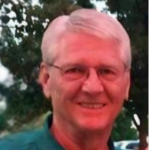
- DeRon Olsen (1944 – ) was a former Mormon bishop and stake presidency counselor in Spokane, Washington; in 2024, pleaded guilty to one felony count of child molestation and one felony count of child rape; sentenced to prison
- View report »
-
-
-

- Errol Pilling (1942 – ) was a Mormon bishop and licensed psychologist in Calgary, Alberta, Canada; went on an LDS mission to England in the early 1960s; pleaded guilty in 1988 and in 1994 to charges of sexual misconduct; in September 1994, his registration as a chartered psychologist with the Psychologists Association of Alberta was cancelled; in 1994, was excommunicated; as of February 2024, lives in Twin Falls, Idaho
- View report »
-
-
-

- Arlo Atkin (1956 – ) was a former LDS bishop in or near Chandler, Maricopa County, Arizona; accused of raping and impregnating a 14-year-old girl in his ward while he was her bishop; pleaded guilty, spent 132 days in jail
- View report »
-