
 Positions: Bishopric counselor, BYU, Missionary, Scout leader, Stake high council, Temple worker, Youth leader,
 - Mission:
 United States - New York Cumorah 1967-1969
  Alleged:
1 victim,
Alleged:
1 victim,  Criminal case(s): Never charged, Not convicted,
 - Civil case(s): Dismissed, Dismissed with prejudice,
- AKA Steve Stokes, Professor Stokes
 updated Aug 5, 2026 - request update | add info

 Alleged crime state:

Stephen Stokes was a Mormon church member and Brigham Young University-Idaho professor. He was accused in a civil lawsuit of grooming and sexually assaulting a student. He died in 2016.
In December 2022, a civil lawsuit by the victim against BYU-Idaho was dismissed with prejudice.
FLOODLIT is seeking more information about this case.
From a news article:
“A federal judge determined this month that the six-year-old lawsuit against Brigham Young University-Idaho, revolving around allegations of sexual impropriety, must move forward.
A female student filed the lawsuit in 2016, alleging a professor was sexually harassing and abusing her at the university.
The professor, Stephen Stokes, died in July 2016 due to complications during a medical procedure, according to court documents. Stokes met the student in 2014.
The woman claims teacher-on-student hostile environment/sexual harassment is a violation of Title IX of the Education Amendments Act. She also claimed teacher-on-student quid pro quo sexual harassment in violation of the Rehabilitation Act and Americans with Disabilities Act and in violation of the Idaho Human Rights Act.
Idaho Reports does not disclose the names of potential sexual assault victims.
After years of litigation, BYU-I asked the court in September for a summary judgment on the issue.
“In short, BYUI exercised reasonable care to prevent and promptly correct any potentially sexually harassing behavior and (the woman) unreasonably failed to take advantage of BYUI’s preventative or corrective opportunities or otherwise avoid the harm,” the filing says.
The court disagreed, sharply calling BYU-I’s actions potentially “deliberate indifference” to victims.
Allegations
According to a copy of U.S. District Judge B. Lynn Winmill’s March 2 order, the student was reported to have “suffered a history of abusive relationships that has caused her to have mental health issues, including severe anxiety, agoraphobia, and PTSD.”
Her counselors reportedly encouraged her to attend BYU-I because they believed it would be safe.
The woman met with the BYU-I disability office to arrange accommodations and the office directed her to speak with her professors.
She first met Stokes in June of 2014 when signing up for a class he instructed.
The student alleges Stokes started as her adviser but began integrating into her life and calling and texting her frequently. She alleged Stokes began isolating her from her mental health counselors and church leaders.
She accused Stokes of telling her “that he was the only one who could help her, he had been directed by God that he was the only one who could help her, and she could not trust anyone else.”
He began touching her, progressing to what he called “spinal touch therapy,” and then to sexual touching, according to court documents. Stokes allegedly went to her home uninvited, took off her clothes and touched her without her permission.
Stokes allegedly told the woman “that sexual intercourse was acceptable within church doctrine as long as he did not ejaculate inside of her. At one point, Stokes, who was already married to someone else, performed what he claimed was a ‘marriage ceremony’ to the student.”
Some of the sexual abuse occurred in Stokes’ office at the BYU-I campus, according to the claims.
The woman involved reportedly told her friend, Danielle Spencer, and Spencer told a BYU-I counselor, Lisa Fox. Spencer also later confronted Stokes, who reportedly said he loved the alleged victim and referred to her as his “wife,” though he was still legally married to another woman. Spencer also told Dan Barnes, a counselor and professor at BYU-I.
Eventually, Dean Steve Dennis, of the College of Education and Human Development, was notified but the concerns were not elevated to Human Resources nor a Title IX investigation, according to the document. Dennis said he was not aware of all the details that Nathan Meeker, the chairman of the department, knew about the harassment or abuse.
The department’s only response was to send Stokes an email, telling Stokes to stop all non-academic interactions with the student.
The student involved never returned to campus and the department did not follow-up with her, according to the court order.
The alleged victim claimed Stokes threatened Spencer’s educational opportunities and was concerned about what Stokes might do to interfere with her own ability to complete her degree if she took further action against him.
Title IX and the Honor Code
Barnes did reach out to the woman after she learned of Stokes’ death, but she “was not provided with support from anyone at BYU-I to ensure that she could continue to attend school.”
The woman claims she requested a Title IX investigation through her counselor, according to her claims, but BYU-I reportedly didn’t initiate one.
The complaint alleges BYU-I also refused to allow the woman to meet Title IX Coordinator Nick Rammell in the presence of her attorney. Further, Rammell allegedly told her that he encourages parties to not report issues of sexual misconduct to the Title IX office and to seek help outside of BYU-I because of BYU-I’s failure to grant amnesty from the Honor Code.
BYU-I’s Honor Code aligns with teachings from The Church of Jesus Christ of Latter-day Saints. It includes a statement saying students must live “a chaste and virtuous life, including abstaining from any sexual relations outside a marriage between a man and a woman.”
Moving forward
In his written order, Winmill disagreed with BYU-I’s argument that the woman “failed to put forward evidence demonstrating that an ‘appropriate person’ under Title IX had ‘actual knowledge’ of Stokes’ sexual harassment.”
“Here, the evidence, viewed in the light most favorable to (the woman), demonstrates that (the woman) and Spencer reported the Stokes-(student) relationship to numerous individuals employed by BYU-I,” Winmill wrote.
“Further, the evidence shows that Meeker is a supervisor of Stokes and had authority to take action to remedy Stokes’ misconduct,” Winmill wrote. “BYU-I does not dispute that Meeker is an ‘appropriate person’ under Title IX.”
The judge noted that with the exception of an email sent to Stokes, “There is no evidence that, following this email, anyone at BYU-I followed up with (the woman), Stokes, or in any other manner, to confirm that Stokes was following the direction to cease all nonacademic interactions” with the student.
Winmill also took issue with the Honor Code office and Title IX office sharing information.
“In addition, there is evidence that BYU-I fails to adequately train its employees on Title IX; that BYU-I applies its policy inconsistently in sexual misconduct cases such that victims are disregarded and offenders are protected; that claims of sexual misconduct against faculty can be decided within a department rather than by the Title IX or HR office; and that there is a general policy of victim blaming, particularly where the complaint is against faculty,” Winmill wrote.
Winmill went on to say the issue “demonstrates an official policy of deliberate indifference to a known overall risk of sexual harassment, including the risks that sexual misconduct will occur but not be reported and investigated, that those who perpetrate sexual misconduct will be emboldened and victims will not report and not be protected.”
The court also denied BYU-I’s request for dismissal of the claim made by the woman under the Idaho Human Rights Act for gender discrimination.
“BYU-I relies solely on its contention that it cannot be held vicariously liable under the IHRA for Stokes’ conduct. The Court disagrees and will thus deny summary judgment on this claim.”
The judge did grant BYU-I’s request for dismissal of the woman’s claim that it created a hostile educational environment under the Rehabilitation Act.
BYU-I also argued that the destruction and manipulation of text messages by the woman was intentional and was for the purpose of depriving BYU-I of evidence and allowing her “to craft a misleading narrative.” The plaintiff reported that happening in an AT&T store factory reset and the court did not find the new evidence sufficient to warrant reconsideration of an evidence spoliation ruling.
The next court hearing in the case is set for 1:30 p.m. March 22.
Idaho Reports did email and leave a voicemail for BYU-I’s media relations office seeking comment but did not receive a response by Thursday morning.
Idaho Reports also left messages for the female student’s attorney but did not receive a response by Thursday.”
Have any info on this case? Contact FLOODLIT.
Reader-funded investigative journalism
Help us raise money
FLOODLIT needs to raise funds to cover immediate operating bills and keep our independent newsroom running.
If this case report, our source documents, or our database have been useful to you, please help us.
Donate now →FLOODLIT is 100% reader-funded. Every amount helps.
Sources
- Stephen Stokes,
- STEVENS v. BRIGHAM YOUNG UNIVERSITY-IDAHO ,
- Woman suing BYU-Idaho, widow for alleged sexual assault from now-deceased professor,
- BYU-I sexual abuse Title IX lawsuit moves forward after 6 years,
- BYU-I sexual abuse Title IX lawsuit moves forward after 6 years,
-
1. Stephen Stokes
Stephen Wayne Stokes, 67, of Rexburg, Idaho, passed away July 1, 2016, at Eastern Idaho Regional Medical Center following post surgery complications.
He was born in Salmon, Idaho, on Oct. 1, 1948, to [redacted by FLOODLIT] and [redacted by FLOODLIT] Stokes.
Steve graduated from Salmon High School in 1966. He attended Ricks College before serving an LDS mission to the Cumorah, N.Y., mission from 1967 to 1969.
Following his mission, he married the love of his life, [redacted by FLOODLIT], in the Idaho Falls LDS Temple in 1971. They moved to Boise, Idaho, to attend Boise State University, and he graduated in 1973.
[...]
He taught high school in Leadore, Idaho, for 14 years, was athletic director, coached basketball and cross-country and taught early morning seminary. During the summers, he operated heavy equipment and drove truck. In 1976, he drove his own truck to help with the Teton Dam cleanup.
[...]
While in Leadore, he served on the city council and as mayor and was a volunteer EMT. In 1988, he moved [...] to Pocatello, Idaho, to earn his doctorate in political science from Idaho State University in 1990. He moved to Ottumwa, Iowa, to teach at Indian Hills Community College. Shortly after, he accepted his dream job teaching at Ricks College. He received the Master Teacher Award and served as department chair, assisting Ricks College in transitioning to Brigham Young University - Idaho. He lived in the Rexburg area the rest of his life [...].
He loved the Gospel of Jesus Christ. He served in bishoprics, on the high councils of the Salmon and Rexburg South stakes, ward mission leader, YM presidencies, Scouts, high priest group leader and as a temple worker at the Rexburg LDS Temple.
Steve Stokes was a man that loved all and was loved by all. His sincere smile and genuine interest in others lifted and inspired everyone around him. His greatest joy in life was spending time with his family and playing with his grandkids. He also loved teaching and counseling his students in academics and life. He never passed by an opportunity to help others.
[...]
Funeral services will be held at 11 a.m. Saturday, July 9, at Rexburg South Stake Center, 2041 W. 5200 S.
-
2. STEVENS v. BRIGHAM YOUNG UNIVERSITY-IDAHO
STEVENS v. BRIGHAM YOUNG UNIVERSITY-IDAHO
Case No. 4:16-cv-00530-BLW.View Case
588 F.Supp.3d 1117 (2022)
Lori STEVENS, Plaintiff, v. BRIGHAM YOUNG UNIVERSITY — IDAHO, dba BYU-Idaho, Defendant.
United States District Court, D. Idaho.
Signed March 2, 2022.
Attorney(s) appearing for the CaseAmanda Elizabeth Ulrich, DeAnne Casperson, Casperson Ulrich Dustin PLLC, Idaho Falls, ID, for Plaintiff.
Christine R. Arnold, Haley Krug, Steven B. Andersen, Kirton McConkie, Boise, ID, for Defendant Brigham Young University — Idaho.
MEMORANDUM DECISION AND ORDER
B. LYNN WINMILL, United States District Court Judge.
INTRODUCTIONPlaintiff, Lori Stevens, brought this action against Defendant, Brigham Young University — Idaho (BYU-I) alleging teacher-on-student hostile environment/sexual harassment in violation of Title IX of the Education Amendments...
-
3. Woman suing BYU-Idaho, widow for alleged sexual assault from now-deceased professor
REXBURG — A former Brigham Young University-Idaho student claims she was repeatedly sexually assaulted by a now-deceased professor between 2014 and 2016.
The female student, whom EastIdahoNews.com has chosen not to identify, filed a Title IX lawsuit against BYU-Idaho in federal court. Title IX bars sexual discrimination on campus and ensures that every university and college receiving money from the federal government investigates and resolves complaints of sexual violence.
In the 27-page lawsuit, the woman, who is disabled, alleges that Stephen Stokes, a sociology professor, intentionally targeted her as a “vulnerable person whom he could groom for a sexual relationship.” Stokes is accused of using “his knowledge of (the woman’s) disabilities to coerce (her) into an unwelcomed and unwanted sexual relationship.”
The lawsuit asserts at least five school officials were aware of the abuse, but it was not reported to the Title IX coordinator for investigation.
The university and Stokes’ wife, Susan, are listed as defendants in the case. They adamantly deny the allegations.
Both sides are demanding a jury trial to state their arguments.
This case was filed amidst changes to the Title IX policies at BYU-Idaho and other educational facilities owned by The Church of Jesus Christ of Latter-day Saints. The changes aims to “encourage the reporting of sexual misconduct” by giving victims or witnesses of sexual assault guarantees of confidentiality, amnesty and leniency.
Stephen Stokes was never accused or charged of any sex crime in Idaho during his life. He died in July 2016 due to complications from heart surgery. Stokes was a “beloved professor” who was missed by faculty and students, according to the BYU-Idaho Scroll.
The lawsuit was filed five months after his death and amended in March.
THE ALLEGATIONSIn the complaint, the woman is described as being disabled due to a number of mental illnesses, including post traumatic stress disorder, agoraphobia, severe anxiety, panic disorder, anorexia and Stockholm syndrome. Her disabilities allowed her to obtain disability accommodations from the school.
Court records indicate the woman met Stokes in 2014 at BYU-Idaho. The two developed a friendship after she discovered Stokes had known her deceased father.
Stokes is said to have encouraged her to join the social work program and promised he would become her faculty advisor. Stokes allegedly took a heightened interest in her and when she joined the program, she told him about her mental issues.
The woman also confided to Stokes that she was experiencing financial problems as a single mother. Stokes arranged for her to get food from the food bank and advocated on her behalf at BYU-Idaho.
The woman asserts her contact with Stokes became more frequent and he confessed to her that he was experiencing marital problems. He is said to have mentioned that God brought the two of them together.
“Stokes told her that Heavenly Father placed her in his life for a reason and that (Stokes was) supposed to show her what it feels like to be cared for … and that God had revealed her goodness to him and that he had been given the sacred privilege to help her,” court documents state.
The woman claims the relationship escalated to hugging in his office and then to physical massage or “spinal touch” sessions to help her relieve severe anxiety. In court documents, she alleges the touching made her anxiousness worse.
In the fall of 2014, court documents state one of the spinal touch sessions ended with sexual activity. Afterward she said it became a regular part of their interaction, and Stokes used God and religion on multiple occasions to justify sexual advances.
In January 2015, the woman took a job as his teaching assistant and she claims Stokes indicated he wanted a more permanent relationship.
“During her employment, (Stokes) continued to insist on providing ‘therapeutic’ rubbing and touching to ‘assist’ (her) in managing her anxiety,” court documents show. “To the contrary, her anxiety became unmanageable at this time.”
She saw doctors 14 times between January 2015 and July 2016 to get medication for anxiety or panic attacks exacerbated “by Stokes’ aggressive harassment, stalking and sexual assault and battery,” according to court documents.
Between April 2015 to July 2016, she says, that sexual contact occurred at least three times per week in BYU-Idaho parking lots, classrooms, a campus greenhouse and at her home.
She began to skip school to avoid Stokes, but she said he would show up at her house, at church and at family events. He is said to have told her that “he was her loving husband sent by God.”
“(She) wanted to end this harmful relationship, but felt trapped. Stokes had been so kind to (her) as a father figure when they first met, but she wanted nothing to do with his sexual advances and obsession with her as his ‘wife,'” documents show. “She came to believe if she ended the relationship Stokes would retaliate against her and ensure she could not complete her degree.”
The woman told a friend and fellow social work student about the relationship. The friend advised that she report Stokes to university officials. The friend also told a school counselor at the BYU-Idaho Counseling Center about the relationship and said she was going to report Stokes.
The plaintiff claims Stokes found out about the friend. He threatened to cancel the friend’s internship if she “continued to meddle in their relationship,” the plaintiff said.
Stokes came up with a plan to tell administrators about the relationship, “but to explain their relationship in a way that would not point to any misconduct on Stokes’ part,” the plaintiff said.
The woman and the friend spoke with department administrators, according to court documents. The woman initially disclosed that she was in a relationship with Stokes that involved “kissing and leg rubbing,” but was not sexual. She is said to have also told administrators that Stokes had “taken over her life.”
Department leaders met with Stokes to discuss the allegations.
“After a matter of minutes Stokes exited the room smiling triumphantly and reported to (the woman) that everything was fine and thanked her for ‘saving him,'” court documents state.
The next day Stokes received a letter of reprimand from the department chair for having an inappropriate relationship with a student and he was advised to stop to avoid further disciplinary action, according to the lawsuit. No other action was taken.
The woman claims even after the reprimand, Stokes “continued to regularly sexually assault and batter (her) on the BYU-Idaho campus and in her home.” Stokes is said to have called and texted the woman up to the time he died on July 1, 2016.
Later, the woman was put on academic suspension for poor grades. She said it was due to missed classes from trying to avoid Stokes and from anxiety that came with the relationship.
She also said due to the lawsuit, she was denied an ecclesiastical endorsement, which is needed to attend BYU-Idaho.
Steven Stokes
Stephen Stokes | BYU-Idaho Scroll
BACKGROUNDThis federal lawsuit against BYU-Idaho is not the first legal action taken by the female plaintiff against the Stokes estate. In October 2016, the woman filed a claim in Madison County against the estate of Stephen Stokes in excess of $1 million. She was claiming damages for sexual assault, sexual battery, and infliction of negligent and intentional emotional stress. Her attorney said that the case is still active and is pending the results of the federal case.
CLAIM FOR DAMAGESThe woman is being represented by Holden, Kidwell Hahn & Crapo in Idaho Falls. When asked about their client, the law firm issued the following statement:
“In spite of the tragic events (the plaintiff) endured from a trusted professor, she is, and intends to remain, a faithful member of the Mormon church. Unfortunately, (her) disabilities make her extremely vulnerable to manipulation and abuse, which she was not prepared to encounter on the campus of BYU-Idaho.”
The lawsuit is seeking unspecified damages from BYU-Idaho and the Stokes estate on seven counts:
That BYU-Idaho was a hostile work environment where the plaintiff was sexually harassed and that although the harassment was reported to administrators, no one took corrective measures on her behalf or reported the conduct to the Title IX coordinator as per BYU-Idaho’s Sexual Misconduct Policy.
The plaintiff was subjected to teacher-on-student sexual harassment based on the fact Stokes had the power to harm the plaintiff’s ability to complete her education. Also that BYU-Idaho acted with indifference to the abuse and discrimination and as a result the woman continues to suffer emotional distress and humiliation.
That the school violated the Americans with Disabilities Act because Stokes knew about her disabilities and proceeded to take advantage of her with unwanted sexual advances.
That BYU-Idaho violated the Human Rights Act because Stokes, her superior when she was his teaching assistant, discriminated against her based on gender.
The plaintiff claims that Susan Stokes, a representative of her husband’s estate, is liable for the intentional infliction of emotional distress and for Stephen Stokes’ treatment of the plaintiff.
The plaintiff claims Susan Stokes is also liable for negligent infliction of emotional distress because Stephen Stokes was aware he was in breach of a standard of conduct.
That Stephen Stokes did sexually assault and batter the woman despite her repeated protests and that he used her vulnerabilities to force her into a sexual relationship.BYU-IDAHO’S RESPONSE
With few exceptions, BYU-Idaho and Susan Stokes adamantly deny the allegations made against them by the plaintiff. They imply her story of a sexual relationship with Stokes was made up only after his death.
BYU-Idaho spokesman Brett Crandall issued the following statement about the case:
“Brigham Young University-Idaho is committed to promoting and maintaining a safe and respectful environment for the campus community. It is the university’s policy to take immediate and appropriate steps to stop sexual harassment, prevent any recurrence and address its effects. BYU-Idaho confirms it has reviewed allegations of sexual harassment concerning a former employee who passed away in July 2016. The university was unaware of these allegations prior to the employee’s death and is confident it has acted appropriately. Moreover, the university is not aware of any violations of state or federal law. In its court submissions, BYU-Idaho has responded to the lawsuit’s specific allegations and is confident the legal system will determine the truth of this case and will act accordingly.”
BYU-Idaho and Susan Stokes are being represented by Boise law firm Andersen, Schwartzman, Woodard and Brailsford. In its rebuttal to the lawsuit, the university denies discriminating against the plaintiff. BYU-Idaho also says administrators had no knowledge of any harassment or abuse.
“When plaintiff met with BYU-I before Stokes’ death, she did not reveal a physical or romantic relationship. Contrary to (her complaint), she did not mention any harassment or abuse,” according to a university statement in court records.
Instead, BYU-Idaho claims Stokes’ interactions with the plaintiff were limited to emotional and financial support.
“It was not until after Stokes’ death that plaintiff indicated she had a consensual romantic relationship with Stokes. Then months after Stokes’ death and after hiring an attorney and demanding significant sums of money, plaintiff changed her story to claim harassment and abuse,” the statement reads.
The university admits Stokes did help the plaintiff pay for groceries, medication and helped her in a legal matter. But it denies the woman ever told any administrator that there was a physical or romantic relationship with Stokes.
BYU-Idaho also asserts the plaintiff’s friend denied knowing anything about a physical relationship between her and Stokes.
EastIdahoNews.com reached out to the friend for comment but has not received a response.
The university said it sent a letter to Stokes directing him to cease all non-academic interactions with the plaintiff. However, nothing reported to BYU-Idaho at the time required a Title IX investigation because all involved said there had been no discrimination or harassment, according to the university.
BYU-Idaho said the plaintiff told several individuals about a consensual romantic relationship after Stokes’ death. Upon hearing those rumors, the Title IX coordinator reached out to the plaintiff multiple times, but she did not meet with him.
BYU-Idaho claims it exercised reasonable care to protect the plaintiff and that it did not know about Stokes’ alleged conduct. The university denies it discriminated against her based on her gender or disability or that she suffered any damages as a result of its actions.
The lawsuit is currently in the discovery phase. No trial date has been set.
-
4. BYU-I sexual abuse Title IX lawsuit moves forward after 6 years
A federal judge determined this month that the six-year-old lawsuit against Brigham Young University-Idaho, revolving around allegations of sexual impropriety, must move forward.
A female student filed the lawsuit in 2016, alleging a professor was sexually harassing and abusing her at the university.
The professor, Stephen Stokes, died in July 2016 due to complications during a medical procedure, according to court documents. Stokes met the student in 2014.
The woman claims teacher-on-student hostile environment/sexual harassment is a violation of Title IX of the Education Amendments Act. She also claimed teacher-on-student quid pro quo sexual harassment in violation of the Rehabilitation Act and Americans with Disabilities Act and in violation of the Idaho Human Rights Act.
Idaho Reports does not disclose the names of potential sexual assault victims.
After years of litigation, BYU-I asked the court in September for a summary judgment on the issue.
“In short, BYUI exercised reasonable care to prevent and promptly correct any potentially sexually harassing behavior and (the woman) unreasonably failed to take advantage of BYUI’s preventative or corrective opportunities or otherwise avoid the harm,” the filing says.
The court disagreed, sharply calling BYU-I’s actions potentially “deliberate indifference” to victims.
Allegations
According to a copy of U.S. District Judge B. Lynn Winmill’s March 2 order, the student was reported to have “suffered a history of abusive relationships that has caused her to have mental health issues, including severe anxiety, agoraphobia, and PTSD.”
Her counselors reportedly encouraged her to attend BYU-I because they believed it would be safe.
The woman met with the BYU-I disability office to arrange accommodations and the office directed her to speak with her professors.
She first met Stokes in June of 2014 when signing up for a class he instructed.
The student alleges Stokes started as her adviser but began integrating into her life and calling and texting her frequently. She alleged Stokes began isolating her from her mental health counselors and church leaders.
She accused Stokes of telling her “that he was the only one who could help her, he had been directed by God that he was the only one who could help her, and she could not trust anyone else.”
He began touching her, progressing to what he called “spinal touch therapy,” and then to sexual touching, according to court documents. Stokes allegedly went to her home uninvited, took off her clothes and touched her without her permission.
Stokes allegedly told the woman “that sexual intercourse was acceptable within church doctrine as long as he did not ejaculate inside of her. At one point, Stokes, who was already married to someone else, performed what he claimed was a ‘marriage ceremony’ to the student.”
Some of the sexual abuse occurred in Stokes’ office at the BYU-I campus, according to the claims.
The woman involved reportedly told her friend, Danielle Spencer, and Spencer told a BYU-I counselor, Lisa Fox. Spencer also later confronted Stokes, who reportedly said he loved the alleged victim and referred to her as his “wife,” though he was still legally married to another woman. Spencer also told Dan Barnes, a counselor and professor at BYU-I.
Eventually, Dean Steve Dennis, of the College of Education and Human Development, was notified but the concerns were not elevated to Human Resources nor a Title IX investigation, according to the document. Dennis said he was not aware of all the details that Nathan Meeker, the chairman of the department, knew about the harassment or abuse.
The department’s only response was to send Stokes an email, telling Stokes to stop all non-academic interactions with the student.
The student involved never returned to campus and the department did not follow-up with her, according to the court order.
The alleged victim claimed Stokes threatened Spencer’s educational opportunities and was concerned about what Stokes might do to interfere with her own ability to complete her degree if she took further action against him.
Title IX and the Honor Code
Barnes did reach out to the woman after she learned of Stokes’ death, but she “was not provided with support from anyone at BYU-I to ensure that she could continue to attend school.”
The woman claims she requested a Title IX investigation through her counselor, according to her claims, but BYU-I reportedly didn’t initiate one.
The complaint alleges BYU-I also refused to allow the woman to meet Title IX Coordinator Nick Rammell in the presence of her attorney. Further, Rammell allegedly told her that he encourages parties to not report issues of sexual misconduct to the Title IX office and to seek help outside of BYU-I because of BYU-I’s failure to grant amnesty from the Honor Code.
BYU-I’s Honor Code aligns with teachings from The Church of Jesus Christ of Latter-day Saints. It includes a statement saying students must live “a chaste and virtuous life, including abstaining from any sexual relations outside a marriage between a man and a woman.”
Moving forward
In his written order, Winmill disagreed with BYU-I’s argument that the woman “failed to put forward evidence demonstrating that an ‘appropriate person’ under Title IX had ‘actual knowledge’ of Stokes’ sexual harassment.”
“Here, the evidence, viewed in the light most favorable to (the woman), demonstrates that (the woman) and Spencer reported the Stokes-(student) relationship to numerous individuals employed by BYU-I,” Winmill wrote.
“Further, the evidence shows that Meeker is a supervisor of Stokes and had authority to take action to remedy Stokes’ misconduct,” Winmill wrote. “BYU-I does not dispute that Meeker is an ‘appropriate person’ under Title IX.”
The judge noted that with the exception of an email sent to Stokes, “There is no evidence that, following this email, anyone at BYU-I followed up with (the woman), Stokes, or in any other manner, to confirm that Stokes was following the direction to cease all nonacademic interactions” with the student.
Winmill also took issue with the Honor Code office and Title IX office sharing information.
“In addition, there is evidence that BYU-I fails to adequately train its employees on Title IX; that BYU-I applies its policy inconsistently in sexual misconduct cases such that victims are disregarded and offenders are protected; that claims of sexual misconduct against faculty can be decided within a department rather than by the Title IX or HR office; and that there is a general policy of victim blaming, particularly where the complaint is against faculty,” Winmill wrote.
Winmill went on to say the issue “demonstrates an official policy of deliberate indifference to a known overall risk of sexual harassment, including the risks that sexual misconduct will occur but not be reported and investigated, that those who perpetrate sexual misconduct will be emboldened and victims will not report and not be protected.”
The court also denied BYU-I’s request for dismissal of the claim made by the woman under the Idaho Human Rights Act for gender discrimination.
“BYU-I relies solely on its contention that it cannot be held vicariously liable under the IHRA for Stokes’ conduct. The Court disagrees and will thus deny summary judgment on this claim.”
The judge did grant BYU-I’s request for dismissal of the woman’s claim that it created a hostile educational environment under the Rehabilitation Act.
BYU-I also argued that the destruction and manipulation of text messages by the woman was intentional and was for the purpose of depriving BYU-I of evidence and allowing her “to craft a misleading narrative.” The plaintiff reported that happening in an AT&T store factory reset and the court did not find the new evidence sufficient to warrant reconsideration of an evidence spoliation ruling.
The next court hearing in the case is set for 1:30 p.m. March 22.
Idaho Reports did email and leave a voicemail for BYU-I’s media relations office seeking comment but did not receive a response by Thursday morning.
Idaho Reports also left messages for the female student’s attorney but did not receive a response by Thursday.
-
5. BYU-I sexual abuse Title IX lawsuit moves forward after 6 years
A federal judge determined this month that the six-year-old lawsuit against Brigham Young University-Idaho, revolving around allegations of sexual impropriety, must move forward.
A female student filed the lawsuit in 2016, alleging a professor was sexually harassing and abusing her at the university.
The professor, Stephen Stokes, died in July 2016 due to complications during a medical procedure, according to court documents. Stokes met the student in 2014.
The woman claims teacher-on-student hostile environment/sexual harassment is a violation of Title IX of the Education Amendments Act. She also claimed teacher-on-student quid pro quo sexual harassment in violation of the Rehabilitation Act and Americans with Disabilities Act and in violation of the Idaho Human Rights Act.
Idaho Reports does not disclose the names of potential sexual assault victims.
After years of litigation, BYU-I asked the court in September for a summary judgment on the issue.
“In short, BYUI exercised reasonable care to prevent and promptly correct any potentially sexually harassing behavior and (the woman) unreasonably failed to take advantage of BYUI’s preventative or corrective opportunities or otherwise avoid the harm,” the filing says.
The court disagreed, sharply calling BYU-I’s actions potentially “deliberate indifference” to victims.
Allegations
According to a copy of U.S. District Judge B. Lynn Winmill’s March 2 order, the student was reported to have “suffered a history of abusive relationships that has caused her to have mental health issues, including severe anxiety, agoraphobia, and PTSD.”
Her counselors reportedly encouraged her to attend BYU-I because they believed it would be safe.
The woman met with the BYU-I disability office to arrange accommodations and the office directed her to speak with her professors.
She first met Stokes in June of 2014 when signing up for a class he instructed.
The student alleges Stokes started as her advisor but began integrating into her life and calling and texting her frequently. She alleged Stokes began isolating her from her mental health counselors and church leaders.
She accused Stokes of telling her “that he was the only one who could help her, he had been directed by God that he was the only one who could help her, and she could not trust anyone else.”
He began touching her, progressing to what he called “spinal touch therapy,” and then to sexual touching, according to court documents. Stokes allegedly went to her home uninvited, took off her clothes and touched her without her permission.
Stokes allegedly told the woman “that sexual intercourse was acceptable within church doctrine as long as he did not ejaculate inside of her. At one point, Stokes, who was already married to someone else, performed what he claimed was a “marriage ceremony” to the student.”
Some of the sexual abuse occurred in Stokes’ office at the BYU-I campus, according to the claims.
The woman involved reportedly told her friend, Danielle Spencer, and Spencer told a BYU-I counselor, Lisa Fox. Spencer also later confronted Stokes, who reportedly said he loved the alleged victim and referred to her as his “wife,” though he was still legally married to another woman. Spencer also told Dan Barnes, a counselor and professor at BYU-I.
Eventually, Dean Steve Dennis, of the College of Education and Human Development, was notified but the concerns were not elevated to Human Resources nor a Title IX investigation, according to the document. Dennis said he was not aware of all the details that Nathan Meeker, the Chair of the Department, knew about the harassment or abuse.
The department’s only response was to send Stokes an email, telling Stokes to stop all non-academic interactions with the student.
The student involved never returned to campus and the department did not follow-up with her, according to the court order.
The alleged victim claimed Stokes threatened Spencer’s educational opportunities and was concerned about what Stokes might do to interfere with her own ability to complete her degree if she took further action against him.
Title IX and the Honor Code
Barnes did reach out to the woman after she learned of Stokes’ death, but she “was not provided with support from anyone at BYU-I to ensure that she could continue to attend school.”
The woman claims she requested a Title IX investigation through her counselor, according to her claims, but BYU-I reportedly didn’t initiate one.
The complaint alleges BYU-I also refused to allow the woman to meet Title IX Coordinator Nick Rammell in the presence of her attorney. Further, Rammell allegedly told her that he encourages parties to not report issues of sexual misconduct to the Title IX office and to seek help outside of BYU-I because of BYU-I’s failure to grant amnesty from the Honor Code.
BYU-I’s Honor Code aligns with teachings from The Church of Jesus Christ of Latter-Day Saints. It includes a statement saying students must live “a chaste and virtuous life, including abstaining from any sexual relations outside a marriage between a man and a woman.”
Moving forward
In his written order, Winmill disagreed with BYU-I’s argument that the woman “failed to put forward evidence demonstrating that an “appropriate person” under Title IX had “actual knowledge” of Stokes’ sexual harassment.”
Winmill wrote “Here, the evidence, viewed in the light most favorable to (the woman), demonstrates that (the woman) and Spencer reported the Stokes-(student) relationship to numerous individuals employed by BYU-I.”
“Further, the evidence shows that Meeker is a supervisor of Stokes and had authority to take action to remedy Stokes’ misconduct,” Winmill wrote. “BYU-I does not dispute that Meeker is an “appropriate person” under Title IX.”
The judge noted that with the exception of an email sent to Stokes, “There is no evidence that, following this email, anyone at BYU-I followed up with (the woman), Stokes, or in any other manner, to confirm that Stokes was following the direction to cease all nonacademic interactions” with the student.
Winmill also took issue with the Honor Code office and Title IX office sharing information.
“In addition, there is evidence that BYU-I fails to adequately train its employees on Title IX; that BYU-I applies its policy inconsistently in sexual misconduct cases such that victims are disregarded and offenders are protected; that claims of sexual misconduct against faculty can be decided within a department rather than by the Title IX or HR office; and that there is a general policy of victim blaming, particularly where the complaint is against faculty,” Winmill wrote.
Winmill went on to say the issue “demonstrates an official policy of deliberate indifference to a known overall risk of sexual harassment, including the risks that sexual misconduct will occur but not be reported and investigated, that those who perpetrate sexual misconduct will be emboldened and victims will not report and not be protected.”
The court also denied BYU-I’s request for dismissal of the claim made by the woman under the Idaho Human Rights Act for gender discrimination.
“BYU-I relies solely on its contention that it cannot be held vicariously liable under the IHRA for Stokes’ conduct. The Court disagrees and will thus deny summary judgment on this claim.”
The judge did grant BYU-I’s request for dismissal of the woman’s claim that it created a hostile educational environment under the Rehabilitation Act.
BYU-I also argued that the destruction and manipulation of text messages by the woman was intentional and was for the purpose of depriving BYU-I of evidence and allowing her “to craft a misleading narrative.” The plaintiff reported that happening in an AT&T store factory reset and the court did not find the new evidence sufficient to warrant reconsideration of an evidence spoliation ruling.
The next court hearing in the case is set for 1:30 p.m. March 22.
Idaho Reports did email and leave a voicemail for BYU-I’s media relations office seeking comment but did not receive a response by Thursday morning.
Idaho Reports also left messages for the female student’s attorney but did not receive a response by Thursday.
Documents
Have docs or info? Add information
Criminal case documents
We believe this person was never criminally charged, so no related criminal case documents exist. If you have information that suggests otherwise, please contact us.
Civil case documents
Floodlit does not have a copy of a related civil complaint. Please check back soon or contact us to request that we look for one.Other documents
Floodlit does not have a copy of any other related documents. Please check back soon or contact us to request that we look for some.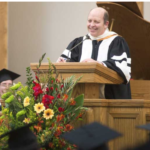
Add information
If someone you know was harmed by the person listed on this page, or if you would like us to add or correct any information, please fill out the form below. We will keep you anonymous. You can also contact us directly.
"*" indicates required fields
Other Mormon sex abuse cases
-
-

- Timothy McCleve (1956 – ) was a former Mormon bishop in Harrisville, Utah when he was charged with sexually abusing three children; some of the abuse took place while he was bishop; sentenced in 2008 to up to 30 years in prison for child sexual abuse; in 2024, charged in Utah with threatening a witness in a parole violation investigation
- View report »
-
-
-
- James Hayes (1956 – ) was an LDS bishop in the Timmins - North Bay area, Ontario, Canada; convicted of sexual exploitation in November 2001; molested an underage girl in his ward while serving as her bishop
- View report »
-
-
-

- Eddie Padilla was a Mormon bishop in Taos, New Mexico; accused of child sexual abuse; convicted twice
- View report »
-