
-
-
 Crime: 1980s, 1990s, 2000s,
 Crime city:
oh-bainbridge,
 Crime county:
oh-geauga,
 Crime state:
California, North Carolina, Ohio, Pennsylvania,
-
- Convicted:
2007,
 Positions: Bishopric counselor, Scout leader, Youth leader,
- During crime: Youth leader,
- Mission:
 unknown
 Alleged crime scenes:
church, LDS activity, Recreational trip/outing,
 Criminal case(s): Convicted, Pleaded guilty, Prison,
 Alleged church actions: Church officials accused of allowing interaction with children after notice of wrongdoing,
- AKA Dick Gibbs
 updated Nov 28, 2026 - request update | add info
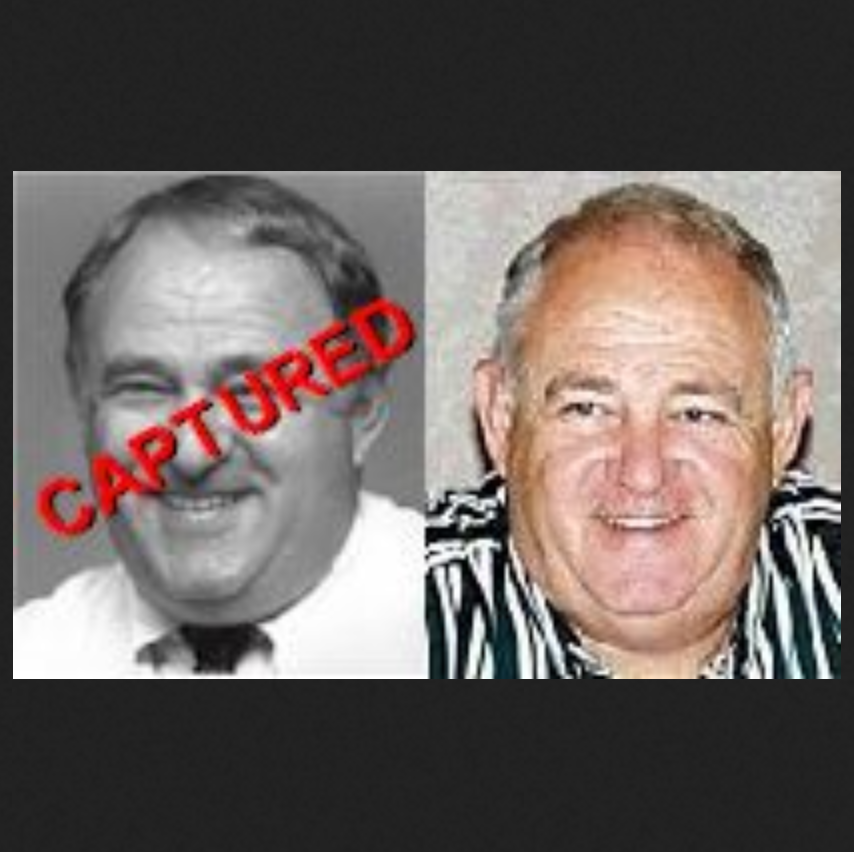
Richard Wesley Gibbs was a former communications professor at Shippensburg University in Pennsylvania.
In 2007 an Ohio court sentenced Gibbs to 12 to 30 years in prison after he pleaded guilty to six counts of gross sexual imposition for acts committed between 1987 and 1989. The court classified him as a sexual predator. Ohio appeals court opinions also record that he had earlier been convicted of indecent assault in Pennsylvania.
Two people have separately told FLOODLIT that Gibbs was a member of the Church of Jesus Christ of Latter-day Saints who held local church callings. One said a relative remembers him as a counselor in the bishopric and an adviser to the teachers quorum in the Laconia Ward, Manchester New Hampshire Stake, in the late 1970s and possibly the early 1980s. The other said he was the Boy Scout leader in that person’s Ohio ward.
FLOODLIT has not found church or news records that confirm either calling, and neither person says when the Ohio calling took place.
Ohio
In 2006 a Geauga County grand jury indicted Gibbs on 10 counts of gross sexual imposition for acts between Jan. 1, 1987, and Dec. 31, 1989. The Bainbridge Township police chief told the News-Herald that at least one victim in the township had come forward, and said Gibbs preyed on young male victims.
Gibbs pleaded guilty to the first six counts, and the other four were dropped. In a judgment entry dated May 18, 2007, the Geauga County Court of Common Pleas sentenced him to a total of 12 to 30 years in prison and classified him as a sexual predator. He did not appeal his conviction.
From 2010 on, Gibbs filed motions from prison to withdraw his guilty plea, dismiss the indictment and vacate his sentence, arguing among other things that the time limit for prosecuting him had run out. The Eleventh District Court of Appeals dismissed or rejected his appeals in 2010 and 2014. In 2016 it sent two of his motions back to the trial court to be decided. FLOODLIT has not found how the trial court ruled after that.
Pennsylvania, North Carolina and Panama
In 2006 Gibbs faced 14 felony counts in Cumberland County, Pennsylvania, over sexual images of children found on his computers while he worked at Shippensburg University, according to the U.S. Marshals Service.
He was arrested in North Carolina in June 2006 and freed on $25,000 bond before an extradition hearing set for July 31. The Marshals said he fled the country on July 18. On Oct. 13, 2006, Panamanian police working with U.S. Marshals arrested him at a bar and grill in Bocas del Toro, Panama, where he had been working under the name Wesley Alonzo. The News-Herald reported that he had been featured on “America’s Most Wanted.”
The Marshals also said he had been charged with molesting a child in California about six years earlier. FLOODLIT has not confirmed how the Pennsylvania and California cases ended.
What church leaders knew
One person who contacted FLOODLIT said Gibbs was “very protected by our ward and stake” in Ohio. FLOODLIT has not confirmed this and does not know what local leaders knew about him, or when. FLOODLIT has not seen a statement from the church about him.
Where he is now
Ohio court records place him in state prisons from 2010 to 2016, first at Mansfield Correctional Institution and later at London Correctional Institution. FLOODLIT has not confirmed where he is now.
LDS church involvement
A person who knew Gibbs told FLOODLIT, “He creeped me out as a child in the 1980s.”
The source said multiple alleged victims reported that Gibbs abused them on church camping trips.
In the 1980s, Gibbs owned a printing company called Gibbs Publishing that published genealogy forms, the source said.
“Our ward in Ohio allowed him to be in boy scouts even with his crimes,” another source told FLOODLIT.
Criminal charges – summary
Date: 2006
Description: Geauga County, Ohio: indicted on 10 counts of gross sexual imposition for acts between Jan. 1, 1987, and Dec. 31, 1989.
Source: 2014-Ohio-5773; News-Herald
Date: 2006
Description: Geauga County, Ohio: indicted on 10 counts of gross sexual imposition for acts between Jan. 1, 1987, and Dec. 31, 1989.
Source: 2014-Ohio-5773; News-Herald
Date: 2006
Description: Cumberland County, Pennsylvania: 14 felony counts over sexual images of children found on his computers. Outcome not confirmed.
Source: News-Herald
Date: about 2000
Description: California: charged with molesting a child, according to the U.S. Marshals Service. Outcome not confirmed.
Source: News-Herald
Date: (blank; plea date not found)
Result: Pleaded guilty
Description: Geauga County, Ohio: pleaded guilty to counts 1-6 of gross sexual imposition; counts 7-10 dropped.
Source: 2014-Ohio-1341
Date: (blank)
Result: Convicted
Description: Pennsylvania: earlier conviction for indecent assault (date and county not confirmed).
Source: 2014-Ohio-1341
Date: 20070518
Description: 12 to 30 years in prison in total (three consecutive pairs of concurrent 4-to-10-year terms); classified a sexual predator.
Source: 2014-Ohio-1341; 2014-Ohio-5772
Prison time:
Row 1: Mansfield Correctional Institution, Ohio (listed there in 2010; source 2010-Ohio-2675)
Row 2: London Correctional Institution, Ohio (listed there in 2016; source 2016-Ohio-5004)
Start and end dates: blank
Location history:
Row 1: New Hampshire, late 1970s (source: tip on file)
Row 2: Geauga County, Ohio, 1987-89 (source: 2014-Ohio-1341; News-Herald)
Row 3: Shippensburg, Pennsylvania, until 2006 (source: News-Herald)
Row 4: Bocas del Toro, Panama, 2006 (source: News-Herald)
LDS church positions:
Row 1: Bishopric counselor; Ward: Laconia Ward; Stake: Manchester New Hampshire Stake; State: New Hampshire; Dates: late 1970s
Row 2: Teachers quorum adviser; same ward, stake and dates
Row 3: Boy Scout leader; Ward: an Ohio ward (name not given); Dates: unknown
Source for all three: tips to FLOODLIT
If you hvae any information about Gibb’s LDS membership history please contact us.
Sources
- DS Assists in Apprehension of U.S. Professor Wanted on Child Sex Charges,
- Geauga fugitive caught,
- Ex-university professor arrested in Panama,
- State v. Gibbs, 2010-Ohio-2675,
- State v. Gibbs, 2014-Ohio-1341,
- State v. Gibbs, 2014-Ohio-5772,
- State v. Gibbs, 2014-Ohio-5773,
- State v. Gibbs, 2016-Ohio-5004,
- Gibbs gets 12-30 years in prison,
- Sex Crime Professor Nabbed In Panama,
- DS Assists in Apprehension of U.S. Professor Wanted on Child Sex Charges,
- Gibbs sentenced on child porn charges ,
-
1. DS Assists in Apprehension of U.S. Professor Wanted on Child Sex Charges
Department of Justice, U.S. Marshals Service
October 15, 2006CONTACT:
Northern Ohio Violent Fugitive Task Force
Deputy U.S. Marshal David Siler
216-522-2150PROFESSOR CHARGED WITH SEXUAL CRIMES FOUND BY U.S. MARSHALS IN PANAMA
Fugitive Richard Gibbs, apprehended by U.S. Marshals Service in Panama with assistance from Diplomatic Security.On Sunday, U.S. Marshals announced that Richard Wesley Gibbs’ run from justice ended as Deputy Marshals, working through Panamanian authorities, apprehended Gibbs at the Big Bamboo Bar and Grill in Bocas Del Toro, Panama, after a 90-day manhunt that spanned seven states.
On July 18, 2006 Gibbs, 65, fled the country with hopes that he and his crimes would be forgotten. "Gibbs, a former professor, was on the run after skipping an extradition hearing on July 31. He was facing 14 felony counts of sexual abuse of children stemming from pornographic images found on his computers while being employed at Shippensburg University in Pennsylvania," said U.S. Marshal Peter Elliott of the Northern District of Ohio.
"He also was charged with molesting a child in California six years ago and faces 10 counts of gross sexual imposition in Ohio during the 1980s," said U.S. Marshal Elliott.
"His alleged acts were unspeakable and it was critical that we brought him to justice."
Deputy U.S. Marshals determined that Gibbs had traveled to Panama where he attempted to fit into the culture. He was working at the Big Bamboo Bar and Grill under the name Wesley Alonzo, which he sculpted from his relatives’ first and middle names.
Investigative leads enabled Deputy U.S. Marshals to advise the Panamanian authorities to Gibbs location. Panamanian police officers set up surveillance at the Big Bamboo Bar and Grill, Panama, and were able to identify Gibbs. He was arrested without incident.
Gibbs is currently in custody in Miami, FL after being transported by Panamanian authorities early Sunday morning.
The arrest of Richard Gibbs was orchestrated beautifully due to the team effort by all law enforcement agencies involved.
"This case was the perfect example of the significant level of cooperation that exists between the U.S. Marshals, Bainbridge Police Department, San Diego County Sheriff’s Office, the Durham County Sheriff’s Office and the Cumberland County District Attorney’s Office" says U.S. Marshal Pete Elliott.
Furthermore, international coordination between the United States Marshals Service, the Diplomatic Security Service, the Federal Bureau of Investigation and the Panamanian Immigration Authorities played a key role in this high profile arrest.
"Richard Wesley Gibbs was made the highest priority by our assembled law enforcement team due to the heinous nature of his crimes," Elliott said.
-
2. Geauga fugitive caught
A high-profile fugitive wanted by Bainbridge Township police to face 10 indictments for sex crimes that stemmed from the late-1980s is now in custody in Miami after his apprehension in Panama, according to the U.S. Marshals Service.
Richard Wesley Gibbs, 65, who has been featured on “America’s Most Wanted”, also was wanted to face similar charges in San Diego and Pennsylvania.
Gibbs was caught Friday when U.S. Marshals, working through Panamanian authorities, apprehended Gibbs at the Big Bamboo Bar and Grill in Bocas Del Toro, Panama, after a 90-day manhunt that spanned seven states, according to a news release from the U.S. Marshals.
“He was facing 14 felony counts of sexual abuse of children stemming from pornographic images found on his computers while being employed at Shippensburg University in Pennsylvania,” said U.S. Marshal Peter Elliott of the Northern District of Ohio.
“He also was charged with molesting a child in California six years ago and facing 10 counts of gross sexual imposition in Ohio in the late-1980s,” Elliott said. “His alleged acts were unspeakable and it was critical that we brought him to justice.”
Gibbs was indicted on 10 counts of gross sexual imposition earlier this summer by a Geauga County grand jury, said Bainbridge Police Chief James P. Jimison.
Gibbs, a former communication professor at Shippensburg University in Pennsylvania, had been arrested in June in North Carolina and was free on $25,000 bond prior to an extradition hearing that had been scheduled for July 31.
On July 18, Gibbs fled the country shortly after he posted bail, according to U.S. Marshals.
Jimison said Sunday night that he couldn’t see the reason why the bail amount was so low considering the charges.
“This guy is a low-life, the kind of individual we see in the news every day that people are paying attention to keep off the streets,” Jimison said. “Very few of these individuals are rehabilitated and it leads to more serious consequences.”
At least one victim in Bainbridge Township has come forward, and if there are other possible victims, the chief encourages them to come forward now that Gibbs is in custody.
Jimison said Gibbs pried on young male victims and could have been committing crimes for decades.
“How many years has he abused young kids?” he said. “Now, he can’t ruin any more lives.”
No matter how long it takes, Geauga County officials plan to extradite Gibbs to the county to face charges, the chief said.
“We don’t plan to forget what happened here,” Jimison said.
Deputy U.S. Marshals determined that Gibbs had traveled to Panama where he attempted to fit into the culture.
He was working at the Big Bamboo Bar and Grill under the name Wesley Alonzo, which he sculpted from his relatives’ first and middle names.
Investigative leads enabled Deputy U.S. Marshals to advise the Panamanian authorities to Gibbs’ location. Panamanian police officers set up surveillance at the Big Bamboo Bar and Grill and were able to identify Gibbs. He was arrested without incident.
“Richard Wesley Gibbs was made the highest priority by our assembled law enforcement team due to the heinous nature of his crimes,” Elliott said.
He praised the team effort by all law enforcement agencies involved.
“This case was the perfect example of the significant level of cooperation that exists between the U.S. Marshals, Bainbridge Police Department, San Diego County Sheriff’s Office, the Durham County Sheriff’s Office and the Cumberland County District Attorney’s Office.”
International coordination between the United States Marshals Service, the Diplomatic Security Service, the FBI and the Panamanian Immigration Authorities played a key role in this high-profile arrest, he said.
-
3. Ex-university professor arrested in Panama
[The Deseret News ommitted Gibbs's church membership.]
HARRISBURG, Pa. (AP) — A former university professor accused of molesting boys in four states was arrested in Panama and deported to Miami, where he was in custody, federal authorities said.
Richard W. Gibbs, who taught at Shippensburg University's journalism and communications department, was apprehended Thursday at a bar in Bocas Del Toro, Panama, U.S. Marshal Peter Elliott said in a statement Sunday.
-
4. State v. Gibbs, 2010-Ohio-2675
[Cite as State v. Gibbs, 2010-Ohio-2675.]
IN THE COURT OF APPEALS
ELEVENTH APPELLATE DISTRICT
GEAUGA COUNTY, OHIO
STATE OF OHIO, : MEMORANDUM OPINION
Plaintiff-Appellee, :
-vs- : CASE NO. 2010-G-2967
RICHARD W. GIBBS, :
Defendant-Appellant. :
Criminal Appeal from the Court of Common Pleas, Case No. 06 CR 000077.
Judgment: Appeal dismissed.
David P. Joyce, Geauga County Prosecutor, Courthouse Annex, 231 Main Street,
Chardon, OH 44024(For Plaintiff-Appellee).
Richard W. Gibbs, pro se, PID: 530-087, Mansfield Correctional Institution, P.O. Box
788, Mansfield, OH 44901 (Defendant-Appellant).
MARY JANE TRAPP, P.J.
{¶1} On May 10, 2010, appellant, Richard W. Gibbs, pro se, filed a notice of
appeal from a March 12, 2010 judgment of the Geauga County Court of Common
Pleas, which denied his motion to vacate a void sentence. Appellant’s notice of appeal
was due to be filed by Monday, April 12, 2010, which was not a holiday or a weekend.
Thus, his appeal was untimely filed.
{¶2} App.R. 4(A) states:
{¶3} “A party shall file the notice of appeal required by App.R. 3 within thirty
days of the later of entry of the judgment or order appealed ***.”
2
{¶4} App.R. 5(A) states, in relevant part:
{¶5} “(1) After the expiration of the thirty day period provided by App.R. 4(A) for
the filing of a notice of appeal as of right, an appeal may be taken by a defendant with
leave of the court to which the appeal is taken in the following classes of cases:
{¶6} “(a) Criminal proceedings;
{¶7} “(b) Delinquency proceedings; and
{¶8} “(c) Serious youthful offender proceedings.
{¶9} “(2) A motion for leave to appeal shall be filed with the court of appeals
and shall set forth the reasons for the failure of the appellant to perfect an appeal as of
right.”
{¶10} In the present case, appellant has neither complied with the thirty-day rule
set forth in App.R. 4(A) nor sought leave to appeal under App.R. 5(A). Thus, this court
is without jurisdiction to consider this appeal.
{¶11} Based upon the foregoing analysis, this appeal is hereby sua sponte
dismissed as being untimely.
{¶12} Appeal dismissed.
CYNTHIA WESTCOTT RICE, J.,
TIMOTHY P. CANNON, J.,
concur. -
5. State v. Gibbs, 2014-Ohio-1341
[Cite as State v. Gibbs, 2014-Ohio-1341.]
IN THE COURT OF APPEALS
ELEVENTH APPELLATE DISTRICT
GEAUGA COUNTY, OHIO
STATE OF OHIO : O P I N I O N
Plaintiff-Appellant, :
CASE NO. 2012-G-3123
- vs - :
RICHARD W. GIBBS, :
Defendant-Appellee. :
Criminal Appeal from the Geauga County Court of Common Pleas, Case No. 06 C
000077.
Judgment: Affirmed.
James R. Flaiz, Geauga County Prosecutor, and Nicholas A. Burling, Assistant
Prosecuting Attorney, Courthouse Annex, 231 Main Street, Suite 3A, Chardon, OH
44024 (Plaintiff-Appellee).
Brendon J. Kohrs, 421 Graham Road, Suite F, Cuyahoga Falls, OH 44221
(Defendant-Appellant).
CYNTHIA WESTCOTT RICE, J.
{¶1} Appellant, Richard W. Gibbs, appeals from the judgment of the Geauga
County Court of Common Pleas, denying his post-sentence motion to withdraw his
guilty plea. For the reasons discussed in this opinion, the trial court’s judgment is
affirmed.
{¶2} On July 11, 2005, appellant was indicted on 10 counts of gross sexual
imposition, in violation of R.C. 2907.05(A)(3), felonies of the third degree, for crimes he
2
allegedly committed between January 1, 1987 and December 31, 1989. Appellant
pleaded not guilty to the charges. He eventually entered pleas of guilty on the first six of
the 10 counts. The trial court accepted the plea and nolled the remaining counts.
Appellant was ultimately sentenced pursuant to the felony-sentencing scheme in effect
at the time the crimes were committed. Appellant received indefinite terms of four to 10
years on counts one and two, to run concurrently to each other; four to 10 years on
counts three and four, to run concurrently with each other, but consecutively to counts
one and two; and four to 10 years on counts five and six, to run concurrently with each
other, but consecutively to counts three and four. In total, appellant received an
aggregate prison term of 12-30 years. He was also classified as a sexual predator.
Appellant did not appeal his conviction.
{¶3} In February 2010, appellant filed a “motion to vacate a void sentence.”
The trial court denied the motion and appellant appealed the judgment to this court.
The appeal, however, was dismissed for failure to file a timely notice of appeal. See
State v. Gibbs, 11th Dist. Geauga No. 2010-G-2967, 2010-Ohio-2675, ¶10.
{¶4} Appellant then filed a “motion to dismiss the indictment” in September,
2012. The court denied the motion and appellant did not appeal that judgment.
{¶5} In October 2012, appellant filed a “motion to withdraw his guilty plea.” The
court denied the motion and appellant filed the instant appeal. Appellant moved this
court for appointment of counsel, which was granted on February 1, 2013.
Notwithstanding the appointment of counsel, appellant filed a merit brief, pro se, on
January 31, 2013. This court struck this brief on February 4, 2013. On April 12, 2013,
3
appointed counsel filed an appellate brief pursuant to Anders v. California, 386 U.S. 738
(1967).1
{¶6} In Anders, the United States Supreme Court held that if appellate counsel,
after a conscientious examination of the case, finds an appeal to be wholly frivolous, he
or she should advise the court and request permission to withdraw. Id. at 744. This
request to withdraw must be accompanied by a brief citing anything in the record that
could arguably support an appeal. Id. Further, counsel must furnish his client with a
copy of the brief and request to withdraw and give the client an opportunity to raise any
additional items. Id. Once these requirements have been met, the appellate court must
review the entire record to determine whether the appeal is wholly frivolous. Id. If the
court finds the appeal is wholly frivolous, the court may grant counsel's motion to
withdraw and proceed to a decision on the merits. Id. If, however, the court concludes
the appeal is not frivolous, it must appoint new counsel for the client. Id.; see also
Penson v. Ohio, 488 U.S. 75, 83 (1988).
{¶7} Pursuant to Anders, counsel’s brief was properly served on appellant.
And, on October 4, 2013, this court reinstated appellant’s brief, essentially ruling the
pleading was prematurely filed. We shall therefore begin our analysis by considering
the merits of the assigned errors in appellant’s pro se brief. They provide, respectively:
{¶8} “[1.] The trial court erred as a matter of law in holding that Pennsylvania
Code Section 3126, indecent assault[,] constitutes an ‘offense of violence[,]’ in violation
of appellant[’]s right to due process of law.”
1. Counsel’s brief does not specifically reference Anders; after discussing what occurred in the lower
court, including an outline of appellant’s argument, however, counsel concludes there are no meritorious
issues for appeal and moves this court for withdrawal as appellant’s counsel. This court therefore
construed the filing as an Anders brief.
4
{¶9} “[2.] The trial court erred as a matter of law in failing to grant relief to
appellant, in violation of appellant’s right to equal protection and due process of law as
guaranteed by the Fifth and Fourteenth Amendments.”
{¶10} Crim.R. 32.1 provides that “[a] motion to withdraw a plea of guilty * * * may
be made only before sentence is imposed * * *; but to correct manifest injustice the
court after sentence may set aside the judgment of conviction and permit a defendant to
withdraw his plea.” A defendant who seeks to withdraw a guilty plea after sentence must
establish a manifest injustice. See e.g. State v. Wilfong, 11th Dist. Lake No. 2010-L-
074, 2011-Ohio-6512, ¶12. “Manifest injustice is determined by examining the totality of
the circumstances surrounding the guilty plea. Paramount in this determination is the
trial court’s compliance with Crim.R. 11(C), evidence of which must show in the record
that the accused understood his rights accordingly.” State v. Padgett, 8th Dist.
Cuyahoga No. 64846, 1993 Ohio App. LEXIS 3374, *2 (Jul. 1, 1993). A trial court need
not hold an evidentiary hearing on a post-sentence motion to withdraw a guilty plea
unless the facts as alleged by the defendant suggest a manifest injustice would result if
the plea was allowed to stand. State v. Britford, 10th Dist. Franklin No. 11AP-646, 2012-
Ohio-1966, ¶12.
{¶11} The decision whether to grant or deny a post-sentence motion to withdraw
a guilty plea is within the sound discretion of the trial court. State v. Borecky, 11th Dist.
Lake No. 2007-L-197, 2008-Ohio-3890, ¶14. The good faith, credibility, and weight of
the movant’s assertions in support of the motion are to be resolved by the trial court.
State v. Smith, 49 Ohio St.2d 261 (1977), paragraph two of the syllabus. Accordingly,
appellate review of the trial court’s denial of a post-sentence motion to withdraw a guilty
plea is limited to a consideration of whether the lower court abused its discretion. State
5
v. Pearson, 11th Dist. Portage Nos. 2002-P-2413 and 2002-P-2414, 2003-Ohio-6962,
¶7. The term “abuse of discretion” is one of art, connoting judgment exercised by a
court, which does not comport with reason or the record. State v. Underwood, 11th Dist.
Lake No. 2008-L-113, 2009-Ohio-2089, ¶30, citing State v. Ferranto, 112 Ohio St. 667,
676-678 (1925). Where the record neither shows a “clear or openly unjust action” nor
“an extraordinary and fundamental flaw in the plea proceeding,” the denial of a post-
sentence motion to withdraw a guilty plea will typically be affirmed. State v. Corradetti,
11th Dist. Lake No. 2012-L-006, 2012-Ohio-5225, ¶9.
{¶12} Under his assignments of error, appellant contends a manifest injustice
occurred because he was misled, at the time of entering his plea, regarding the
potential penalties of the crimes to which he was pleading. In particular, he asserts
neither his attorney nor the court explained the maximum sentence he would be facing.
Thus, he concludes, to correct this manifest injustice, this court must reverse the trial
court’s denial of his post-sentence motion to withdraw his guilty plea.
{¶13} Appellant’s claim is premised upon his belief that the trial court misapplied
the applicable version of R.C. 2929.11 in effect at the time he committed his crimes.
Specifically, appellant argues the trial court committed an error of law when it found he
had previously been convicted of an offense of violence at the time of his sentencing
which justified imposing indefinite sentences between two and 10 years. Appellant
asserts that, even though he had previously committed the crime of “indecent assault” in
Pennsylvania, that crime was neither a crime of violence, nor substantially equivalent to
such a crime. He therefore argues he was entitled, under the applicable statute, to a
stated term of one, one and one-half or two years. Because the court sentenced him to
6
the indefinite term, appellant contends he was “actively mislead [sic] as to the potential
sentence” when he entered his plea. We do not agree.
{¶14} Regardless of the possible merits of appellant’s argument that his
previous conviction for “indecent assault” was neither a crime of violence, nor
substantially equivalent to a crime of violence in Ohio, the record discloses appellant
was aware of the possible, indefinite terms of imprisonment he was facing when he
entered his plea. The record discloses appellant was aware of and understood the
potential penalties he was facing. At the plea hearing, the foregoing exchange took
place:
{¶15} THE COURT: The potential penalties for a third degree felony
range from two to two and a half to three or four years to a
maximum of ten years on each count. * * * I know in this plea
agreement, there is a recommendation for concurrent periods of
incarceration. You understand that’s a recommendation and that
the Court does not have to accept that?
{¶16} [Appellant]: Yes, I understand.
{¶17} THE COURT: And you understand those potential prison terms?
{¶18} [Appellant]: Yes, I do.
{¶19} * * *
{¶20} THE COURT: * * * All these penalties are with respect to each
individual count and are potential for each count. Do you
understand that?
{¶21} [Appellant]: I do now.
7
{¶22} The foregoing colloquy, in which the court engaged appellant regarding
the potential penalties he would face if it accepted his plea of guilty, illustrates appellant
was not misled about the nature of the punishment to which he was subject. Appellant
was told he could receive a term of imprisonment between two and 10 years on each
crime. Appellant stated he understood and did not inquire further about the nuances of
the sentencing process relating to the crimes to which he pleaded guilty. Given these
points, we conclude appellant was not misled as to his potential sentence. In this
respect, we discern no manifest injustice justifying a post-sentence withdrawal of
appellant’s guilty plea.
{¶23} As a postscript, appellant’s argument that the court improperly imposed an
indefinite sentence goes to the validity of the underlying sentence. If the court was not,
as a matter of law, authorized to impose an indefinite sentence, the sentence could be
void; and, if so, appellant would be entitled to resentencing for the court to impose the
proper, authorized statutory term. The legal propriety of the court’s sentence, however,
does not have an impact upon the knowing and voluntary character of appellant’s entry
of his plea of guilty.
{¶24} Appellant’s two assignments of error lack merit.
{¶25} Appellate counsel, in his Anders brief, proposes the following potential
assignment of error:
{¶26} “The trial court created a reversible error and as against the manifest
injustice in not granting the defendant’s motion to withdraw his guilty plea as against his
request by the ineffective assistance of counsel to fully advise him of his rights.” [Sic.]
{¶27} The foregoing alleged error appears to be premised upon the same
argument as the assigned errors set forth in appellant’s pro se brief. Counsel’s
8
proposed error, however, asserts trial counsel was ineffective for allegedly failing to
advise appellant of the potential punishment he would face by entering the plea. For
the same reasons discussed above, this argument lacks merit. Even assuming trial
counsel was deficient in failing to advise appellant of the potential penalties, any
deficiency was rendered harmless by the trial court’s ultimate advisement during the
plea hearing.
{¶28} This potential error is without merit.
{¶29} We shall now proceed to conduct a full examination of the record to
determine whether the appeal is wholly frivolous pursuant to Anders, supra.
{¶30} The record of the plea hearing demonstrates that appellant was fully
advised of all constitutional and non-constitutional rights he was waiving. The trial court
engaged appellant in a complete Crim.R. 11 colloquy. In particular, the court advised
appellant that, by pleading guilty, he was waiving: (1) his right to a jury trial; (2) his right
to confront his accusers; (3) his right to compulsory process to obtain witnesses; (4) his
right to require the state to prove his guilt beyond a reasonable doubt; and (5) his
privilege against compulsory self-incrimination. The court further explained the nature
of the charges and their practical and legal significance as well as the maximum penalty
appellant could face if the court accepted his plea of guilty. Appellant stated he
understood the rights he was waiving and specifically stated he desired to plead guilty
to all six counts. The record demonstrates appellant understood the rights he was
waiving and knowingly, intelligently, and voluntarily entered the plea.
{¶31} After a thorough and independent review of the record, we hold the trial
court did not err in denying appellant’s post-sentence motion to withdraw his guilty plea.
9
Thus, there are no arguable legal points on the merits of this matter. Appellant’s appeal
is without merit and is wholly frivolous.
{¶32} The purpose of the Anders procedure is to “vindicate the constitutional
right to appellate counsel.” Smith v. Robbins, 528 U.S. 259, 273 (2000). The process
ensures an indigent criminal defendant, in his or her direct appeal of right, will receive
conscientious scrutiny of the record and, if necessary, have new counsel appointed to
actively assert any issues which may, in the attorney’s professional judgment, result in
reversal of a judgment or a reduction in sentence. The procedure consequently sets
forth a “prophylactic framework” to preserve an appellant’s right to due process of law in
his or her direct appeal of right. See e.g. Pennsylvania v. Finley, 481 U.S. 551, 555
(1987); see also Anders, at 743.
{¶33} Anders ensures that a criminal defendant’s direct appeal of right will be
handled in a manner consistent with his or her right to due process. This does not
imply, and it is completely unclear how one could infer, that all direct appeals must be
non-frivolous requiring appointment of new counsel. Anders preserves a defendant’s
right to a full and meaningful review of the record via appointed counsel and an
appellate court. If, in the course of a court’s independent review, an arguable issue fails
to manifest itself, the direct appeal of right, which the criminal defendant was afforded
through the preventative and salutary Anders procedure, is frivolous as a matter of law.
This procedure has been deemed both necessary and sufficient to meet standards of
due process under the Constitution by the United States Supreme Court in Anders.
{¶34} The dissent asserts, in its opinion, at least one issue of arguable merit
exists; namely, whether appellant was properly sentenced pursuant to R.C. 2941.25
and 2929.11. This is not an issue of arguable merit.
10
{¶35} Appellant’s appeal is from the judgment denying his post-sentence motion
to withdraw his guilty plea. Potential errors relating to merger under R.C. 2941.25 and
any other issues relating to the court’s imposition of sentence under R.C. 2929.11 are
voidable and barred if not raised in a direct appeal. See e.g. State v. Stalnaker, 11th
Dist. Lake No. 2013-L-006, 2013-Ohio-3479, ¶13. Appellant did not file a direct appeal.
As a result, the issue raised by the dissent is res judicata and patently lacks merit.
{¶36} Because there are no arguable issues in this appeal, the request to
withdraw filed by appellate counsel is well-taken and is hereby granted. The judgment of
the Geauga County Court of Common Pleas is hereby affirmed.
TIMOTHY P. CANNON, P.J., concurs,
COLLEEN MARY O’TOOLE, J., dissents with a Dissenting Opinion.
______________________
COLLEEN MARY O’TOOLE, J., dissents with a Dissenting Opinion.
{¶37} I respectfully dissent.
{¶38} The majority holds that appellant’s appeal is without merit and wholly
frivolous. For the following reasons, I disagree.
{¶39} Under the United States Constitution, there is no right to appeal, “as a
matter of right.” See Abney v. United States, 431 U.S. 651, 656 (1977) (holding that
there is no constitutional right to appeal; rather, the right to appeal in a criminal case is a
creature of statute). However, an appeal is a matter of right in criminal proceedings
under the Ohio Constitution. See State v. Awkal, 8th Dist. Cuyahoga Nos. 98532 and
11
98553, 2012-Ohio-3970, ¶2 (Blackmon, A.J.); Article IV, Sections 1, 2, and 3 of the Ohio
Constitution (appeal “as a matter of right”).
{¶40} An appeal “as of right” is “[a]n appeal to a higher court from which
permission need not be first obtained.” Black’s Law Dictionary 74 (7th Ed.2000). In
Ohio, in addition to the Ohio Constitution, pursuant to statute, “a defendant who is
convicted of or pleads guilty to a felony may appeal as a matter of right.” R.C.
2953.08(A). Thus, it logically follows that if an appeal is a matter of right in criminal
proceedings in Ohio, how can an appeal be frivolous?
{¶41} Under this writer’s independent examination of the record, I find at least
one issue of arguable merit as to whether appellant was properly sentenced pursuant to
R.C. 2941.25 and 2929.11. Therefore, although I agree with granting Attorney Brendon
Kohrs’ motion to withdraw as he has satisfied his duties under Anders, I believe that
new appellate counsel must be appointed to pursue this appeal. Thus, I would direct
newly appointed counsel to prepare an appellate brief discussing the arguable issue
identified herein and any further arguable issues which may be found in the record.
{¶42} Accordingly, I respectfully dissent. -
6. State v. Gibbs, 2014-Ohio-5772
[Cite as State v. Gibbs, 2014-Ohio-5772.]
IN THE COURT OF APPEALS
ELEVENTH APPELLATE DISTRICT
GEAUGA COUNTY, OHIO
STATE OF OHIO, : MEMORANDUM OPINION
Plaintiff-Appellee, :
CASE NO. 2014-G-3201
- vs - :
RICHARD W. GIBBS, :
Defendant-Appellant. :
Criminal Appeal from the Geauga County Court of Common Pleas.
Case No. 06 C 000077.
Judgment: Appeal dismissed.
James R. Flaiz, Geauga County Prosecutor, and Nicholas A. Burling, Assistant
Prosecuting Attorney, Courthouse Annex, 231 Main Street, Suite 3A, Chardon, OH
44024 (For Plaintiff-Appellee).
Richard W. Gibbs, pro se, PID: A530087, London Correctional Institution, P.O. Box 69,
1580 State Route 56, S.W., London, OH 43140 (Defendant-Appellant).
CYNTHIA WESTCOTT RICE, J.
{¶1} This matter is currently before this court upon Mr. Gibbs’ pro se motion for
leave to file a delayed appeal pursuant to App.R. 5(A). Mr. Gibbs seeks leave to appeal
from a judgment entry issued by the trial court on May 18, 2007, which indicates he
entered a plea of guilty to six counts of gross sexual imposition. The trial court
sentenced Mr. Gibbs to an aggregate prison term of 12-30 years and was classified as
a sexual predator.
2
{¶2} Along with the motion for leave, Mr. Gibbs filed his notice of appeal of the
May 18, 2007 judgment of conviction on April 22, 2014. Thus, this appeal is untimely by
nearly seven years.
{¶3} The state of Ohio filed a response in opposition to Mr. Gibbs’ motion and a
motion to dismiss on April 28, 2014. Mr. Gibbs filed a “reply in opposition” on May 8,
2014.
{¶4} There is no constitutional right to appeal under the United States
Constitution. “[A] State is not required by the Federal Constitution to provide appellate
courts or a right to appellate review at all.” Griffin v. Illinois, 351 U.S. 12, 18 (1956). A
state is permitted to provide appellate review, within its law-making discretion, with only
one constitutional caveat:
[A] State can, consistently with the Fourteenth Amendment, provide
for differences [in appellate review] so long as the result does not
amount to a denial of due process or an ‘invidious discrimination.’ *
* * Absolute equality is not required; lines can be and are drawn
and we often sustain them.
Douglas v. California, 372 U.S. 353, 356-357 (1963) (citations omitted).
{¶5} Likewise, the Ohio Supreme Court has continually stated that “there is no
inherent right of appeal from a judgment of a court, and that such right must be
conferred by Constitution or statute.” Cincinnati Gas & Elec. Co. v. Pope, 54 Ohio St.2d
12, 18 (1978) (citations omitted). The Ohio Constitution does not state who has the
right to appeal; we therefore turn to Ohio’s statutory law. E.g., Middletown v. City
Comm. of Middletown, 138 Ohio St. 596, 603 (1941); see also Pope, supra, at 18-19.
{¶6} The Ohio Revised Code provides, in relevant part:
In addition to the original jurisdiction conferred by Section 3 of
Article IV, Ohio Constitution, the [appellate] court shall have
jurisdiction upon an appeal upon questions of law to review, affirm,
3
modify, set aside, or reverse judgment or final orders of courts of
record inferior to the court of appeals within the district[.]
R.C. 2501.02. Further, “[t]he judges of the court of appeals, or a majority of such
judges, may make and publish such uniform rules of practice, for all the districts, as are
not in conflict with statute or the rules of the supreme court.” R.C. 2501.08. The
Supreme Court of Ohio has, in fact, promulgated uniform Rules of Appellate Procedure.
“An appeal of a final order, judgment, or decree of a court [see R.C. 2501.02] shall be
governed by the Rules of Appellate Procedure or by the Rules of Practice of the
Supreme Court, whichever are applicable, and, to the extent not in conflict with those
rules, this chapter.” R.C. 2505.03(C) (emphasis added).
{¶7} The Rules of Appellate Procedure provide for two types of mutually-
exclusive appeals, over which the district courts of appeal have jurisdiction: (1)
“Appeal[s] as of Right,” governed by App.R. 3 & 4; and (2) “Appeals by Leave of Court
in Criminal Cases,” governed by App.R. 5.
{¶8} App.R. 3(A) states, in relevant part and emphasis added:
An appeal as of right shall be taken by filing a notice of appeal * * *
within the time allowed by Rule 4. Failure of an appellant to take
any step other than the timely filing of a notice of appeal does not
affect the validity of the appeal, but is ground only for such action
as the court of appeals deems appropriate, which may include
dismissal of the appeal. Appeals by leave of court shall be taken in
the manner prescribed by Rule 5.
Pursuant to App.R. 4(A)(1), in a criminal case, “a party who wishes to appeal from an
order that is final upon its entry shall file the notice of appeal required by App.R. 3 within
30 days of that entry.” (Emphasis added.)
{¶9} Mr. Gibbs did not comply with App.R. 3 and App.R. 4, thus his appeal is
not an “appeal as of right.” Specifically, Mr. Gibbs filed his notice of appeal nearly
4
seven years after the 30-day deadline. Accordingly, Mr. Gibbs is attempting to obtain
an “appeal by leave of court in a criminal case,” and App.R. 5 governs.
{¶10} App R. 5(A)(1) provides: “After the expiration of the thirty day period
provided by App.R. 4(A) for the filing of a notice of appeal as of right, an appeal may be
taken by a defendant with leave of the court to which the appeal is taken in * * * (a)
Criminal proceedings * * *.” App.R. 5(A)(2) contains four requirements an appellant
must comply with in order to obtain leave to appeal. The movant shall (1) file a motion
for leave to appeal with the court of appeals; (2) that sets forth his or her reasons for
failing to perfect an appeal as of right; (3) file a notice of appeal with the clerk of the trial
court that complies with App.R. 3; and (4) furnish a copy of the notice of appeal and a
copy of the motion for leave to appeal to the clerk of the court of appeals. Id.
{¶11} With regard to the second requirement, the precedent of this court is that
the reason for failing to perfect an appeal as of right must be valid—i.e., the reason for
delay must justify the length of time it took to initiate an appeal. See, e.g., State v.
Johnson, 11th Dist. Trumbull No. 2013-T-0121, 2014-Ohio-2015, ¶6; State v. Williams,
11th Dist. Trumbull No. 2013-T-0034, 2013-Ohio-3481, ¶9. Mr. Gibbs’ effort to obtain
leave to appeal fails on the second requirement.
{¶12} In his motion, Mr. Gibbs asserts his reasons for failing to perfect a timely
appeal are (1) he was “[misled] by trial counsel into believing he had no right to appeal,”
and (2) he is a “layman at law” with no “knowledge or understanding” of the law.
However, in his “reply in opposition to appellee’s response,” Mr. Gibbs asserts a
different reason for failing to file a timely appeal. In this latter pleading, Mr. Gibbs states
the trial court did not inquire into whether he “intended to file a notice of appeal [or] if he
5
desired for the Court to appoint counsel to perfect an appeal in accordance with Crim.
Rule 32(B)(3)(d).” Crim.R. 32(B)(3) provides:
If a right to appeal or a right to seek leave to appeal applies under
division (B)(1) or (B)(2) of this rule, the court also shall advise the
defendant * * * (d) That the defendant has a right to have a notice
of appeal timely filed on his or her behalf.
However, Mr. Gibbs concedes in his reply that “the trial court did inform him of his rights
to have a timely notice of appeal filed on his behalf.” By doing so, the trial court
complied with Crim.R. 32(B)(3)(d). It is clear from a review of the docket that Mr. Gibbs
did not request appointed counsel for the purpose of appeal until October 11, 2012—
over four years after the judgment of conviction was entered.
{¶13} Given the length of time of nearly seven years that has passed from the
time of Mr. Gibbs’ conviction and sentence until the filing of his motion for delayed
appeal, it is evident he was not diligent in taking the proper steps to protect his rights.
Further, the reasons submitted by Mr. Gibbs as the cause for the delay—whether we
accept the reason provided in his motion for leave or that provided in his reply—do not
adequately justify waiting seven years to initiate a direct appeal. As such, we find that
Mr. Gibbs has not satisfied the requirements of App.R. 5(A).
{¶14} For the foregoing reasons, it is ordered that Mr. Gibbs’ pro se motion for
leave to file a delayed appeal is hereby overruled.
{¶15} Appeal dismissed.
TIMOTHY P. CANNON, P.J., concurs,
COLLEEN MARY O’TOOLE, J., dissents with a Dissenting Opinion.
6
______________________
COLLEEN MARY O’TOOLE, J., dissents with a Dissenting Opinion.
{¶16} Mr. Gibbs, a pro se litigant, has a constitutional right to appeal his
conviction in a criminal proceeding. See State v. Awkal, 8th Dist. Cuyahoga Nos. 98532
and 98553, 2012-Ohio-3970, ¶2 (Blackmon, A.J.); Article IV, Sections 1, 2, and 3 of the
Ohio Constitution (appeal “as a matter of right”). An appeal “as of right” is “[a]n appeal
to a higher court from which permission need not be first obtained.” Black’s Law
Dictionary 74 (7th Ed.2000). In Ohio, in addition to the Ohio Constitution, pursuant to
statute, “a defendant who is convicted of or pleads guilty to a felony may appeal as a
matter of right.” R.C. 2953.08(A).
{¶17} In cases wherein someone is found guilty and sentenced in a criminal
matter and there is no prejudice to the state in the delay, a motion for delayed appeal
should be granted. I suggest that we should accept the delayed appeal, and review the
record before this court. Appellate Rule 5(A) provides specifically for a delayed appeal
if the thirty-day deadline to file is missed. There is also no set deadline for a delayed
appeal to be filed.
{¶18} In reviewing the multiple filings made by Mr. Gibbs to this court over the
years, one thing is clear: he has never had the benefit of appellate review of his
conviction. The judgment of conviction that appellant seeks to appeal was filed in May
2007. In May 2010, Mr. Gibbs filed a “motion to vacate a void sentence” in the trial
court. The trial court denied the motion and Mr. Gibbs appealed the judgment to this
court. This appeal was dismissed as untimely. State v. Gibbs, 11th Dist. Geauga No.
2010-G-2967, 2010-Ohio-2675. In December 2012, Mr. Gibbs filed an appeal to this
7
court based upon the trial court’s denial of his motion to withdraw his guilty plea. This
court affirmed the trial court. State v. Gibbs, 11th Dist. Geauga No. 2012-G-3123,
2014-Ohio-1341. Currently, Mr. Gibbs has another appeal pending in this court, Case
No. 2014-G-3213, regarding the trial court’s denial of his April 2014 “motion for relief
from judgment pursuant to CivR. 60(B).”
{¶19} In the present case, Mr. Gibbs has filed a request for a delayed appeal
seven years after his sentencing. The majority does not feel inclined to accept it
because appellant did not give a valid reason for missing the underlying deadline for
filing his original appeal. However, the mechanical enforcement of a single appellate
rule should not take precedence over enforcement of the law as a whole nor the Ohio
legislature’s intent to create an appeal as of right. The majority, in emphasizing form
over function, is placing a barrier in front of appellant by its strict reading of the rule.
{¶20} The Rules of Appellate Procedure are meant to provide a framework for
the orderly disposition of appeals. In re Beck, 7th Dist. Belmont No. 00 BA 52, 2002-
Ohio- 3460, ¶29. However, ‘“[o]nly a flagrant, substantial disregard for the court rules
can justify a dismissal on procedural grounds.’” Id. at ¶28, quoting DeHart v. Aetna Life
Ins. Co., 69 Ohio St.2d 189, 193 (1982). The Supreme Court of Ohio has instructed the
lower courts of this state that cases are to be decided on the merits, and that the
various rules of court are to be applied so as to achieve substantial justice. See, e.g.,
State ex rel. Lapp Roofing & Sheet Metal Co., Inc. v. Indus. Comm., 117 Ohio St.3d
179, 2008-Ohio-850, ¶12; DeHart at 192. Consequently, strict adherence to the
appellate rules must yield when a procedural error is inadvertent, and a party or counsel
acted in good faith. See, e.g., Beck at ¶29.
8
{¶21} The Staff Note to the 1994 Amendment to App.R. 5(A) also indicates that
the rule is to be given a flexible, liberal interpretation. Prior to the amendment,
defendants were required to set forth the errors claimed and evidence relating to the
claimed errors. Id. The amendment merely retained the requirement that the would-be
appellant set forth his or her reasons for the delay. Id. In explanation, the Staff Note
provides in part:
{¶22} “Although there was also concern about the fairness of requiring usually
indigent, and frequently unrepresented, criminal defendants to demonstrate (often
without the benefit of a transcript) the probability of error, the primary reason for this
amendment is judicial economy. Denial of leave to file a delayed appeal for failure to
demonstrate the probability of error usually leads to subsequent litigation of the issue by
direct appeals to the Ohio and United States Supreme Courts, petitions to vacate
sentence under R.C. 2953.21 et seq., and appeals thereon, and/or federal habeas
corpus petitions and appeals. Review of the merits by the courts of appeals upon the
initial (albeit delayed) appeal would thus avoid the presentation of the probability of error
issue to as many as nine subsequent tribunals.”
{¶23} The intent of the General Assembly is that courts deal with criminal cases
in the most cost effective manner complying with justice. Additionally, this court has an
affirmative, constitutional and statutory duty to review the trial court for error. We are
the constitutional quality control for the citizens of the state of Ohio. By denying delayed
appeals I submit we are not performing our duties to the best of our constitutional and
statutory obligation.
{¶24} If App.R. 5(A) is to be given a flexible, liberal interpretation an appellant
should be entitled to have his case heard on a delayed appeal when there is no
9
prejudice to the state in the delay. Surely it would be more cost effective for this court to
consider any such alleged error, bring this matter to a quick, final close and thus avoid
the presentation of error issues to subsequent tribunals or further filings by Mr. Gibbs
with the trial court. Mr. Gibbs’ only remedy at this point is to timely file an appeal with
the Supreme Court of Ohio and ask them to appoint him counsel. The effect of this
court’s refusal to review these issues on the merits is the promulgation of numerous civil
appeals at the taxpayer’s expense.
{¶25} Thus, I respectfully dissent. -
7. State v. Gibbs, 2014-Ohio-5773
[Cite as State v. Gibbs, 2014-Ohio-5773.]
IN THE COURT OF APPEALS
ELEVENTH APPELLATE DISTRICT
GEAUGA COUNTY, OHIO
STATE OF OHIO, : O P I N I O N
Plaintiff-Appellee, :
CASE NO. 2014-G-3213
- vs - :
RICHARD W. GIBBS, :
Defendant-Appellant. :
Criminal Appeal from the Geauga County Court of Common Pleas, Case No. 06 C
000077.
Judgment: Affirmed.
James R. Flaiz, Geauga County Prosecutor, and Nicholas A. Burling, Assistant
Prosecuting Attorney, Courthouse Annex, 231 Main Street, Suite 3A, Chardon, OH
44024 (For Plaintiff-Appellee).
Richard W. Gibbs, pro se, PID: A530-087, London Correctional Institution, P.O. Box
69, 1580 State Route 56, SW, London, OH 43140 (For Defendant-Appellant).
CYNTHIA WESTCOTT RICE, J.
{¶1} This matter, submitted on the record and briefs of the parties, involves an
appeal taken by appellant, Richard W. Gibbs, from a judgment entered by the Geauga
County Court of Common Pleas denying appellant’s motion for relief from judgment,
pursuant to Civ.R. 60(B)(5). We affirm.
{¶2} On July 11, 2006, appellant was indicted on 10 counts of gross sexual
imposition (“GSI”), in violation of R.C. 2907.05(A)(3), felonies of the third degree, for
2
crimes he allegedly committed between January 1, 1987 and December 31, 1989.
Appellant pleaded not guilty to the charges. He eventually entered pleas of guilty on the
first six of the 10 counts. The trial court accepted the plea and nolled the remaining
counts. Appellant was ultimately sentenced pursuant to the felony-sentencing scheme
in effect at the time the crimes were committed. Appellant received indefinite terms of
four to 10 years on counts one and two, to run concurrently to each other; four to 10
years on counts three and four, to run concurrently with each other, but consecutively to
counts one and two; and four to 10 years on counts five and six, to run concurrently with
each other, but consecutively to counts three and four. In total, appellant received an
aggregate prison term of 12-30 years. He was also classified as a sexual predator.
Appellant did not appeal his conviction.
{¶3} In February 2010, appellant filed a “motion to vacate a void sentence.”
The trial court denied the motion and appellant appealed the judgment to this court. The
appeal, however, was dismissed for failure to file a timely notice of appeal. See State v.
Gibbs, 11th Dist. Geauga No. 2010-G-2967, 2010-Ohio-2675, ¶10.
{¶4} Appellant then filed a “motion to dismiss the indictment” in September,
2012. The court denied the motion and appellant did not appeal that judgment.
{¶5} In October 2012, appellant filed a “motion to withdraw his guilty plea.” The
court denied the motion. Appellant appealed and, in State v. Gibbs, 11th Dist. Geauga
No. 2012-G-3123, 2014-Ohio-1341, this court affirmed the judgment.
{¶6} In April 2014, appellant filed a “motion for relief from judgment pursuant to
Civ.R. 60(B).” The trial court denied the motion on May 23, 2014. This appeal follows.
3
{¶7} Appellant assigns two errors for this court’s review. We shall first address
appellant’s second assignment of error, which provides:
{¶8} “The trial court erred to the prejudice of the appellant when the court
recast appellant’s motion and treated it as a post conviction petition were not dehores
the record ruled it to be untimely, applied res judicata to the issues presented in his
motion and denied it without any finding of facts or conclusions of law in regards to the
issues presented.” (Sic passim).
{¶9} Under this assigned error, appellant argues the trial court improperly
construed his Civ.R. 60(B) motion as a petition for postconviction relief. And, in doing
so, the trial court improperly found the motion untimely as well as erred in applying the
doctrine of res judicata. We do not agree.
{¶10} When the rules of criminal procedure do not address an issue, an
applicable Ohio Civil Rule may apply. State v. Belknap, 11th Dist. No. 2002-P-0021,
2004-Ohio-5636, ¶25. In this matter, appellant attempts to have his conviction vacated
because it was entered in violation of the ex post facto clause of the United States
Constitution. Given the nature of appellant’s challenge, Civ.R. 60(B) does not apply.
{¶11} The Supreme Court of Ohio has observed that “where a criminal
defendant, subsequent to his or her direct appeal, files a motion seeking vacation or
correction of his or her sentence on the basis that his or her constitutional rights have
been violated, such a motion is a petition for postconviction relief as defined in R.C.
2953.21.” State v. Reynolds, 79 Ohio St.3d 158, 160 (1997). Because appellant is
seeking to vacate his conviction based upon a violation of his constitutional rights, the
4
trial court properly construed his motion as a petition for postconviction relief pursuant to
R.C. 2953.21.
{¶12} Moreover, it is well settled that a final judgment of conviction bars a
defendant from raising in any proceeding, except a direct appeal from that conviction,
any non-jurisdictional issues that were raised or could have been raised by the
defendant at trial or on an appeal from that judgment. See e.g. State v. Perry, 10 Ohio
St.2d 175 (1967), paragraphs six and nine. The expiration of a statute of limitations is a
non-jurisdictional defect. Daniel v. State, 98 Ohio St.3d 467, 2003-Ohio-1916, ¶7, citing
State ex rel. Tubbs Jones v. Suster, 84 Ohio St.3d 70, 76 (1998). Accordingly,
appellant’s failure to raise the issue on a direct appeal operates to bar the argument by
operation of res judicata. The trial court did not err in so concluding.
{¶13} Appellant’s second assignment of error lacks merit.
{¶14} Appellant’s first assignment of error provides:
{¶15} “Appellant’s rights were violated when the state violated the statute of
limitations and prosecuted appellant beyond the statute of limitations and applying the
tolling statute to his case retroactively.”
{¶16} Under his first assignment of error, appellant argues, at the time he
committed the offenses, between 1987 and 1989, the statute of limitations period for
gross sexual imposition was six years. He was not indicted, however, until 2006. He
asserts the limitations period expired prior to his indictment, and the trial court
consequently violated the constitutional prohibition against ex post facto laws by utilizing
the 20-year limitation period that became effective in 1999.
5
{¶17} As discussed under appellant’s second assignment of error, his argument
under his first assignment of error is barred by res judicata. Even if appellant’s
argument was not barred by res judicata, however, it lacks merit.
{¶18} The United States Supreme Court has set forth the following list of actions
that are constitutionally prohibited under the ex post facto clause:
{¶19} “1st. Every law that makes an action done before the passing of the
law, and which was innocent when done, criminal; and punishes
such action. 2d. Every law that aggravates a crime, or makes it
greater than it was, when committed. 3d. Every law that changes
the punishment, and inflicts a greater punishment, than the law
annexed to the crime, when committed. 4th. Every law that alters
the legal rules of evidence, and receives less, or different,
testimony, than the law required at the time of the commission of
the offence, in order to convict the offender. All these, and similar
laws, are manifestly unjust and oppressive.” (Emphasis removed.)
Stogner v. California, 539 U.S. 607, 612 (2003), quoting Calder v.
Bull, 3 U.S. 386, 390-391 (1798).
{¶20} “[A] statute of limitations reflects a legislative judgment that, after a certain
time, no quantum of evidence is sufficient to convict.” Stogner, supra, at 615. To pursue
or revive a prosecution after the expiration of a statute of limitations would eliminate the
conclusive presumption forbidding prosecution. Id. at 616. Nevertheless, the Court in
Stogner acknowledged, albeit in dicta, that the extension of existing limitations periods
is not ex post facto so long as the prior limitations period has not expired. Id. at 618.
6
{¶21} In 1995, the time at which the corpus delicti of appellant’s crimes was
disclosed and the limitations period commenced running, the statute of limitations for
GSI was six years. See former R.C. 2901.13(A)(1). The Ohio General Assembly
amended this statute, effective March 9, 1999, and extended the limitations period for
GSI to 20 years. As it now reads, R.C. 2901.13(A)(3)(a) requires that a prosecution for
GSI, inter alia, commence within 20 years subsequent to the commission of the offense.
The amendment applies retroactively to offenses committed prior to the amendment,
provided that the statute of limitations for such offenses had not expired prior to the
amendment. See State v. Bentley, 11th Dist. Asthabula No. 2005-A-0026, 2006-Ohio-
2503, ¶12.
{¶22} In Bentley, this court concluded the amendment was not an ex post facto
law. Following the Tenth Appellate District’s decision in State v. Dycus, 10th Dist.
Franklin No. 04-AP-751, 2005-Ohio-3990, this court held:
{¶23} “[The 1999 amendment] does not punish any action that was
formerly not a crime or increase the penalty for a crime already
committed. Nor does it alter the legal rules of evidence. Because
the pre-existing six-year statute of limitations period applicable to
defendant had not expired when the statutory amendment to R.C.
2901.13 was enacted, we find that the retroactive application of
amended R.C. 2901.13 does not violate the Ex Post Facto Clause.”
Bentley, supra, at ¶51, quoting Dycus, supra, at ¶21.
{¶24} In this matter, the amendment took effect within the then-existing, six-year
limitations period for a GSI prosecution. Accordingly, the 1999 amendment, permitting
7
a GSI charge to be prosecuted within 20 years, became retroactively applicable to
appellant’s criminal acts. Because appellant was indicted in 2006, eleven years from
the limitation period’s commencement, the prosecution was proper. Thus, even if the
matter was not res judicata, appellant’s prosecution was not premised upon the
application of an ex post facto law and, furthermore, was accomplished within the
relevant limitations period.
{¶25} Appellant’s first assignment of error is without merit.
{¶26} For the reasons discussed in this opinion, the judgment of the Geauga
County Court of Common Pleas is affirmed.
TIMOTHY P. CANNON, P.J., concurs,
COLLEEN MARY O’TOOLE, J., concurs with a Concurring Opinion.
______________________
COLLEEN MARY O’TOOLE, J., concurs with a Concurring Opinion.
{¶27} I concur with the majority’s holding that appellant’s failure to raise these
issues on a direct appeal prevents him from arguing them now as they are barred by res
judicata. I write separately to note that appellant has never had his case reviewed on
direct appeal. Appellant has filed multiple appeals and motions with this court over the
years all seeking the same thing: appellate review of his conviction.
{¶28} Appellant’s judgment of conviction was filed in May 2007. In May 2010,
appellant filed a “motion to vacate a void sentence” in the trial court. The trial court
denied the motion and appellant appealed the judgment to this court. This appeal was
8
dismissed as untimely. State v. Gibbs, 11th Dist. Geauga No. 2010-G-2967, 2010-
Ohio-2675. In December 2012, appellant filed an appeal to this court based upon the
trial court’s denial of his motion to withdraw his guilty plea. This court affirmed the trial
court. State v. Gibbs, 11th Dist. Geauga No. 2012-G-3123, 2014-Ohio-1341. Currently,
Mr. Gibbs has a pro se motion for leave to file a delayed appeal pursuant to App.R. 5(A)
pending before this court, Case No. 2014-G-3201.
{¶29} The Staff Note to the 1994 Amendment to App.R. 5(A) warns of the
subsequent litigation that can occur when appellants are denied review of their cases.
The Staff Note provides in part:
{¶30} “Although there was also concern about the fairness of requiring usually
indigent, and frequently unrepresented, criminal defendants to demonstrate (often
without the benefit of a transcript) the probability of error, the primary reason for this
amendment is judicial economy. Denial of leave to file a delayed appeal for failure to
demonstrate the probability of error usually leads to subsequent litigation of the issue by
direct appeals to the Ohio and United States Supreme Courts, petitions to vacate
sentence under R.C. 2953.21 et seq., and appeals thereon, and/or federal habeas
corpus petitions and appeals. Review of the merits by the courts of appeals upon the
initial (albeit delayed) appeal would thus avoid the presentation of the probability of error
issue to as many as nine subsequent tribunals.”
{¶31} Denied review of the merits of his case, appellant continues to file motions
with the trial court and subsequent appeals with this court, all at the taxpayer’s expense.
It would be more cost effective for this court to consider any such alleged error, bring
9
this matter to a quick, final close and thus avoid the presentation of error issues to
subsequent tribunals or further filings by Mr. Gibbs with the trial court. -
8. State v. Gibbs, 2016-Ohio-5004
[Cite as State v. Gibbs, 2016-Ohio-5004.]
IN THE COURT OF APPEALS
ELEVENTH APPELLATE DISTRICT
GEAUGA COUNTY, OHIO
STATE OF OHIO, : O P I N I O N
Plaintiff-Appellee, :
CASE NO. 2015-G-0011
- vs - :
RICHARD W. GIBBS, :
Defendant-Appellant. :
Criminal Appeal from the Geauga County Court of Common Pleas, Case No. 06 C
000077.
Judgment: Reversed and remanded.
James R. Flaiz, Geauga County Prosecutor, and Nicholas A. Burling, Assistant
Prosecuting Attorney, Courthouse Annex, 231 Main Street, Suite 3A, Chardon, OH
44024 (For Plaintiff-Appellee).
Richard W. Gibbs, pro se, PID: A530-087, London Correctional Institution, P.O. Box
69, 1580 State Route 56, SW, London, OH 43140 (Defendant-Appellant).
CYNTHIA WESTCOTT RICE, P.J.
{¶1} Appellant, Richard W. Gibbs, appeals from the judgment of the Geauga
County Court of Common Pleas denying his “motion to proceed to judgment on the
pleadings,” which related to, inter alia, a “motion to vacate void sentence and judgment”
filed previously. For the reasons discussed in this opinion, we reverse the trial court’s
judgment, ruling appellant’s motion was untimely. The matter is consequently
remanded to the trial court to specifically address the arguments advanced in his
2
“motion[s] to vacate void sentence and judgment,” filed in September and October
2014, respectively.
{¶2} On July 11, 2005, appellant was indicted on 10 counts of gross sexual
imposition, in violation of R.C. 2907.05(A)(3), felonies of the third degree, for crimes he
allegedly committed between January 1, 1987 and December 31, 1989. Appellant
pleaded not guilty to the charges. He eventually entered pleas of guilty on the first six of
the 10 counts. The trial court accepted the plea and nolled the remaining counts.
{¶3} Appellant was ultimately sentenced pursuant to the felony-sentencing
scheme in effect at the time the crimes were committed. Appellant received indefinite
terms of four to 10 years on counts one and two, to run concurrently to each other; four
to 10 years on counts three and four, to run concurrently with each other, but
consecutively to counts one and two; and four to 10 years on counts five and six, to run
concurrently with each other, but consecutively to counts three and four. In total,
appellant received an aggregate prison term of 12-30 years. He was also classified as a
sexual predator. Appellant did not appeal his conviction.
{¶4} In February 2010, appellant filed a “motion to vacate a void sentence.”
The trial court denied the motion and appellant appealed the judgment to this court. The
appeal, however, was dismissed for failure to file a timely notice of appeal. See State v.
Gibbs, 11th Dist. Geauga No. 2010-G-2967, 2010-Ohio-2675, ¶10 (“Gibbs I”).
{¶5} Appellant then filed a “motion to dismiss the indictment” in September
2012. The court denied the motion and appellant did not appeal that judgment.
{¶6} In October 2012, appellant filed a “motion to withdraw his guilty plea.” The
court denied the motion. Appellant appealed, arguing a manifest injustice occurred
because he was misled, at the time of entering his plea, regarding the potential
3
penalties of the crimes to which he was pleading. In State v. Gibbs, 11th Dist. Geauga
No. 2012-G-3123, 2014-Ohio-1341 (“Gibbs II”), this court affirmed the trial court’s
judgment, ruling:
{¶7} appellant’s argument that the court improperly imposed an
indefinite sentence goes to the validity of the underlying sentence.
If the court was not, as a matter of law, authorized to impose an
indefinite sentence, the sentence could be void; and, if so,
appellant would be entitled to resentencing for the court to impose
the proper, authorized statutory term. The legal propriety of the
court’s sentence, however, does not have an impact upon the
knowing and voluntary character of appellant’s entry of his plea of
guilty. Id. at ¶23.
{¶8} Next, on April 22, 2014, appellant moved this court for leave to file a
delayed appeal of his May 18, 2007 judgment of conviction. This court denied the
motion, concluding appellant failed to adequately justify the seven-year delay. See State
v. Gibbs, 11th Dist. Geauga No. 2014-G-3201, 2014-Ohio-5772 (“Gibbs III”).
{¶9} Also in April 2014, appellant filed a “motion for relief from judgment
pursuant to Civ.R. 60(B)” in the trial court. The trial court construed the motion as a
petition for post-conviction relief and denied the same. Appellant appealed and, in State
v. Gibbs, 11th Dist. Geauga No. 2014-G-3213, 2014-Ohio-5773 (“Gibbs IV”), this court
affirmed the trial court.
{¶10} During the pendency of Gibbs IV, on September 10, 2014, appellant filed
a “motion to vacate void sentence.” In that motion, appellant asserted his indefinite
sentence was void because the original indictment failed to contain a specification,
under former R.C. 2941.143, which was a necessary precondition for imposing an
indefinite sentence for the felony-three offenses to which he pleaded guilty. The trial
court denied the motion on September 24, 2014. Appellant subsequently filed a notice
of appeal and, in State v. Gibbs, 11th Dist. Geauga No. 2014-G-3232, 2015-Ohio-3215
4
(“Gibbs V”), this court determined the trial court, by ruling on appellant’s “motion to
vacate void sentence and judgment” while Gibbs IV was pending, acted in a manner
inconsistent with this court’s ability to affirm, reverse, or modify the judgment at issue in
Gibbs IV. Accordingly, that judgment was void and, as a result, the appeal was
dismissed for lack of a final, appealable order.
{¶11} On October 10, 2014, appellant filed a duplicate “motion to vacate void
sentence and judgment,” repeating the same arguments asserted in the previously-filed
September 2014 motion (which, as a result of this court’s disposition of Gibbs V, was
still pending). And, on December 15, 2014, appellant filed a “motion to proceed to
judgment on the pleadings.” In the “motion to proceed,” appellant asked the court to
enter judgment on the outstanding motion(s), which he characterized as petitions for
post conviction relief. According to appellant, Ohio’s post-conviction relief statute
required the prosecuting attorney to respond to such a petition and, even though the
state had opposed appellant’s September filing, it failed to reply to his October filing.
Finally, on January 5, 2014, appellant filed a pleading supplementing his “motion to
proceed to judgment on the pleadings.”
{¶12} On January 28, 2015, the trial court entered judgment, ruling it lacked
jurisdiction to rule on appellant’s filings because they were filed untimely in violation of
Ohio’s post-conviction relief statute.
{¶13} Appellant filed his notice of appeal and, later, his appellate brief. Appellee
filed its brief, summarily asserting appellant’s arguments were not properly before this
court. On March 25, 2016, this court ordered appellee to file a supplemental
submission addressing appellant’s substantive arguments. On March 30, 2016,
appellee filed its supplemental argumentation.
5
{¶14} Appellant assigns the following error for our consideration:
{¶15} “The trial court erred and abused its discretion to the prejudice of appellant
when it imposed an indefinite sentence contrary to ORC [Sec] 2929[.]11(D)(1) & (G)
when indictment was required but did not include the necessary specification required
under ORC [Sec] 2941.143 to enhance the penalty from definite to indefinite sentence.”
{¶16} A postconviction proceeding is a collateral civil attack on a criminal
judgment. State v. Dudley, 2d Dist. Montgomery No. 23613, 2010-Ohio-4152, ¶30,
citing State v. Steffen, 70 Ohio St.3d 399, 410 (1994). Pursuant to R.C. 2953.21(A)(2), a
petition for post-conviction relief must be filed within 365 days of the date the trial
transcript is filed with the court of appeals in the direct appeal. An exception to the 365-
day rule is set forth in R.C. 2953.23, which requires a party to establish he or she was
unavoidably prevented from discovering the facts upon which the petition is premised
and show, by clear and convincing evidence that, but for constitutional error at trial, no
reasonable fact finder would have found the petitioner guilty of the offense(s). R.C.
2953.23(A)(1)(a) and (b).
{¶17} In this case, appellant characterized his 2014 “motions to vacate void
sentence and judgment,” which were the substantive subject of his “motion to proceed,”
as petitions for post-conviction relief. These filings were well outside the 365-day
window set forth under R.C. 2953.21(A)(2), and, appellant did not attempt to justify the
untimeliness by recourse to R.C. 2953.23(A)(1)(a) and (b). If governed by Ohio’s post-
conviction relief statute, they would be untimely. Because the error in this case is
premised upon the court’s failure to impose the proper statutory sentence, however,
appellant’s argument is jurisdictional in nature. And, it is well settled that a
“jurisdictional defect cannot be waived and can be raised at any time.” See, e.g.,
6
Painesville v. Lake Cty. Budget Comm., 56 Ohio St.2d 282, 284 (1978). In this respect,
the trial court erred in applying R.C. 2953.21 as a basis for denying appellant’s motions.
{¶18} The trial court did not evaluate the substance of appellant’s arguments set
forth in his “motion to vacate void sentence and judgment.” As a court of error, it would
be premature for us to conclude the trial court specifically committed an error that would
trigger resentencing. Put differently, it would be inappropriate to order the trial court to
resentence appellant based upon an error it has yet to commit. We therefore decline to
address the merits of appellant’s arguments until the trial court has given them due
attention.
{¶19} Because the trial court erred in concluding appellant’s motion was
untimely, we reverse its judgment and remand the matter for the trial court to specifically
consider and rule upon the arguments advanced in appellant’s “motion[s] to vacate void
sentence and judgment”, filed on September 10, 2014 and October 10, 2014. To this
limited extent, appellant’s assignment of error has merit.
{¶20} For the reasons discussed in this opinion, the judgment of the Geauga
County Court of Common Pleas is reversed and the matter is remanded for the trial
court to specifically address the arguments advanced in his “motion[s] to vacate void
sentence and judgment,” filed in September and October 2014, respectively.
TIMOTHY P. CANNON, J., concurs,
COLLEEN MARY O’TOOLE, J., concurs with a Concurring Opinion.
_____________________
7
COLLEEN MARY O’TOOLE, J., concurs with a Concurring Opinion.
{¶21} I concur with the majority’s well reasoned opinion. I write separately to
note that it should not have taken appellant years and numerous filings with this court
and the trial court for him to be granted the relief he has been seeking: appellate review
of his sentencing.
{¶22} For those keeping track, this case is Gibbs VI. Gibbs I through Gibbs V all
involved filings by appellant with this court seeking appellate review of his sentencing.
This writer dissented in Gibbs II stating that appellant should have been given new
appellate counsel to address the issues related to his sentencing. Now, two years and
four Gibbs’ decisions later, this court has granted appellant the relief he seeks.
{¶23} Simply put: it should not have taken years and six appellate cases for this
court to determine that appellant was entitled to the relief he sought. I am well-aware
that appellant is a pro se plaintiff, that he never timely appealed his conviction, and that
several of his filings with this court were procedurally defective. But as this writer noted
in the dissent in Gibbs III, “Surely it would be more cost effective for this court to
consider any such alleged error, bring this matter to a quick, final close and thus avoid
the presentation of error issues to subsequent tribunals or further filings by Mr. Gibbs
with the trial court ... the effect of this court’s refusal to review these issues on the merits
is the promulgation of numerous civil appeals at the taxpayer’s expense.” (emphasis
sic).
{¶24} The Rules of Appellate Procedure are meant to provide a framework for
the orderly disposition of appeals. In re Beck, 7th Dist. Belmont No. 00 BA 52, 2002-
Ohio- 3460, ¶29. However, ‘“[o]nly a flagrant, substantial disregard for the court rules
8
can justify a dismissal on procedural grounds.’” Id. at ¶28, quoting DeHart v. Aetna Life
Ins. Co., 69 Ohio St.2d 189, 193 (1982). The Supreme Court of Ohio has instructed the
lower courts of this state that cases are to be decided on the merits, and that the
various rules of court are to be applied so as to achieve substantial justice. See, e.g.,
State ex rel. Lapp Roofing & Sheet Metal Co. v. Indus. Comm., 117 Ohio St.3d 179,
2008-Ohio-850, ¶12; DeHart at 192. Consequently, strict adherence to the appellate
rules must yield when a procedural error is inadvertent, and a party or counsel acted in
good faith. See, e.g., Beck at ¶29.
{¶25} The intent of the General Assembly is that courts deal with criminal cases
in the most cost effective manner complying with justice. Additionally, this court has an
affirmative, constitutional and statutory duty to review the trial court for error. We are
the constitutional quality control for the citizens of the state of Ohio. By denying
repeated delayed appeals on technicalities, I submit we are not performing our duties to
the best of our constitutional and statutory obligation.
{¶26} In the present case, appellant filed numerous motions with the trial court
and six separate appeals with this court since 2010. Until now he was denied relief.
That he has only now been given relief shows that appellate courts are too often
focused on the mechanical enforcement and strict reading of the appellate rules,
resulting in a denial of access to justice, appellants serving time beyond their legal
sentence and an unnecessary expenditure of taxpayer’s funds and court resources—
rather than a decision on the merits. I applaud my colleagues’ recognition of this issue.
9 -
9. Gibbs gets 12-30 years in prison
Former Shippensburg University journalism professor Richard Wesley Gibbs - once the subject of an “America's Most Wanted” manhunt - will serve at least 12 years in an Ohio prison for molesting a family member while a resident of Bainbridge Township, Ohio, from 1987 to 1989.
Gibbs, shackled and dressed in prison stripes, appeared for sentencing Wednesday before Geauga County Common Pleas Judge David Fuhry in Chardon, Ohio.
Fuhry pronounced a 12-year to 30-year sentence, calling Gibbs' crimes “reprehensible and heinous.” Gibbs, now 66, had entered a guilty plea to six of 10 counts of gross sexual imposition in Ohio in February after first pleading not guilty to the charges.Fuhry also ordered Gibbs to register as a sexual predator if he is ever released from prison.
He faced maximum penalties of 10 years for each of the third-degree felony counts.
Gibbs' court-appointed attorney, Robert Umholtz, described Gibbs as an intelligent man with a great deal of remorse and understanding of the pain he has caused.
Umholtz said the Mormon church bears some of the blame for Gibbs' string of sexual molestations, saying the church helped cover up Gibbs' crimes, leading him not to seek treatment for his emotional problems.
‘Threat to community'
Judge Fuhry expressed a different judgment.
He called Gibbs “a threat to the community who is unable to control his deviant sexual desires.” Fuhry said he was not convinced of Gibbs' remorse or empathy for his victims.
Gibbs - who did time in 1988 for molesting a teenage boy during a church trip from Ohio to Warren County, Pennsylvania - still faces similar charges in California, North Carolina and in Cumberland County, where he is accused of 14 counts of sexual abuse of children that are linked to pornographic images found on computers at his Southampton Township home and SU office in April 2006.
Gibbs, who taught at SU from 1991 to 2006, abruptly retired from his SU teaching post and fled Pennsylvania on the day a search warrant was served.
He was located and arrested in North Carolina in June, but a county judge there let the him slip through his fingers by setting a bail amount of $25,000. Gibbs posted bail and disappeared.
With U.S. marshals on his trail and the popular “America's Most Wanted” television show trumpeting Gibbs' taste for warm climates and nudist lifestyles, Gibbs was located three months later in Panama.
Local police arrested him in an island resort off the coast of Panama, where he was working under an assumed name - Wesley Alonzo - at the Big Bamboo Bar and Grill. He was returned to Miami and subsequently to Ohio just before Christmas.
Gibbs' sentence is “an appropriate sanction,” according to Cumberland County District Attorney David Freed.
“It will certainly keep him from victimizing anyone else, at least for the years to come.”
Freed says Gibbs will be prosecuted in Cumberland County eventually.
“Since he is now a sentenced prisoner, there is no deadline we have to be concerned with,” Freed said Thursday. We will get him when the time comes.”
Freed says there are prescribed steps to follow to bring Gibbs to Cumberland County through an agreement between the governors of Ohio and Pennsylvania.
-The Lake County (Ohio) News Herald contributed to this story.
0 Comments
Get local news delivered to your inbox!
Subscribe to our Daily Headlines newsletter.
* I understand and agree that registration on or use of this site constitutes agreement to its user agreement and privacy policy. -
10. Sex Crime Professor Nabbed In Panama
Bocas Del Toro, PANAMA - On the evening of October 12, 2006, Richard Wesley Gibbs' run from justice ended as U.S. Marshals, working through Panamanian authorities, apprehended Gibbs at the Big Bamboo Bar and Grill in Bocas Del Toro, Panama, after a 90-day manhunt that spanned seven states.
On July 18, 2006 Gibbs, 65, fled the country with hopes that he and his crimes would be forgotten.
"Gibbs, a former professor, was on the run after skipping an extradition hearing on July 31. He was facing 14 felony counts of sexual abuse of children stemming from pornographic images found on his computers while being employed at Shippensburg University in Pennsylvania," said U.S. Marshal Peter Elliott of the Northern District of Ohio.
"He also was charged with molesting a child in California six years ago and faces 10 counts of gross sexual imposition in Ohio in the 1980s," said U.S. Marshal Elliott. "His alleged acts were unspeakable and it was critical that we brought him to justice."
Deputy U.S. Marshals determined that Gibbs had traveled to Panama where he attempted to fit into the culture. He was working at the Big Bamboo Bar and Grill under the name Wesley Alonzo, which he sculpted from his relatives' first and middle names.
Investigative leads enabled Deputy U.S. Marshals to advise the Panamanian authorities to Gibbs location. Panamanian police officers set up surveillance at the Big Bamboo Bar and Grill, Panama, and were able to identify Gibbs. He was arrested without incident.
Gibbs is currently in custody in Miami, FL after being transported by Panamanian authorities early this morning.
The arrest of Richard Gibbs was orchestrated beautifully due to the team effort by all law enforcement agencies involved. "This case was the perfect example of the significant level of cooperation that exists between the U.S. Marshals, Bainbridge Police Department, San Diego County Sheriff's Office, the Durham County Sheriff's Office and the Cumberland County District Attorney's Office" says U.S. Marshal Pete Elliott. Furthermore, international coordination between the United States Marshals Service, the Diplomatic Security Service, the Federal Bureau of Investigation and the Panamanian Immigration Authorities played a key role in this high profile arrest. "Richard Wesley Gibbs was made the highest priority by our assembled law enforcement team due to the heinous nature of his crimes," Elliott said.
-
11. DS Assists in Apprehension of U.S. Professor Wanted on Child Sex Charges
DS Assists in Apprehension of U.S. Professor Wanted on Child Sex Charges
Department of Justice, U.S. Marshals Service
October 15, 2006CONTACT:
Northern Ohio Violent Fugitive Task Force
Deputy U.S. Marshal David Siler
216-522-2150PROFESSOR CHARGED WITH SEXUAL CRIMES FOUND BY U.S. MARSHALS IN PANAMA
Fugitive Richard Gibbs, apprehended by U.S. Marshals Service in Panama with assistance from Diplomatic Security.On Sunday, U.S. Marshals announced that Richard Wesley Gibbs’ run from justice ended as Deputy Marshals, working through Panamanian authorities, apprehended Gibbs at the Big Bamboo Bar and Grill in Bocas Del Toro, Panama, after a 90-day manhunt that spanned seven states.
On July 18, 2006 Gibbs, 65, fled the country with hopes that he and his crimes would be forgotten. "Gibbs, a former professor, was on the run after skipping an extradition hearing on July 31. He was facing 14 felony counts of sexual abuse of children stemming from pornographic images found on his computers while being employed at Shippensburg University in Pennsylvania," said U.S. Marshal Peter Elliott of the Northern District of Ohio.
"He also was charged with molesting a child in California six years ago and faces 10 counts of gross sexual imposition in Ohio during the 1980s," said U.S. Marshal Elliott.
"His alleged acts were unspeakable and it was critical that we brought him to justice."
Deputy U.S. Marshals determined that Gibbs had traveled to Panama where he attempted to fit into the culture. He was working at the Big Bamboo Bar and Grill under the name Wesley Alonzo, which he sculpted from his relatives’ first and middle names.
Investigative leads enabled Deputy U.S. Marshals to advise the Panamanian authorities to Gibbs location. Panamanian police officers set up surveillance at the Big Bamboo Bar and Grill, Panama, and were able to identify Gibbs. He was arrested without incident.
Gibbs is currently in custody in Miami, FL after being transported by Panamanian authorities early Sunday morning.
The arrest of Richard Gibbs was orchestrated beautifully due to the team effort by all law enforcement agencies involved.
"This case was the perfect example of the significant level of cooperation that exists between the U.S. Marshals, Bainbridge Police Department, San Diego County Sheriff’s Office, the Durham County Sheriff’s Office and the Cumberland County District Attorney’s Office" says U.S. Marshal Pete Elliott. Furthermore, international coordination between the United States Marshals Service, the Diplomatic Security Service, the Federal Bureau of Investigation and the Panamanian Immigration Authorities played a key role in this high profile arrest. "Richard Wesley Gibbs was made the highest priority by our assembled law enforcement team due to the heinous nature of his crimes," Elliott said.
-
12. Gibbs sentenced on child porn charges
The former Shippensburg University professor’s one to seven years on child porn charges are on top of a 12 to 30-year Ohio sentence
Former Shippensburg University journalism professor Richard Wesley Gibbs stood at the bench in a green prison garb and handcuffs Tuesday, folding his hands and listening as attorneys discussed his case with the judge.
“I have to admit that I panicked, and that’s all I’m going to have to say,” Gibbs said.
The 57-year-old Southampton Township resident turned Panamanian fugitive kept his word, making no further comment as Cumberland County Judge Edward Guido sentenced him to one to seven years at a state prison on 14 counts of possessing child pornography.
Gibbs pleaded guilty to the charges in March.Guido’s attorney, Greg Abeln, requested a sentence to run concurrently with one of 12 to 30 years Gibbs is currently serving in Ohio for molesting a family member there from 1987 to 1989. Gibbs was also charged with molestation in California for an incident in the 1980s, but those charges were dismissed after he was sentenced in Ohio.
“I just feel that we should let him get back to Ohio and serve his time there,” Abeln said. “He’s cost the county quite a bit of money so far.”
But the prosecutor disagreed, requesting a sentence consecutive to that in Ohio, and Guido obliged.
The parole laws must be different in Ohio, Guido said, as he was told Gibbs would be eligible for parole there in seven years.
The Pennsylvania sentence, Guido noted, was in the standard range. He also required Gibbs, who has been determined to be a sexually violent predator, to register with the Megan’s Law sex offender registry for the rest of his life.
Police said they found child pornography on computers at Gibbs’ home and university office in April 2006. After fleeing the area then, Gibbs was first caught in North Carolina that June, where he fled again after posting $25,000 bail, then found in Panama that October after being feature on the “America’s Most Wanted” television show.
Documents
Have docs or info? Add information
Criminal case documents
Floodlit does not have a copy of a related probable cause affidavit. Please check back soon or contact us to request that we look for one.Civil case documents
Floodlit does not have a copy of a related civil complaint. Please check back soon or contact us to request that we look for one.Other documents
Floodlit does not have a copy of any other related documents. Please check back soon or contact us to request that we look for some.Add information
If someone you know was harmed by the person listed on this page, or if you would like us to add or correct any information, please fill out the form below. We will keep you anonymous. You can also contact us directly.
"*" indicates required fields
Other Mormon sex abuse cases
-
-

- Todd Edwards (1964 – ) was a Mormon bishop in Menifee, Riverside County, California; in 2013, sentenced to three years in prison for sexual abuse of one teenage girl in 2006 and another in 2012; was bishop at the time of the 2012 abuse; in 2024, two victims sued the LDS church in separate lawsuits; one said a stake president and LDS law firm Kirton McConkie hindered police; Sept 2026 reportedly lives in Moses Lake, WA.
- View report »
-
-
-

- Michael Antrobus (1947 – 2023) was a former Mormon branch president (similar to a bishop) and bishop in Connersville, Indiana for 10 years (approximately 1974-84); convicted of child sexual abuse charges (9 counts, 6 victims) in Sacramento County, California in 2021-2022; sentenced to 8 years in San Quentin State Prison; died by suicide in prison in September 2023; allegedly had at least a dozen victims
- View report »
-
-
-

- David Cannata (1965 – ) was a Mormon bishop in Tucson, Arizona in 2005 when he sexually abused a child who was 5 or 6 years old; was a stake high council member sometime in the 2010s; was confronted by the victim and turned himself into the police; convicted in 2019 and sentenced to seven and a half years in prison; was excommunicated from the Mormon church because of the abuse
- View report »
-