
-
-
 Alleged failure to report
 Crime: 2000s, 2010s,
 Crime state:
Minnesota, Utah,
-
- Convicted:
2003, 2006, 2022,
 Positions: Elders quorum president/counselor, Other leader,
- During crime: Other leader,
- Mission:
 United States -
 Alleged:
2 victims, Multiple victims,
 Criminal case(s): Convicted, Found guilty; Jury trial; Registered sex offender, Plea deal, Pleaded guilty, Prison,
 Alleged church actions: Church position after conviction,
- AKA Mike Davis
 updated Nov 10, 2026 - request update | add info

Michael Davis was an LDS church member in Utah and later an elders quorum president in Kasson, Minnesota.
Davis pleaded guilty in 2003 in Utah to misdemeanor lewdness involving a child; pleaded guilty in Utah in 2006 to two counts of attempted forcible sexual abuse of a disabled woman and became a lifetime registered sex offender.
Davis was given the elders quorum president position in Minnesota despite his sex offender status.
Davis was arrested in 2019 after a traffic stop, when a 13-year-old boy he had met through church told deputies Davis had repeatedly sexually assaulted him; was found guilty by a jury in May 2022 of first- and second-degree criminal sexual conduct and indecent exposure in front of a minor.
The Post Bulletin reported, “The victim’s mother testified during the trial that she thought the LDS church was trying to cover up the abuse.”
Davis was sentenced in November 2022 to 30 years in prison, the maximum allowed; the Minnesota Court of Appeals affirmed his sentence in June 2024.
The Minnesota Supreme Court denied review in October 2024; a district judge denied his petition for post conviction relief in August 2025.
Michael Benjamin, a witness for the prosecution in the case, gave this statement to ABC 6 News: “I am so happy that justice was served. I hope that this victim and all of Mr. Davis’ previous victims can find peace in knowing that he will finally be held accountable for his actions. I also hope that the LDS Church can change their policies and practices to prevent cases like this from happening again.”
Michael Davis was incarcerated as of 11/29/2022. Currently at Minnesolta Correctional Facility in Rush City, Minnesota.
If you have any information about Davis’s LDS membership history please contact us.
Have any info on this case? Contact FLOODLIT.
Reader-funded investigative journalism
Help us raise money
FLOODLIT needs to raise funds to cover immediate operating bills and keep our independent newsroom running.
If this case report, our source documents, or our database have been useful to you, please help us.
Donate now →FLOODLIT is 100% reader-funded. Every amount helps.
Sources
- Utah sex offender who became local Church leader convicted of sex abuse again,
- Former LDS leader sentenced to 30 years for sexually assaulting teen in Dodge County,
- Former Mormon leader sentenced on sexual assault conviction in Minnesota,
- Former LDS church leader appeals criminal sexual conduct sentence,
- Former Kasson LDS church leader sentenced to 30 years in sex abuse case denied Petition for Post-conviction Relief,
- UPDATE: MN Supreme Court denies convicted LDS Church leader’s petition for review,
- Former LDS leader sentenced to 30 years in sex abuse case,
- Former LDS leader Michael Davis found guilty on all charges,
- State of Minnesota, Respondent, vs. Michael Adam Davis, Appellant (Minn. Ct. App. 2024),
- STATE OF MINNESOTA IN COURT OF APPEALS A23-0308 State of Minnesota, Respondent, vs. Michael Adam Davis, Appellant.,
- Rochester Church of Latter-day Saints member speaks out on church’s abuse issues,
- Former Minnesota Mormon church leader pleads not guilty to sexual assault on child,
- Rochester Church of Latter-day Saints member speaks out on church's abuse issues ,
- Case Number: 20-CR-19-245 Case Title:State of Minnesota vs Michael Adam DavisState of Minnesota versus Michael Adam Davis,
- Michael Adam Davis,
-
1. Utah sex offender who became local Church leader convicted of sex abuse again
A registered sex offender who became a leader in a local congregation of The Church of Jesus Christ of Latter-day Saint has been convicted of sex crimes again.
A jury in Dodge County, Minnesota found Michael Adam Davis, 37, guilty of one count of criminal sexual conduct – a first-degree felony – two counts of second-degree felony criminal sexual conduct, and once count of indecent exposure.
According to court records, Davis met his teenage victim at a congregation in Kasson, Minnesota in 2018 while Davis was serving in a ward leadership position known as Elders Quorum President.
Davis was given that role despite his status as a sex offender, stemming from a previous sex abuse conviction in Utah.
Court records show Davis was convicted of two counts of attempted forcible sexual abuse in Davis County in 2006 when he was living in Sunset. Since his conviction, Davis has been listed on the Utah Department of Corrections Sex and Kidnap Offender registry.
KUTV asked the Church by email if local leaders were aware of Davis’ status as a sex offender when he was called as elders quorum president, as well as if his church membership record was flagged that he was a sex offender.
In a written statement provided by Church headquarters, Rochester, Minnesota Stake President Randal Thomas did not address either question, but said the Church does not tolerate any kind of sex abuse.
“Anyone who abuses a child is rightfully subject to both criminal prosecution and would also be subject to formal discipline from the Church, including loss of their membership. When the leader of our local congregation learned of this alleged abuse, he assisted the family to ensure a report was made to the authorities. This individual was not serving (and has not served) in any position in the congregation associated with youth or children. When leaders learned about these allegations, Davis was immediately removed from any position in the congregation, and has not served in any capacity since that time. We extend our love to this family as they continue their healing process,” Thomas wrote.
A registered sex offender who became a leader in a local congregation of The Church of Jesus Christ of Latter-day Saint has been convicted of sex crimes again. (KUTV)
For Sam Young, the founder of Protect LDS Children, this case represents a systemic failure in the Church.
“He abused one of the kids in the ward - he absolutely had interaction with those children. Give me a break, you don’t want sexual offenders in the church. They made a gigantic error, but it’s an easy error to fix; just make sure you do a background check on people called into leadership positions,” Young told KUTV.
Young is a former bishop who was excommunicated from the church in 2018. Young held a hunger strike in the summer of 2018 when he asked the church to end one-on-one interview with children behind closed doors and to stop allowing church leaders to ask sexual questions during worthiness interviews.
A registered sex offender who became a leader in a local congregation of The Church of Jesus Christ of Latter-day Saint has been convicted of sex crimes again. (KUTV)
“They’ve implemented a few minor changes, but they still have big dangers that are built into their system,” Young said.
Davis’ sentencing date in Minnesota has not been set. The first-degree felony count carries a maximum prison term of 30 years and a $40,000 fine. Each second-degree felony count can carry a maximum penalty of 25 years in prison.
Davis’ case was featured earlier this year in a report by KMSP Television in Minneapolis.
-
2. Former LDS leader sentenced to 30 years for sexually assaulting teen in Dodge County
MANTORVILLE — A former Church of Jesus Christ of Latter-day Saints leader was sentenced in Dodge County District Court to 360 months in prison for sexually assaulting a juvenile male under his care.
Michael Adam Davis, 38, was found guilty in May 2022 of felony first-degree criminal sexual conduct, two counts of second-degree criminal sexual conduct and one charge of indecent exposure in the presence of a minor with a previous conviction.
District Judge Jodi Williamson also credited Davis with 229 days for time served and ordered Davis to be under supervised probation for 10 years.
Davis was the elders quorum president at the LDS church in Kasson where the victim and his mother attended. Davis has since been removed from any position in the congregation, according to Randal Thomas, president of the Rochester Minnesota Stake of The Church of Jesus Christ of Latter-day Saints.
Davis sexually assaulted a then-13-year-old boy under his care multiple times over Christmas break in December 2018 in Davis’ home.
The prosecution, headed by Assistant Olmsted County Attorney Geoffrey Hjerleid, made a motion following Davis' conviction to pursue an upward departure for Davis , meaning a longer sentence than allowed by Minnesota sentencing guidelines. Hjerleid cited Davis' prior convictions related to sexual assaults in Utah, saying due to those past sexual assault convictions in Utah, Davis should face a longer prison sentence.
"Defendant has a long involvement in criminal activity. Defendant has engaged in criminal sexual acts practically his entire adulthood," Williamson wrote in her order.
Davis pleaded guilty to or was charged with multiple crimes involving sexually assaulting people in the early 2000s in Utah while he was a member of the LDS church.
In one case, Davis exposed himself to an 11-year-old child in a public restroom. In another, he sexually assaulted an adult woman with cerebral palsy.
"As a lifetime registered sex offender, Defendant moved to a different state and committed more criminal sexual conduct offenses," Williamson wrote in her ruling.
He received minimal sentences for all his Utah convictions.
"To see this case finally come to a close only means it's the end of this chapter because now comes the healing for the survivors in Utah and Minnesota and their famalies," Michael Benjamin, a witness in the trial, said. "There is no amount of jail time that can ever right the wrong that was caused."
Benjamin, a current Rochester LDS member, testified to the church's leadership structure, a key point that help secure a conviction.
"Mr. Davis was sentenced to 30 years, but the survivors will live the rest of their lives with what happened," he said.
Davis' lawyer, Thomas Braun, argued to the court that Davis' conviction of lewdness involving a child was not a felony and could not be construed as a crime of violence. Because the lewdness conviction was not a crime of violence, Braun argued, prosecutors should not be able to push for an upward departure for Davis.
Williamson wrote in her order that while that conviction is not considered a crime of violence under Minnesota statute, the court could consider it as factor into whether Davis is a danger to public safety.
Braun also argued that Davis' felony convictions should count as one under Minnesota law because they were committed against the same victim.
“The conduct underlying the convictions is one of a singular behavioral incident that, in the State of Minnesota, would only give rise to a single conviction,” reads part of a memorandum submitted by Braun.
In a statement about Davis' conviction, Thomas wrote, "We are grateful the legal process has moved forward and that justice has been served. We will continue to support and love the victim and family as they continue their healing process."
The victim's mother testified during the trial that she thought the LDS church was trying to cover up the abuse.
-
3. Former Mormon leader sentenced on sexual assault conviction in Minnesota
A former Mormon leader in Minnesota has been sentenced to 30 years behind bars after he was convicted in a sexual assault case.
Michael Adam Davis, age 38, was convicted in May of criminal sexual conduct of a minor and a count of felony indecent exposure. Investigators say Davis assaulted the child in 2019.
The case wasn't Davis' first conviction related to crimes against a child.
Before the recent case, Davis had been convicted in 2003 in Utah on counts of lewdness involving a child. In 2006, Davis pled guilty to two more changes in Utah for attempted forcible sexual abuse of a disabled woman. As a result, Davis is a lifetime sex offender registrant.
As a FOX 9 investigation uncovered, in the years after the Utah arrests, Davis somehow managed to get a leadership role at a Mormon church outside Kasson, Minnesota – a small city west of Rochester in Dodge County.
He served as "Elders Quorum President" at the church until a traffic stop in 2019 when Davis was pulled over by a Dodge County Sheriff's deputy, due to a child in Davis' vehicle not wearing a seatbelt. When the deputy ran Davis' license they found he was a registered sex offender in Utah. The 13-year-old boy later told deputies that Davis had repeatedly sexually assaulted him and tried to rape him.
Davis got the maximum sentence allowable after prosecutors argued for an aggravated departure from sentencing guidelines. A person who witnesses the sentence says the judge had stern words for Davis, quoting from his psychosexual assessment and saying this was the first time in her 20 years on the bench that she's used aggravated sentencing.
Davis is set to serve his time in St. Cloud, according to court documents.
-
4. Former LDS church leader appeals criminal sexual conduct sentence
Michael Adam Davis, a former leader in the Kasson Church of Latter-Day Saints, appealed his 30-year criminal sexual conduct sentence in Minnesota’s appeals court Thursday, March 7.
The appeals court has 90 days to determine whether Davis is eligible for a new trial.
Davis was convicted of two counts of first-degree criminal sexual conduct, two counts of second-degree criminal sexual conduct, and one count of indecent exposure in front of a minor in 2022.
His defense attorney Aaron Roy argued Thursday that evidence the state used to claim that Davis had a position of authority over his alleged child victim — including text messages from Davis to a family member and the testimony of a former LDS church member who did not attend the Kasson church or know Davis personally — was unfair and prejudicial.
Prosecuting attorney Peter Magnuson argued that even if the state had not presented text messages or used the outside LDS member’s description of church structures to demonstrate Davis’ authority, other statements by witnesses would have resulted in the defendant’s conviction.
-
5. Former Kasson LDS church leader sentenced to 30 years in sex abuse case denied Petition for Post-conviction Relief
(ABC 6 News) — On Monday, Dodge County District Court Judge Debra A. Groehler denied a Petition for Postconviction Relief for a former Kasson LDS church leader who was sentenced in a sex abuse case back in 2022.
Michael Adam Davis, 31, was charged with two counts of first-degree criminal sexual conduct, two counts of second-degree criminal sexual conduct, and indecent exposure in presence of a minor back in 2019. He was found guilty on all counts in 2022 and sentenced to 30 years in prison.
Related: Former LDS leader Michael Davis found guilty on all charges
Related: Former LDS leader sentenced to 30 years in sex abuse caseIn 2024, Davis filed a Petition for Review of Decision of Court of Appeals, but that petition was also denied in October.
-
6. UPDATE: MN Supreme Court denies convicted LDS Church leader’s petition for review
(ABC 6 News) — On Tuesday, the Minnesota Supreme Court denied a convicted LDS Church leader’s petition for further review regarding his case.
Michael Davis was sentenced to 30 years in prison for sexual abuse back in 2022.
—PREVIOUS STORY—
(ABC 6 News) — On July 3, 2024, former Kasson LDS Church leader, Michael Adam Davis, filed a “petition for review” to the Minnesota Supreme Court regarding a case in which Davis was sentenced to 30 years in prison for sexual abuse.
Related: Former LDS leader sentenced to 30 years in sex abuse case
Davis was sentenced on November 29th, 2022, after being found guilty of two counts of first-degree criminal sexual conduct, two counts of second-degree criminal sexual conduct, and one count of indecent exposure in front of a minor in May 2022.
Related: Former LDS leader Michael Davis found guilty on all charges
Davis then appealed the court decision on March 7th, 2024, giving the appeals court 90 days to determine whether or not he was eligible for a new trial.
Related: Former LDS church leader appeals criminal sexual conduct sentence
The Court of Appeals ultimately affirmed the decision stating “the district court did not err when it calculated Davis’s criminal-history score.” Davis is looking to the state’s Supreme Court to overturn that decision made on June 3rd, 2024.
-
7. Former LDS leader sentenced to 30 years in sex abuse case
(ABC 6 News) – Michael Adam Davis, the former leader in the Kasson Church of Latter-Day Saints, was sentenced to 30 years in prison Tuesday, Nov. 29.
Davis was found guilty of two counts of first-degree criminal sexual conduct, two counts of second-degree criminal sexual conduct, and one count of indecent exposure in front of a minor in May of this year.
RELATED: Former LDS leader Michael Davis found guilty on all charges – ABC 6 News – kaaltv.com
Davis was accused using his position in the Church of Latter-Day Saints to secure access to a Kasson boy, after which he used gifts and games to manipulate the witness into silence for a period of time during and after the assaults in 2019.
RELATED: State and defense rest their case in LDS church sex abuse trial – ABC 6 News – kaaltv.com
Davis was also sentenced to pay $1,304 in restitution. He will receive credit for 229 days served in jail.
-
8. Former LDS leader Michael Davis found guilty on all charges
(ABC 6 News) – Former LDS leader Michael Adam Davis has been found guilty on all charges in the LDS church sex abuse trial
The jury deliberated less than four hours Friday before reaching its verdict.
A sentencing date is pending a psychosexual evaluation.
Jury members listened to the closing statements in Michael Davis’ trial Friday morning, and went to deliberate shortly after noon.
Davis is charged with two counts of first-degree criminal sexual conduct, two counts of second-degree criminal sexual conduct, and one count of indecent exposure in front of a minor.
Olmsted County Assistant Attorney Geoffrey Hjerleid, representing the state, argued that the alleged victim was clearly abused by Davis, and that Davis further used his position in the Church of Latter-Day Saints to secure access to the boy, after which he used gifts and games to manipulate the witness into silence for a period of time during and after the assaults.
Defense counsel Thomas Braun attempted to poke holes in the teenage witness’ credibility, arguing that if the boy had been assaulted, he would not have remembered details of the encounters differently in his testimonies in 2019 and 2022 — nor would he have suffered multiple assaults in the first place.
The jurors must take into account whether the state has proven, beyond reasonable doubt, that Davis had a position of the authority over the alleged victim and that he used said authority to assault the child.
Davis volunteered as Elders Quorum President at the church, which is where he first met the alleged victim in 2018.
Michael Benjamin, a witness for the prosecution in the case, gave this statement to ABC 6 News, "I am so happy that justice was served. I hope that this victim and all of Mr. Davis’ previous victims can find peace in knowing that he will finally be held accountable for his actions. I also hope that the LDS Church can change their policies and practices to prevent cases like this from happening again."
ABC 6 News Now
-
9. State of Minnesota, Respondent, vs. Michael Adam Davis, Appellant (Minn. Ct. App. 2024)
State of Minnesota, Respondent, vs. Michael Adam Davis, Appellant (Minn. Ct. App. 2024)
Court: Minnesota Court of Appeals
Docket Number: A23-0308
Date Decided: June 3, 20242 NONPRECEDENTIAL OPINIONWORKE, JudgeAppellant challenges his criminal-sexual-conduct convictions, arguing that (1) the district court erred when it admitted certain evidence, (2) the state’s discovery violations require a new trial, (3) he received ineffective assistance of counsel, (4) the state presented insufficient evidence to prove beyond a reasonable doubt that he was in a position of authority, and (5) the district court erred when it calculated his criminal-history score. We affirm.FACTSIn March 2019, appellant Michael Adam Davis was stopped by a Dodge County Deputy after being observed operating a vehicle with a juvenile male passenger who was not wearing a seatbelt. When Davis pulled over to the side of the road, D.T. (then 13 years old) moved from “the middle of the front seats where there is no seat” to the passenger seat. The deputy ran the license plate of the vehicle and came across information raising concerns about whether Davis could have contact with a minor. The deputy contacted D.T.’s mother and shared his concerns about D.T. being with Davis. Davis led a young-men’s group that D.T. participated in at the church that D.T.’s family attended.D.T.’s mother subsequently reported to police that D.T. told her that Davis had sexually abused him in December 2018. D.T. was interviewed by a social worker at CornerHouse. The social worker asked D.T. to describe the “situation right now,” and D.T. replied: “I was physically raped.” When asked what he meant by “physically raped,” D.T. told the social worker that “Davis put the in the mouth and then [Davis] tried to do it in
3 my . . . a**.” When asked who Michael Davis was, D.T. answered, “He is the one who raped me.” The social worker asked D.T. if he could repeat what he said about his mouth, and D.T. replied: “[Davis] put his thing in my mouth.” D.T. told the social worker that he went back to Davis’s home the next day. Davis took D.T. to the bedroom, took “his pants off and then he tried to put his thing in [D.T.]’s butt.” The social worker asked D.T. if Davis ever made him feel uncomfortable any other times. D.T. replied: “Yeah, . . . we would fake wrestle . . . and [Davis] would like try to hump me.” D.T. explained that he wrestled with Davis twice and while he was wrestling with Davis, Davis would try to touch his buttocks and penis over D.T.’s clothes.Respondent State of Minnesota charged Davis by amended complaint with fourcounts of criminal sexual conduct, including two counts of first-degree criminal sexual conduct—while in a position of authority and the victim is between 13 and 16 years old, and one count of indecent exposure in the presence of a minor. The state moved the district court to admit Davis’s out-of-state criminal-sexual-conduct convictions—and impose an aggravated sentence because of Davis’s criminal history.In July 2021, the district court granted the state’s motion in part as to two of Davis’s prior convictions.1 The district court also granted the state’s motion in part seeking to introduce evidence related to (1) Davis’s use of a position of authority to sexually groom another male juvenile, S.S., (2) a letter written by D.T.’s aunt, and (3) evidence obtained 1 Davis pleaded guilty in Utah state court to two counts of attempted third-degree forcible sex abuse. Count one took place “on or about June 15, 2005,” and the second occurred “during 2004.” In Minnesota, Davis’s Utah convictions would be for fourth-degree criminal sexual conduct. See Minn. Stat. § 609.345, subd. 1 (2004).
4 from Davis’s cell phone in the form of a screen shot of a book purchased by Davis,2 and text messages from Davis’s sister.In May 2022, a jury trial was held. The district court, over Davis’s objections, admitted evidence related to a book Davis purchased, text messages between Davis and his sister, and the testimony of M.B., a witness called by the state to describe organizational aspects within the church. The jury found Davis guilty as charged.In September 2022, a Blakely3hearing was held on the state’s motion seeking an aggravated sentence. The district court granted the state’s departure request and sentenced Davis to 360 months in prison. This appeal followed.DECISIONIn this appeal, Davis raises objections to the district court’s evidentiary rulings, witness testimony, and discovery violations by the state which he claims violated his right to a fair trial. Davis additionally asserts a claim of ineffective assistance of counsel, challenges the sufficiency of the evidence to support his conviction, and challenges the district court’s calculation of his criminal-history score. We address each argument in turn.Evidentiary rulingsBookDavis first argues that the district court abused its discretion when it admitted evidence related to a book he purchased. Evidentiary rulings are within the district court’s2 The stated asserted that this was an instructional book about how to work with troubled kids.3Blakely v. Washington, 542 U.S. 296, 303-04 (2004) (requiring that aggravating sentencing factors be found by a jury); State v. Reimer, 962 N.W.2d 196, 197 (Minn. 2021).
5 sound discretion and will only be reversed when that discretion has been clearly abused. State v. Amos, 658 N.W.2d 201, 203 (Minn. 2003) (quotation omitted). Davis objected to the book evidence before trial, arguing that the exhibits were irrelevant and immaterial, but the district court overruled the objections. A district court’s ruling on an evidentiary matter will not be reversed absent a clear abuse of discretion. Doe v. Archdiocese of St. Paul, 817 N.W.2d 150, 164 (Minn. 2012).On appeal, Davis must show that the district court abused its discretion and that he was prejudiced by the admission of the evidence. See State v. Sanders, 775 N.W.2d 883, 887 (Minn. 2009). “A defendant is prejudiced by an evidentiary ruling when there is a reasonable possibility that without the error the verdict might have been more favorable to the defendant.” State v. Miller, 754 N.W.2d 686, 700 (Minn. 2008) (quotations omitted).The book evidence included: (1) a purchase order, (2) a delivery order, (3) a photo of the book found on Davis’s cell phone, and (4) a photo of the book taken by police while searching Davis’s home. Davis argues that any evidence related to the book was irrelevant to any material issue in the case. The state contends that this evidence showed “[Davis]’s position of authority”; specifically, as to “his mentoring or providing guidance to [D.T.] or children in general.” And “[Davis]’s planning and his intent; specifically, how he could better relate to [D.T.]” Davis alternatively argues that even if the evidence pertaining to the book is relevant, it nevertheless must be excluded as it was unduly prejudicial. “Although relevant, evidence may be excluded if its probative value is substantially outweighed by the danger of unfair prejudice.” Minn. R. Evid. 403. Davis claims that because the book had the word
6 “parenting” in the subtitle, the probative value was outweighed by its prejudice. We are not persuaded. The probative value of the book outweighed its potential prejudice. Therefore, the district court did not abuse its discretion when it admitted the book evidence.Next, Davis contends that the book evidence was admitted without proper foundation. Evidence admitted without a proper foundation violates a defendant’s Sixth Amendment right to confront the witnesses against him. See U.S. Const. amend. VI; Minn. Const. art. I, § 6 (“In all criminal prosecutions, the accused shall enjoy the right . . . to be confronted with the witnesses against him.”).“[T]he primary objective behind the adoption of the Confrontation Clause was to regulate the admission of testimonial hearsay by witnesses against the defendant.” State v. Lopez-Ramos, 929 N.W.2d 414, 417-18 (Minn. 2019). Thus, the Confrontation Clause “prohibits admission of testimonial statements of a witness who did not appear at trial unless he was unavailable to testify, and the defendant had had a prior opportunity for cross-examination.” State v. Warsame, 735 N.W.2d 684, 689 (Minn. 2007) (quotationomitted). This evidence, however, is not the evidence the Confrontation Clause intended to be inadmissible because there is no witness to confront.Davis also argues that the book evidence violates the Minnesota Rules of Evidence. Rule 901 provides that evidence has been properly authenticated if there is evidence “sufficient to support a finding that the matter in question is what its proponent claims.” Minn. R. Evid. 901(a). The rules do not prescribe particular means of authentication. See Minn. R. Evid. 901(b) (listing examples of authentication not by way of limitation).
7 Preliminary questions concerning the . . . admissibility of evidence shall be determined by the [district] court, [except]. . . .When the relevancy of evidence depends upon thefulfillment of a condition of fact, the [district] court shall admit it upon, or in [its] discretion subject to, the introduction of evidence sufficient to support a finding of the fulfillment of the condition.Minn. R. Evid. 104(a)-(b). Even if the district court abused its discretion, any error in admitting the book evidence did not impact the verdict where the evidence against Davis was strong given the numerous exhibits and multiple witnesses—primarily D.T.’s testimony and the CornerHouse interview. The district court was within its broad discretion when it admitted the evidence as relevant. Davis also argues that the district court erred when it admitted hearsay evidence, including (1) text messages between Davis and his sister, and (2) M.B.’s testimony, a witness called by the state. Hearsay is a “statement, other than one made by the declarant while testifying at the trial or hearing, offered in evidence to prove the truth of the mater asserted.” Minn. R. Evid. 801(c). Hearsay is inadmissible unless an exception applies. Minn. R. Evid. 802. Hearsay is excluded to protect the defendant’s right to cross-examine the declarant. State v. Ferguson, 804 N.W.2d 586, 594 (Minn. 2011) (Anderson, Paul H., Justice, concurring). But a statement made out of court is not considered hearsay if it is admitted into evidence for a purpose other than to prove the truth of the matter asserted in the statement. State v. Moua, 678 N.W.2d 29, 37 (Minn. 2004).
8 Text messagesPrior to admitting the state’s text-message evidence, the district court noted that “text messages do not contain inadmissible hearsay; text messages contain statements by an opposing party, which means they are not hearsay. Statements contained within the text messages are not hearsay because they were offered against him and they were [Davis]’s own statement.” Davis’s counsel responded: “It’s not Mr. Davis’s statement that we’re concerned about. It’s [his sister]’s.” Davis challenges the admissibility of the test-message evidence.Even if we assume without deciding that the text messages sent by Davis’s sister were inadmissible, the text messages were not prejudicial because the state presented substantial evidence showing that Davis was in a position of authority over D.T. SeeSanders, 775 N.W.2d at 887; Miller, 754 N.W.2d at 700.Witness testimonyThe state identified M.B. as a witness in October 2021. Davis moved to exclude M.B.’s testimony as irrelevant. The district court determined that M.B.’s testimony regarding the church’s “structure” was relevant and denied Davis’s motion to exclude the testimony.M.B. testified that he was baptized in the church about 39 years ago. During his time with the church, M.B. has held various leadership positions. M.B.’s testimony was offered to give the jury an explanation of various aspects of the church, such as the members, leadership positions, and the general organizational structure of the church in Minnesota.
9 Davis argues that because M.B. did not have personal knowledge of Davis’s role within the church—only general knowledge of the church—his testimony was prohibited by rule 602. “A witness may not testify to a matter unless evidence is introduced sufficient to support a finding that the witness has personal knowledge of the matter. Evidence to prove personal knowledge may, but need not, consist of the witness’ own testimony.” Minn. R. Evid. 602.Here, M.B. had personal knowledge based on his own experience as a member of the church and could explain the roles of various leadership positions within the church. Moreover, Davis’s trial counsel had the opportunity to fully prepare to cross-examine M.B.The state asked M.B. to give his opinion about whether someone with a leadership position at the church would “ever take a youth or a young man and go visit a family?” M.B. answered:He definitely could . . . . And I think what I experienced when I was [in a leadership position] . . . and what I’ve experienced as a member with [a leader in charge of me] is there’s a lot of . . . respect and prestige with the [leadership-position] title, that if I were to call up a family and say, hey, I’d like to come visit you or, hey, I’d like to take your son out to go visit a family, there would be no questions asked because of the ranking of that title. A family has just automatic trust in [the leadership position] and would assume that it’s fine to go with that person and go visit a family.Davis objected to M.B.’s statement as speculative and nonresponsive. And the district court overruled the objection.The record shows that M.B.’s testimony consisted of about 30 pages of transcripts, much of which focused on the church’s structure and various terms of art used by the
10 church and its members. Therefore, the district court did not abuse its discretion when it allowed M.B. to testify over Davis’s objection. Discovery violationDavis argues that the district court abused its discretion when it denied his motion requesting an order to obtain evidence from the state. Davis contends that the state failed to procure certain evidence that he requested because of an inability to obtain such evidence through alternative means. The discovery violations Davis claims relate to his access, or lack thereof, to D.T. to conduct a pretrial interview and, once denied such access by the state, its refusal to conduct said interview for him. This argument is without merit.“Under Brady[4], the suppression by the [s]tate, whether intentional or not, of material evidence favorable to the defendant violates the constitutional guarantee of due process.” Walen v. State, 777 N.W.2d 213, 216 (Minn. 2010). Whether evidence is material under Brady“involves a mixed issue of fact and law, [appellate courts] review a district court’s materiality determination de novo.” Id. The reviewing court should not order a new trial to remedy a discovery violation unless there is a reasonable probability that the evidence would have affected the outcome of the trial. State v. Clobes, 422 N.W.2d 252, 255 (Minn. 1988).The state must disclose any “[m]aterial or information in the prosecutor’s possession and control that tends to negate or reduce the defendant’s guilt.” Minn. R. Crim. P. 9.01, subd. 1(6). The state must also disclose any statements “known to the prosecutor that relate 4Brady v. Maryland, 373 U.S. 83, 87 (1963).
11 to the case,” including “the substance of oral statements.” Id., subd. 1(2)(c). The word “any” in this context means “every.” State v. Palubicki, 700 N.W.2d 476, 490 (Minn. 2005). Rule 9.01, subd. 2(3), provides that:On the defendant’s motion, the [district] court at any time before trial may, in its discretion, require the prosecutor to disclose to defense counsel and to permit the inspection, reproduction, or testing of any relevant material and information not subject to disclosure without order of court under [r]ule 9.01, subd. 1, provided however, a showing is made that the information may relate to the guilt or innocence of the defendant or negate guilt or reduce the culpability of the defendant as to the offense charged.Minn. R. Crim. P. 9.01, subd. 2(3). The Minnesota Rules of Criminal Procedure, however, “allow only limited discovery, with a handful of provisions meant to give the defendant and prosecution as complete discovery as is possible under constitutional limitations.” In re Program to Aid Victims of Sexual Assault, 943 N.W.2d 673, 676 (Minn. App. 2020) (quotation omitted).“Evidence is material under Brady if there is a reasonable probability that, had the evidence been disclosed to the defense, the result of the proceeding would have been different.” Zornes v. State, 903 N.W.2d 411, 418 (Minn. 2017) (quotations omitted).Davis, however, has failed to show a Brady violation. Because the evidence Davis seeks did not exist—a second interview with the claimant about whether he knew about Davis’s sex-offender status—the state was not obligated to create such evidence for Davis.But even if there was a discovery violation, Davis has failed to show how his defense was prejudiced by the inability to conduct a pretrial interview with D.T. During the jury trial, D.T. testified. Davis had the opportunity to cross-examine D.T. Further, the stateto the case,” including “the substance of oral statements.” Id., subd. 1(2)(c). The word “any” in this context means “every.” State v. Palubicki, 700 N.W.2d 476, 490 (Minn. 2005). Rule 9.01, subd. 2(3), provides that:On the defendant’s motion, the [district] court at any time before trial may, in its discretion, require the prosecutor to disclose to defense counsel and to permit the inspection, reproduction, or testing of any relevant material and information not subject to disclosure without order of court under [r]ule 9.01, subd. 1, provided however, a showing is made that the information may relate to the guilt or innocence of the defendant or negate guilt or reduce the culpability of the defendant as to the offense charged.Minn. R. Crim. P. 9.01, subd. 2(3). The Minnesota Rules of Criminal Procedure, however, “allow only limited discovery, with a handful of provisions meant to give the defendant and prosecution as complete discovery as is possible under constitutional limitations.” In re Program to Aid Victims of Sexual Assault, 943 N.W.2d 673, 676 (Minn. App. 2020) (quotation omitted).“Evidence is material under Brady if there is a reasonable probability that, had the evidence been disclosed to the defense, the result of the proceeding would have been different.” Zornes v. State, 903 N.W.2d 411, 418 (Minn. 2017) (quotations omitted).Davis, however, has failed to show a Brady violation. Because the evidence Davis seeks did not exist—a second interview with the claimant about whether he knew about Davis’s sex-offender status—the state was not obligated to create such evidence for Davis.But even if there was a discovery violation, Davis has failed to show how his defense was prejudiced by the inability to conduct a pretrial interview with D.T. During the jury trial, D.T. testified. Davis had the opportunity to cross-examine D.T. Further, the state
12 provided Davis with a copy of the CornerHouse transcript before trial. The state’s delivery of the CornerHouse transcript allowed Davis to form a defense and formulate a strategy to cross-examine D.T. at trial. The district court did not abuse its discretion when it denied Davis’s motion to compel a pretrial interview with D.T.Ineffective assistance of counselDavis argues that he received ineffective assistance of counsel because his trial counsel failed to investigate Davis’s theory of the case and failed to call a crucial witness.Appellate courts apply the two-prong Strickland5 test to evaluate an ineffective-assistance-of-counsel claim. State v. King, 990 N.W.2d 406, 417 (Minn. 2023).The first prong requires the appellant to show that his “attorney’s representation fell below an objective standard of reasonableness.” Id.(quotations omitted). The second prong requires the appellant to show that “there is a reasonable probability that, but for counsel’s unprofessional errors, the result of the proceeding would have been different.” Id.(quotations omitted). If one prong is determinative, we need not address the other. State v. Rhodes, 657 N.W.2d 823, 842 (Minn. 2003).An attorney performs within an “objective standard of reasonableness” when he provides “the representation of an attorney exercising the customary skills and diligence that a reasonably competent attorney would perform under the circumstances.” State v. Doppler, 590 N.W.2d 627, 633 (Minn. 1999) (quotation omitted). There is also a “strong presumption” that counsel’s conduct meets this standard. King, 990 N.W.2d at 417 5Strickland v. Washington, 466 U.S. 668, 688, 694 (1984).
13 (quotation omitted). Matters involving trial strategy are generally not reviewed by ap pellate courts, including counsel’s decisions about what evidence to present. State v. Mems, 708 N.W.2d 526, 534 (Minn. 2006).To prove prejudice resulting from an attorney’s deficient performance, Davis must show that there is “a reasonable probability that, but for counsel’s errors, the result of the proceeding would have been different.” See State v. Nicks, 831 N.W.2d 493, 504 (Minn.2013). “A reasonable probability is a probability sufficient to undermine confidence in the outcome [of a proceeding].” Strickland, 466 U.S. at 694.We consider each of Davis’s ineffective-assistance-of-counsel claims individually.Failure to investigateDavis contends that his counsel was ineffective for failing to conduct a pretrial interview with D.T. Davis bears the burden to show that a reasonably competent attorney would have ensured that a pretrial interview with D.T. was conducted and the failure to do so prejudiced him. See King, 990 N.W.2d at 417. An attorney’s investigation into a defense is considered trial strategy, which we generally will not review. See Opsahl v. State, 677 N.W.2d 414, 421 (Minn. 2004). But the failure to investigate a defense may constitute unreasonable representation if the failure was due to “inattention or neglect.” Swaney v. State, 882 N.W.2d 207, 218 (Minn. 2016). However, even an incomplete investigation is objectively reasonable if supported by the circumstances or if counsel made a reasoned decision that made further investigation unnecessary. Id.
14 Here, Davis claims that a proper defense required interviewing D.T. to determine when D.T. learned that Davis was a registered sex offender. Davis’s counsel moved the district court to compel the state to either allow Davis to conduct a pretrial interview of D.T. or, alternatively, have the state conduct an interview for Davis. The district court denied Davis’s motion. Therefore, the failure to conduct the pretrial interview with D.T. cannot be attributed to trial counsel’s “inattention or neglect.” See id. Further, we note that given the circumstances and the strong case the state presented against Davis “when” D.T. learned of Davis’s previous criminal sexual conduct is immaterial. Because Davis failed to show that his counsel’s representation fell below an objective standard of reasonableness under prong one, we need not address prong two. See Rhodes, 657 N.W.2d at 842.Failure to call a witness Davis also contends that his counsel was ineffective for failing to call a witness who was “more equipped to discuss [Davis]’s position within the church” than M.B. Davis bears the burden to show that a reasonably competent attorney would have called the witness and that the failure to do so prejudiced him. “Decisions about which witnesses to call at trial and what information to present to the jury are questions of trial strategy that lie within the discretion of trial counsel.” Leake v. State, 737 N.W.2d 531, 539 (Minn. 2007).6 This court will not second guess the trial-strategy decision of which 6See,e.g., Andersen v. State, 830 N.W.2d 1, 13 (Minn. 2013) (noting that decision to call exculpatory witnesses falls within trial strategy and is not reviewable on appeal);Scruggs v. State, 484 N.W.2d 21, 26-27 (Minn. 1992) (determining that trial counsel’s failure to call three potential witnesses was within counsel’s trial strategy).
15 witnesses to call. Leake, 737 N.W.2d at 539. Because Davis failed to show that his counsel’s representation fell below an objective standard of reasonableness under prong one, we need not address prong two. See Rhodes, 657 N.W.2d at 842. Sufficiency of the evidenceDavis argues that the state failed to present sufficient evidence to sustain the jury’s finding that he was in a position of authority over D.T. when he committed the offenses.Whether a defendant’s conduct meets the definition of a particular offense presents a question of statutory interpretation that appellate courts review de novo. State v. Hayes, 826 N.W.2d 799, 803 (Minn. 2013). When considering a sufficiency-of-the-evidence claim, appellate courts examine the record to determine whether the evidence, when viewed in the light most favorable to the conviction, could reasonably support the verdict. Bernhardt v. State, 684 N.W.2d 465, 476-77 (Minn. 2004). “We will not disturb a guilty verdict if the jury, acting with due regard for the presumption of innocence and for the necessity of overcoming it by proof beyond a reasonable doubt, could reasonably conclude that [a] defendant was proven guilty of the offense charged.” Staunton v. State, 784 N.W.2d 289, 297 (Minn. 2010) (alteration in original) (quotations omitted). The reviewing court must assume that “the jury believed the state’s witnesses and disbelieved any evidence to the contrary.” State v. Moore, 438 N.W.2d 101, 108 (Minn. 1989).To be found guilty of the first-degree criminal-sexual-conduct charge, the state had to prove beyond a reasonable doubt, among other things, that: Davis was “in a position of authority over” D.T. See Minn. Stat. § 609.342, subd. 1(b) (2018).
16 The phrase “position of authority”includes but is not limited to any person who is a parent or acting in the place of a parent and charged with any of a parent’s rights, duties or responsibilities to a child, or a person who is charged with any duty or responsibility for the health, welfare, or supervision of a child, either independently or through another, no matter how brief, at the time of the act.Minn. Stat. § 609.341, subd. 10 (2018). “[T]he circumstances in which a person is in a position of authority are not limited to the examples of ‘position of authority’ described in section 609.341, subdivision 10.” State v. Rucker, 752 N.W.2d 538, 546 (Minn. App. 2008), rev. denied (Minn. Sept. 23, 2008). The statutory definition is instead “broadly defined.” State v. Willette, 421 N.W.2d 342, 345 (Minn. App. 1988), rev. denied (Minn. May 16, 1988).The record shows that the state presented sufficient direct evidence to meet its burden of proof beyond a reasonable doubt to establish that Davis was in a position of authority over D.T. at the time of the offenses.The state presented the following direct evidence: (1) transcripts of D.T.’s CornerHouse interview; (2) D.T.’s testimony; and (3) M.B.’s testimony.7 In a criminal-sexual-conduct prosecution, the claimant’s testimony need not be corroborated to support a conviction; indeed, in any criminal case a conviction may rest on the testimony of a single, credible witness. Minn. Stat. § 609.347, subd. 1 (2018); State v. Hill, 172 N.W.2d 406, 407 (Minn. 1969). In viewing the facts in the light most favorable to the verdict, the 7 As noted above, even without the text-message evidence, the state presented sufficient evidence to prove that Davis was in a position of authority over D.T. at the time of the offense.
17 jury determined D.T.’s testimony to be credible. See Bernhardt, 684 N.W.2d at 476-77;Moore, 438 N.W.2d at 108. Based on the direct evidence presented by the state and given the direct-evidence standard of review, the state presented sufficient evidence to meet itsburden of proof beyond a reasonable doubt that Davis was guilty of the charged offenses.Criminal-history scoreDavis argues that the district court erred when it calculated his criminal-history score because his prior out-of-state convictions arose from the same behavioral incident.Generally, we review a criminal-history score for an abuse of discretion. State v. Strobel, 921 N.W.2d 563, 573 (Minn. App. 2018), aff’d, 932 N.W.2d 303 (Minn. 2019). The “[i]nterpretation of the Minnesota Sentencing Guidelines is a question of law that [appellate courts] review de novo.” Strobel, 932 N.W.2d at 306.The state bears the burden of proving by a fair preponderance of the evidence that a prior conviction qualifies for inclusion in a defendant’s criminal-history score. State v. Maley, 714 N.W.2d 708, 711 (Minn. App. 2006). A fair preponderance of the evidence means that the evidence of the conviction must lead the district court to believe it is more likely than not that it exists. See State v. Wahlberg, 296 N.W.2d 408, 418 (Minn. 1980). A sentence based on an incorrect criminal-history score is an illegal sentence that may be corrected at any time. State v. Maurstad, 733 N.W.2d 141, 147 (Minn. 2007).A defendant’s criminal-history score consists of the sum of points from eligible prior offenses and the defendant’s custody status at the time that the defendant committed the offense at issue. Minn. Sent’g Guidelines 2.B. (2018). When calculating the criminal-history score for a prior out-of-state offense, the guidelines instruct district courts
18 to “[f]ind the equivalent Minnesota offense based on the elements of the prior non-Minnesota offense.” Minn. Sent’g Guidelines 2.B.5.b.Generally, when a defendant is sentenced for multiple offenses on the same day, as Davis was in Utah, points for the defendant’s previously sentenced offenses are included in the defendant’s criminal-history score for subsequently sentenced offenses. State v. Williams, 771 N.W.2d 514, 521 (Minn. 2009). But an exception exists when multiple offenses “aris[e] from a single course of conduct involving multiple victims.” Minn. Sent’g Guidelines 2.B.1.d(2). In these cases, only the weights from the two offenses at the highest severity levels are included in the defendant’s criminal-history score. Id.Whether multiple offenses arose out of a single course of conduct presents a mixed question of fact and law. State v. Jones, 848 N.W.2d 528, 533 (Minn. 2014). When the facts are undisputed, we review de novo whether multiple acts form a single course of conduct. State v. McCauley, 820 N.W.2d 577, 591 (Minn. App. 2012), rev. denied (Minn.Oct.24, 2012).Davis does not challenge the facts pertaining to the out-of-state convictions. The remaining issue is therefore whether the out-of-state convictions arose from a single course of conduct.To determine whether multiple prior offenses formed a single course of conduct, appellate courts consider two factors: “(1) whether the offenses occurred at substantially the same time and place, and (2) whether the conduct was motivated by an effort to obtain a single criminal objective.” State v. Bakken, 883 N.W.2d 264, 270 (Minn. 2016) (quotations omitted). “The application of this test depends heavily on the facts and
19 circumstances of the particular case.” State v. Bauer, 792 N.W.2d 825, 828 (Minn. 2011); see Bakken, 883 N.W.2d at 270 (“[d]etermining whether multiple offenses are part of a single behavioral incident is not a ‘mechanical’ exercise”).Here, Davis pleaded guilty to two separate offenses for two separate instances of criminal sexual conduct committed against the same victim, which took place in two different years—June 2005 and 2004. When the criminal sexual conduct involves the same complainant but took place years apart, that conduct cannot be considered of the same behavioral incident. See Bakken, 883 N.W.2d at 270. Therefore, the district court did not err when it calculated Davis’s criminal-history score.Affirmed. -
10. STATE OF MINNESOTA IN COURT OF APPEALS A23-0308 State of Minnesota, Respondent, vs. Michael Adam Davis, Appellant.
This opinion is nonprecedential except as provided by
Minn. R. Civ. App. P. 136.01, subd. 1(c).
STATE OF MINNESOTA
IN COURT OF APPEALS
A23-0308
State of Minnesota,
Respondent,
vs.
Michael Adam Davis,
Appellant.
Filed June 3, 2024
Affirmed
Worke, Judge
Dodge County District Court
File No. 20-CR-19-245
Keith Ellison, Attorney General, Peter Magnuson, Assistant Attorney General, St. Paul,
Minnesota; and
Paul J. Kiltinen, Dodge County Attorney, Mantorville, Minnesota (for respondent)
Christa J. Groshek, Aaron J. Roy, Groshek Law, P.A., Minneapolis, Minnesota (for
appellant)
Considered and decided by Worke, Presiding Judge; Gaïtas, Judge; and Kirk,
Judge.*
* Retired judge of the Minnesota Court of Appeals, serving by appointment pursuant to
Minn. Const. art. VI, § 10.
2
NONPRECEDENTIAL OPINION
WORKE, Judge
Appellant challenges his criminal-sexual-conduct convictions, arguing that (1) the
district court erred when it admitted certain evidence, (2) the state’s discovery violations
require a new trial, (3) he received ineffective assistance of counsel, (4) the state presented
insufficient evidence to prove beyond a reasonable doubt that he was in a position of
authority, and (5) the district court erred when it calculated his criminal-history score. We
affirm.
FACTS
In March 2019, appellant Michael Adam Davis was stopped by a Dodge County
Deputy after being observed operating a vehicle with a juvenile male passenger who was
not wearing a seatbelt. When Davis pulled over to the side of the road, D.T. (then 13 years
old) moved from “the middle of the front seats where there is no seat” to the passenger
seat. The deputy ran the license plate of the vehicle and came across information raising
concerns about whether Davis could have contact with a minor. The deputy contacted
D.T.’s mother and shared his concerns about D.T. being with Davis. Davis led a
young-men’s group that D.T. participated in at the church that D.T.’s family attended.
D.T.’s mother subsequently reported to police that D.T. told her that Davis had
sexually abused him in December 2018. D.T. was interviewed by a social worker at
CornerHouse. The social worker asked D.T. to describe the “situation right now,” and D.T.
replied: “I was physically raped.” When asked what he meant by “physically raped,” D.T.
told the social worker that “Davis put the in the mouth and then [Davis] tried to do it in
3
my . . . a**.” When asked who Michael Davis was, D.T. answered, “He is the one who
raped me.” The social worker asked D.T. if he could repeat what he said about his mouth,
and D.T. replied: “[Davis] put his thing in my mouth.” D.T. told the social worker that he
went back to Davis’s home the next day. Davis took D.T. to the bedroom, took “his pants
off and then he tried to put his thing in [D.T.]’s butt.” The social worker asked D.T. if
Davis ever made him feel uncomfortable any other times. D.T. replied: “Yeah, . . . we
would fake wrestle . . . and [Davis] would like try to hump me.” D.T. explained that he
wrestled with Davis twice and while he was wrestling with Davis, Davis would try to touch
his buttocks and penis over D.T.’s clothes.
Respondent State of Minnesota charged Davis by amended complaint with four
counts of criminal sexual conduct, including two counts of first-degree criminal sexual
conduct—while in a position of authority and the victim is between 13 and 16 years old,
and one count of indecent exposure in the presence of a minor. The state moved the district
court to admit Davis’s out-of-state criminal-sexual-conduct convictions—and impose an
aggravated sentence because of Davis’s criminal history.
In July 2021, the district court granted the state’s motion in part as to two of Davis’s
prior convictions.1 The district court also granted the state’s motion in part seeking to
introduce evidence related to (1) Davis’s use of a position of authority to sexually groom
another male juvenile, S.S., (2) a letter written by D.T.’s aunt, and (3) evidence obtained
1 Davis pleaded guilty in Utah state court to two counts of attempted third-degree forcible
sex abuse. Count one took place “on or about June 15, 2005,” and the second occurred
“during 2004.” In Minnesota, Davis’s Utah convictions would be for fourth-degree
criminal sexual conduct. See Minn. Stat. § 609.345, subd. 1 (2004).
4
from Davis’s cell phone in the form of a screen shot of a book purchased by Davis,2 and
text messages from Davis’s sister.
In May 2022, a jury trial was held. The district court, over Davis’s objections,
admitted evidence related to a book Davis purchased, text messages between Davis and his
sister, and the testimony of M.B., a witness called by the state to describe organizational
aspects within the church. The jury found Davis guilty as charged.
In September 2022, a Blakely3 hearing was held on the state’s motion seeking an
aggravated sentence. The district court granted the state’s departure request and sentenced
Davis to 360 months in prison. This appeal followed.
DECISION
In this appeal, Davis raises objections to the district court’s evidentiary rulings,
witness testimony, and discovery violations by the state which he claims violated his right
to a fair trial. Davis additionally asserts a claim of ineffective assistance of counsel,
challenges the sufficiency of the evidence to support his conviction, and challenges the
district court’s calculation of his criminal-history score. We address each argument in turn.
Evidentiary rulings
Book
Davis first argues that the district court abused its discretion when it admitted
evidence related to a book he purchased. Evidentiary rulings are within the district court’s
2 The stated asserted that this was an instructional book about how to work with troubled
kids.
3 Blakely v. Washington, 542 U.S. 296, 303-04 (2004) (requiring that aggravating
sentencing factors be found by a jury); State v. Reimer, 962 N.W.2d 196, 197 (Minn. 2021).
5
sound discretion and will only be reversed when that discretion has been clearly abused.
State v. Amos, 658 N.W.2d 201, 203 (Minn. 2003) (quotation omitted). Davis objected to
the book evidence before trial, arguing that the exhibits were irrelevant and immaterial, but
the district court overruled the objections. A district court’s ruling on an evidentiary matter
will not be reversed absent a clear abuse of discretion. Doe v. Archdiocese of St. Paul, 817
N.W.2d 150, 164 (Minn. 2012). On appeal, Davis must show that the district court abused
its discretion and that he was prejudiced by the admission of the evidence. See State v.
Sanders, 775 N.W.2d 883, 887 (Minn. 2009). “A defendant is prejudiced by an evidentiary
ruling when there is a reasonable possibility that without the error the verdict might have
been more favorable to the defendant.” State v. Miller, 754 N.W.2d 686, 700 (Minn. 2008)
(quotations omitted).
The book evidence included: (1) a purchase order, (2) a delivery order, (3) a photo
of the book found on Davis’s cell phone, and (4) a photo of the book taken by police while
searching Davis’s home.
Davis argues that any evidence related to the book was irrelevant to any material
issue in the case. The state contends that this evidence showed “[Davis]’s position of
authority”; specifically, as to “his mentoring or providing guidance to [D.T.] or children in
general.” And “[Davis]’s planning and his intent; specifically, how he could better relate
to [D.T.]” Davis alternatively argues that even if the evidence pertaining to the book is
relevant, it nevertheless must be excluded as it was unduly prejudicial. “Although relevant,
evidence may be excluded if its probative value is substantially outweighed by the danger
of unfair prejudice.” Minn. R. Evid. 403. Davis claims that because the book had the word
6
“parenting” in the subtitle, the probative value was outweighed by its prejudice. We are
not persuaded. The probative value of the book outweighed its potential prejudice.
Therefore, the district court did not abuse its discretion when it admitted the book evidence.
Next, Davis contends that the book evidence was admitted without proper
foundation. Evidence admitted without a proper foundation violates a defendant’s Sixth
Amendment right to confront the witnesses against him. See U.S. Const. amend. VI; Minn.
Const. art. I, § 6 (“In all criminal prosecutions, the accused shall enjoy the right . . . to be
confronted with the witnesses against him.”).
“[T]he primary objective behind the adoption of the Confrontation Clause was to
regulate the admission of testimonial hearsay by witnesses against the defendant.” State v.
Lopez-Ramos, 929 N.W.2d 414, 417-18 (Minn. 2019). Thus, the Confrontation Clause
“prohibits admission of testimonial statements of a witness who did not appear at trial
unless he was unavailable to testify, and the defendant had had a prior opportunity for
cross-examination.” State v. Warsame, 735 N.W.2d 684, 689 (Minn. 2007) (quotation
omitted). This evidence, however, is not the evidence the Confrontation Clause intended
to be inadmissible because there is no witness to confront.
Davis also argues that the book evidence violates the Minnesota Rules of Evidence.
Rule 901 provides that evidence has been properly authenticated if there is evidence
“sufficient to support a finding that the matter in question is what its proponent claims.”
Minn. R. Evid. 901(a). The rules do not prescribe particular means of authentication. See
Minn. R. Evid. 901(b) (listing examples of authentication not by way of limitation).
7
Preliminary questions concerning the . . . admissibility of
evidence shall be determined by the [district] court, [except]
. . . .
When the relevancy of evidence depends upon the
fulfillment of a condition of fact, the [district] court shall admit
it upon, or in [its] discretion subject to, the introduction of
evidence sufficient to support a finding of the fulfillment of the
condition.
Minn. R. Evid. 104(a)-(b).
Even if the district court abused its discretion, any error in admitting the book
evidence did not impact the verdict where the evidence against Davis was strong given the
numerous exhibits and multiple witnesses—primarily D.T.’s testimony and the
CornerHouse interview. The district court was within its broad discretion when it admitted
the evidence as relevant.
Davis also argues that the district court erred when it admitted hearsay evidence,
including (1) text messages between Davis and his sister, and (2) M.B.’s testimony, a
witness called by the state.
Hearsay is a “statement, other than one made by the declarant while testifying at the
trial or hearing, offered in evidence to prove the truth of the mater asserted.” Minn. R.
Evid. 801(c). Hearsay is inadmissible unless an exception applies. Minn. R. Evid. 802.
Hearsay is excluded to protect the defendant’s right to cross-examine the declarant. State
v. Ferguson, 804 N.W.2d 586, 594 (Minn. 2011) (Anderson, Paul H., Justice, concurring).
But a statement made out of court is not considered hearsay if it is admitted into evidence
for a purpose other than to prove the truth of the matter asserted in the statement. State v.
Moua, 678 N.W.2d 29, 37 (Minn. 2004).
8
Text messages
Prior to admitting the state’s text-message evidence, the district court noted that
“text messages do not contain inadmissible hearsay; text messages contain statements by
an opposing party, which means they are not hearsay. Statements contained within the text
messages are not hearsay because they were offered against him and they were [Davis]’s
own statement.” Davis’s counsel responded: “It’s not Mr. Davis’s statement that we’re
concerned about. It’s [his sister]’s.” Davis challenges the admissibility of the test-message
evidence.
Even if we assume without deciding that the text messages sent by Davis’s sister
were inadmissible, the text messages were not prejudicial because the state presented
substantial evidence showing that Davis was in a position of authority over D.T. See
Sanders, 775 N.W.2d at 887; Miller, 754 N.W.2d at 700.
Witness testimony
The state identified M.B. as a witness in October 2021. Davis moved to exclude
M.B.’s testimony as irrelevant. The district court determined that M.B.’s testimony
regarding the church’s “structure” was relevant and denied Davis’s motion to exclude the
testimony.
M.B. testified that he was baptized in the church about 39 years ago. During his
time with the church, M.B. has held various leadership positions. M.B.’s testimony was
offered to give the jury an explanation of various aspects of the church, such as the
members, leadership positions, and the general organizational structure of the church in
Minnesota.
9
Davis argues that because M.B. did not have personal knowledge of Davis’s role
within the church—only general knowledge of the church—his testimony was prohibited
by rule 602. “A witness may not testify to a matter unless evidence is introduced sufficient
to support a finding that the witness has personal knowledge of the matter. Evidence to
prove personal knowledge may, but need not, consist of the witness’ own testimony.”
Minn. R. Evid. 602.
Here, M.B. had personal knowledge based on his own experience as a member of
the church and could explain the roles of various leadership positions within the church.
Moreover, Davis’s trial counsel had the opportunity to fully prepare to cross-examine M.B.
The state asked M.B. to give his opinion about whether someone with a leadership
position at the church would “ever take a youth or a young man and go visit a family?”
M.B. answered:
He definitely could . . . . And I think what I experienced
when I was [in a leadership position] . . . and what I’ve
experienced as a member with [a leader in charge of me] is
there’s a lot of . . . respect and prestige with the
[leadership-position] title, that if I were to call up a family and
say, hey, I’d like to come visit you or, hey, I’d like to take your
son out to go visit a family, there would be no questions asked
because of the ranking of that title. A family has just automatic
trust in [the leadership position] and would assume that it’s fine
to go with that person and go visit a family.
Davis objected to M.B.’s statement as speculative and nonresponsive. And the district
court overruled the objection.
The record shows that M.B.’s testimony consisted of about 30 pages of transcripts,
much of which focused on the church’s structure and various terms of art used by the
10
church and its members. Therefore, the district court did not abuse its discretion when it
allowed M.B. to testify over Davis’s objection.
Discovery violation
Davis argues that the district court abused its discretion when it denied his motion
requesting an order to obtain evidence from the state. Davis contends that the state failed
to procure certain evidence that he requested because of an inability to obtain such evidence
through alternative means. The discovery violations Davis claims relate to his access, or
lack thereof, to D.T. to conduct a pretrial interview and, once denied such access by the
state, its refusal to conduct said interview for him. This argument is without merit.
“Under Brady[4] , the suppression by the [s]tate, whether intentional or not, of
material evidence favorable to the defendant violates the constitutional guarantee of due
process.” Walen v. State, 777 N.W.2d 213, 216 (Minn. 2010). Whether evidence is
material under Brady “involves a mixed issue of fact and law, [appellate courts] review a
district court’s materiality determination de novo.” Id. The reviewing court should not
order a new trial to remedy a discovery violation unless there is a reasonable probability
that the evidence would have affected the outcome of the trial. State v. Clobes, 422 N.W.2d
252, 255 (Minn. 1988).
The state must disclose any “[m]aterial or information in the prosecutor’s possession
and control that tends to negate or reduce the defendant’s guilt.” Minn. R. Crim. P. 9.01,
subd. 1(6). The state must also disclose any statements “known to the prosecutor that relate
4 Brady v. Maryland, 373 U.S. 83, 87 (1963).
11
to the case,” including “the substance of oral statements.” Id., subd. 1(2)(c). The word
“any” in this context means “every.” State v. Palubicki, 700 N.W.2d 476, 490
(Minn. 2005). Rule 9.01, subd. 2(3), provides that:
On the defendant’s motion, the [district] court at any
time before trial may, in its discretion, require the prosecutor
to disclose to defense counsel and to permit the inspection,
reproduction, or testing of any relevant material and
information not subject to disclosure without order of court
under [r]ule 9.01, subd. 1, provided however, a showing is
made that the information may relate to the guilt or innocence
of the defendant or negate guilt or reduce the culpability of the
defendant as to the offense charged.
Minn. R. Crim. P. 9.01, subd. 2(3). The Minnesota Rules of Criminal Procedure, however,
“allow only limited discovery, with a handful of provisions meant to give the defendant
and prosecution as complete discovery as is possible under constitutional limitations.” In
re Program to Aid Victims of Sexual Assault, 943 N.W.2d 673, 676 (Minn. App. 2020)
(quotation omitted).
“Evidence is material under Brady if there is a reasonable probability that, had the
evidence been disclosed to the defense, the result of the proceeding would have been
different.” Zornes v. State, 903 N.W.2d 411, 418 (Minn. 2017) (quotations omitted).
Davis, however, has failed to show a Brady violation. Because the evidence Davis seeks
did not exist—a second interview with the claimant about whether he knew about Davis’s
sex-offender status—the state was not obligated to create such evidence for Davis.
But even if there was a discovery violation, Davis has failed to show how his defense
was prejudiced by the inability to conduct a pretrial interview with D.T. During the jury
trial, D.T. testified. Davis had the opportunity to cross-examine D.T. Further, the state
12
provided Davis with a copy of the CornerHouse transcript before trial. The state’s delivery
of the CornerHouse transcript allowed Davis to form a defense and formulate a strategy to
cross-examine D.T. at trial. The district court did not abuse its discretion when it denied
Davis’s motion to compel a pretrial interview with D.T.
Ineffective assistance of counsel
Davis argues that he received ineffective assistance of counsel because his trial
counsel failed to investigate Davis’s theory of the case and failed to call a crucial witness.
Appellate courts apply the two-prong Strickland5 test to evaluate an ineffective-assistance-
of-counsel claim. State v. King, 990 N.W.2d 406, 417 (Minn. 2023).
The first prong requires the appellant to show that his “attorney’s representation fell
below an objective standard of reasonableness.” Id. (quotations omitted). The second
prong requires the appellant to show that “there is a reasonable probability that, but for
counsel’s unprofessional errors, the result of the proceeding would have been different.”
Id. (quotations omitted). If one prong is determinative, we need not address the other.
State v. Rhodes, 657 N.W.2d 823, 842 (Minn. 2003).
An attorney performs within an “objective standard of reasonableness” when he
provides “the representation of an attorney exercising the customary skills and diligence
that a reasonably competent attorney would perform under the circumstances.” State v.
Doppler, 590 N.W.2d 627, 633 (Minn. 1999) (quotation omitted). There is also a “strong
presumption” that counsel’s conduct meets this standard. King, 990 N.W.2d at 417
5 Strickland v. Washington, 466 U.S. 668, 688, 694 (1984).
13
(quotation omitted). Matters involving trial strategy are generally not reviewed by
appellate courts, including counsel’s decisions about what evidence to present. State v.
Mems, 708 N.W.2d 526, 534 (Minn. 2006).
To prove prejudice resulting from an attorney’s deficient performance, Davis must
show that there is “a reasonable probability that, but for counsel’s errors, the result of the
proceeding would have been different.” See State v. Nicks, 831 N.W.2d 493, 504 (Minn.
2013). “A reasonable probability is a probability sufficient to undermine confidence in the
outcome [of a proceeding].” Strickland, 466 U.S. at 694.
We consider each of Davis’s ineffective-assistance-of-counsel claims individually.
Failure to investigate
Davis contends that his counsel was ineffective for failing to conduct a pretrial
interview with D.T.
Davis bears the burden to show that a reasonably competent attorney would have
ensured that a pretrial interview with D.T. was conducted and the failure to do so prejudiced
him. See King, 990 N.W.2d at 417. An attorney’s investigation into a defense is considered
trial strategy, which we generally will not review. See Opsahl v. State, 677 N.W.2d 414,
421 (Minn. 2004). But the failure to investigate a defense may constitute unreasonable
representation if the failure was due to “inattention or neglect.” Swaney v. State, 882
N.W.2d 207, 218 (Minn. 2016). However, even an incomplete investigation is objectively
reasonable if supported by the circumstances or if counsel made a reasoned decision that
made further investigation unnecessary. Id.
14
Here, Davis claims that a proper defense required interviewing D.T. to determine
when D.T. learned that Davis was a registered sex offender. Davis’s counsel moved the
district court to compel the state to either allow Davis to conduct a pretrial interview of
D.T. or, alternatively, have the state conduct an interview for Davis. The district court
denied Davis’s motion. Therefore, the failure to conduct the pretrial interview with D.T.
cannot be attributed to trial counsel’s “inattention or neglect.” See id. Further, we note
that given the circumstances and the strong case the state presented against Davis “when”
D.T. learned of Davis’s previous criminal sexual conduct is immaterial. Because Davis
failed to show that his counsel’s representation fell below an objective standard of
reasonableness under prong one, we need not address prong two. See Rhodes, 657 N.W.2d
at 842.
Failure to call a witness
Davis also contends that his counsel was ineffective for failing to call a witness who
was “more equipped to discuss [Davis]’s position within the church” than M.B. Davis
bears the burden to show that a reasonably competent attorney would have called the
witness and that the failure to do so prejudiced him. “Decisions about which witnesses to
call at trial and what information to present to the jury are questions of trial strategy that
lie within the discretion of trial counsel.” Leake v. State, 737 N.W.2d 531, 539
(Minn. 2007).6 This court will not second guess the trial-strategy decision of which
6 See, e.g., Andersen v. State, 830 N.W.2d 1, 13 (Minn. 2013) (noting that decision to call
exculpatory witnesses falls within trial strategy and is not reviewable on appeal); Scruggs
v. State, 484 N.W.2d 21, 26-27 (Minn. 1992) (determining that trial counsel’s failure to
call three potential witnesses was within counsel’s trial strategy).
15
witnesses to call. Leake, 737 N.W.2d at 539. Because Davis failed to show that his
counsel’s representation fell below an objective standard of reasonableness under prong
one, we need not address prong two. See Rhodes, 657 N.W.2d at 842.
Sufficiency of the evidence
Davis argues that the state failed to present sufficient evidence to sustain the jury’s
finding that he was in a position of authority over D.T. when he committed the offenses.
Whether a defendant’s conduct meets the definition of a particular offense presents
a question of statutory interpretation that appellate courts review de novo. State v. Hayes,
826 N.W.2d 799, 803 (Minn. 2013). When considering a sufficiency-of-the-evidence
claim, appellate courts examine the record to determine whether the evidence, when
viewed in the light most favorable to the conviction, could reasonably support the verdict.
Bernhardt v. State, 684 N.W.2d 465, 476-77 (Minn. 2004). “We will not disturb a guilty
verdict if the jury, acting with due regard for the presumption of innocence and for the
necessity of overcoming it by proof beyond a reasonable doubt, could reasonably conclude
that [a] defendant was proven guilty of the offense charged.” Staunton v. State, 784
N.W.2d 289, 297 (Minn. 2010) (alteration in original) (quotations omitted). The reviewing
court must assume that “the jury believed the state’s witnesses and disbelieved any
evidence to the contrary.” State v. Moore, 438 N.W.2d 101, 108 (Minn. 1989).
To be found guilty of the first-degree criminal-sexual-conduct charge, the state had
to prove beyond a reasonable doubt, among other things, that: Davis was “in a position of
authority over” D.T. See Minn. Stat. § 609.342, subd. 1(b) (2018).
16
The phrase “position of authority”
includes but is not limited to any person who is a parent or
acting in the place of a parent and charged with any of a
parent’s rights, duties or responsibilities to a child, or a person
who is charged with any duty or responsibility for the health,
welfare, or supervision of a child, either independently or
through another, no matter how brief, at the time of the act.
Minn. Stat. § 609.341, subd. 10 (2018). “[T]he circumstances in which a person is in a
position of authority are not limited to the examples of ‘position of authority’ described in
section 609.341, subdivision 10.” State v. Rucker, 752 N.W.2d 538, 546 (Minn.
App. 2008), rev. denied (Minn. Sept. 23, 2008). The statutory definition is instead “broadly
defined.” State v. Willette, 421 N.W.2d 342, 345 (Minn. App. 1988), rev. denied (Minn.
May 16, 1988).
The record shows that the state presented sufficient direct evidence to meet its
burden of proof beyond a reasonable doubt to establish that Davis was in a position of
authority over D.T. at the time of the offenses.
The state presented the following direct evidence: (1) transcripts of D.T.’s
CornerHouse interview; (2) D.T.’s testimony; and (3) M.B.’s testimony.7 In a criminal-
sexual-conduct prosecution, the claimant’s testimony need not be corroborated to support
a conviction; indeed, in any criminal case a conviction may rest on the testimony of a
single, credible witness. Minn. Stat. § 609.347, subd. 1 (2018); State v. Hill, 172 N.W.2d
406, 407 (Minn. 1969). In viewing the facts in the light most favorable to the verdict, the
7 As noted above, even without the text-message evidence, the state presented sufficient
evidence to prove that Davis was in a position of authority over D.T. at the time of the
offense.
17
jury determined D.T.’s testimony to be credible. See Bernhardt, 684 N.W.2d at 476-77;
Moore, 438 N.W.2d at 108. Based on the direct evidence presented by the state and given
the direct-evidence standard of review, the state presented sufficient evidence to meet its
burden of proof beyond a reasonable doubt that Davis was guilty of the charged offenses.
Criminal-history score
Davis argues that the district court erred when it calculated his criminal-history
score because his prior out-of-state convictions arose from the same behavioral incident.
Generally, we review a criminal-history score for an abuse of discretion. State v.
Strobel, 921 N.W.2d 563, 573 (Minn. App. 2018), aff’d, 932 N.W.2d 303 (Minn. 2019).
The “[i]nterpretation of the Minnesota Sentencing Guidelines is a question of law that
[appellate courts] review de novo.” Strobel, 932 N.W.2d at 306.
The state bears the burden of proving by a fair preponderance of the evidence that a
prior conviction qualifies for inclusion in a defendant’s criminal-history score. State v.
Maley, 714 N.W.2d 708, 711 (Minn. App. 2006). A fair preponderance of the evidence
means that the evidence of the conviction must lead the district court to believe it is more
likely than not that it exists. See State v. Wahlberg, 296 N.W.2d 408, 418 (Minn. 1980).
A sentence based on an incorrect criminal-history score is an illegal sentence that may be
corrected at any time. State v. Maurstad, 733 N.W.2d 141, 147 (Minn. 2007).
A defendant’s criminal-history score consists of the sum of points from eligible
prior offenses and the defendant’s custody status at the time that the defendant committed
the offense at issue. Minn. Sent’g Guidelines 2.B. (2018). When calculating the
criminal-history score for a prior out-of-state offense, the guidelines instruct district courts
18
to “[f]ind the equivalent Minnesota offense based on the elements of the prior
non-Minnesota offense.” Minn. Sent’g Guidelines 2.B.5.b.
Generally, when a defendant is sentenced for multiple offenses on the same day, as
Davis was in Utah, points for the defendant’s previously sentenced offenses are included
in the defendant’s criminal-history score for subsequently sentenced offenses. State v.
Williams, 771 N.W.2d 514, 521 (Minn. 2009). But an exception exists when multiple
offenses “aris[e] from a single course of conduct involving multiple victims.” Minn. Sent’g
Guidelines 2.B.1.d(2). In these cases, only the weights from the two offenses at the highest
severity levels are included in the defendant’s criminal-history score. Id.
Whether multiple offenses arose out of a single course of conduct presents a mixed
question of fact and law. State v. Jones, 848 N.W.2d 528, 533 (Minn. 2014). When the
facts are undisputed, we review de novo whether multiple acts form a single course of
conduct. State v. McCauley, 820 N.W.2d 577, 591 (Minn. App. 2012), rev. denied (Minn.
Oct.24, 2012).
Davis does not challenge the facts pertaining to the out-of-state convictions. The
remaining issue is therefore whether the out-of-state convictions arose from a single course
of conduct.
To determine whether multiple prior offenses formed a single course of conduct,
appellate courts consider two factors: “(1) whether the offenses occurred at substantially
the same time and place, and (2) whether the conduct was motivated by an effort to obtain
a single criminal objective.” State v. Bakken, 883 N.W.2d 264, 270 (Minn. 2016)
(quotations omitted). “The application of this test depends heavily on the facts and
19
circumstances of the particular case.” State v. Bauer, 792 N.W.2d 825, 828 (Minn. 2011);
see Bakken, 883 N.W.2d at 270 (“[d]etermining whether multiple offenses are part of a
single behavioral incident is not a ‘mechanical’ exercise”).
Here, Davis pleaded guilty to two separate offenses for two separate instances of
criminal sexual conduct committed against the same victim, which took place in two
different years—June 2005 and 2004. When the criminal sexual conduct involves the same
complainant but took place years apart, that conduct cannot be considered of the same
behavioral incident. See Bakken, 883 N.W.2d at 270. Therefore, the district court did not
err when it calculated Davis’s criminal-history score.
Affirmed. -
11. Rochester Church of Latter-day Saints member speaks out on church’s abuse issues
Rochester Church of Latter-day Saints member speaks out on church’s abuse issues
KASSON (MN)
Rochester Post Bulletin [Rochester MN]December 13, 2022
By Mark Wasson
Michael Benjamin said his testimony led local LDS Church leaders to “attempt to silence me from being vocal about the sex abuse case that the local leaders were involved in.”
Michael Benjamin has been involved with the Church of Jesus Christ of Latter-day Saints most of his life.
Baptized at age 8, he has served in several callings, or leadership assignments, over the years, including branch president, elders quorum president, Sunday school president, ward mission leader, Sunday school teacher, counselor in the bishopric, and stake young men’s counselor.
The LDS church has influenced almost every aspect of his life, from how he spent his time, where he could marry, how to raise his children, where he went to college — Brigham Young University — and what foods and drinks he could or could not consume.
“It has helped shape the values I have including service, love, kindness, compassion, hard work, loyalty, honesty, charity, dedication and gratitude,” Benjamin wrote in an email to the Post Bulletin. “Ultimately, the LDS Church is at the core of who I am and has made me the person that I am today.”
A two-year proselytizing mission in Guayaquil, Ecuador, was a humbling, challenging, character building experience for him and helped direct him towards his career as a social worker.
In November 2019, LDS church leaders stripped him of his positions within the church after Benjamin began to speak out against various church policies and scandals, including a 2015 church policy that excluded children of same-sex partners from getting baptized, and a rape scandal at the Kasson LDS church branch that concluded with former LDS leader Michael Adam Davis, 38, being sentenced to 30 years in prison. Benjamin’s testimony during the trial helped secure a conviction against Davis.
“In my opinion, being released from my assignments was an attempt by my Church leaders to silence me,” Benjamin wrote.
You’ve been vocal about the abuses within LDS church. What made you start speaking out?
As a clinical social worker, adolescent therapist and former child protection worker, I am passionate about protecting children. On a daily basis, I work with adolescents who have been abused, and I have personally seen the effects of abuse during my 22 years as a therapist.
I started speaking out when I realized that Davis was a registered sex offender from Utah and, despite this, he was put in a position of authority in our local congregation. This fact raised two concerns:
The LDS Church teaches that church leaders have the “gift of discernment,” “inspiration,” and “revelation” from God when they make leadership callings. Local church leaders called Michael Adam Davis to be elders quorum president in the Kasson Branch despite Davis being a registered sex offender and having two felony sex abuse convictions in Utah. If these leaders are truly God’s servants (and were called themselves by inspiration), then they should have discerned that Davis was a sex offender before putting him into a leadership position.
And the LDS Church has policies about annotating a person’s membership record when they are convicted of a crime, especially child sex abuse. Therefore, either the church leaders in Utah failed to annotate Davis’ membership record or the church leaders in Minnesota ignored the annotation. Either way, the LDS Church and its leaders were negligent and should be held responsible for the abuse that happened.
I became more vocal in November 2020 when I learned that two local high-ranking church leaders submitted affidavits to the Dodge County Court in defense of Davis. One of these leaders is a prominent doctor at Mayo Clinic. These affidavits contained the same wording as well as, in my opinion, several inaccuracies. I later learned that the affidavits were written by LDS Church attorneys in Utah. In my opinion, this was an attempt by the LDS Church to cover-up the abuse and protect the church’s reputation.
I have tried to get answers and share my concerns with church leaders: from local leaders to top leaders in Salt Lake City, Utah. My concerns about the church leaders’ negligence and involvement in this case have fallen on deaf ears.
In July 2021, when I tried to notify local members about one of the leaders teaching a youth Sunday school class, my church membership account access and privileges were removed without anyone notifying me. Once again, in my opinion, this was an attempt to silence me from being vocal about the sex abuse case that the local leaders were involved in. In February 2022, I filed a civil court case against the local Church leaders in order to regain access to my church membership account. The case was settled in May 2022 with a “joint stipulation of dismissal without prejudice” and I was given access to my church membership account again.
Bottom line, I have been vocal about this case in order to create a safer place for children within the LDS Church. Many consider me speaking out as “anti-Mormon” or “anti-LDS,” but I am actually “pro-LDS” and “pro-children” because the church has been my life and I want it to be a safe place for children and youth.
Do you think the LDS church has a scandal waiting much like the Catholic Church’s abuse scandal?
Yes, definitely. I think the LDS Church will have a “Spotlight” moment very soon just as the Catholic Church did in the early 2000s with the Boston Globe. It is already happening as we have seen with the recent LDS Church sex abuse case in Arizona reported on by Mike Rezendes of the Associated Press. More and more cases of the LDS Church not reporting abuse or covering up abuse are coming out every week.
What type of changes do you think the LDS church needs to make, and has the church been receptive to any changes regarding the abuse of children?
There are five simple changes that the LDS Church can make in order to create a safer place for children within its congregations:
Complete criminal background checks on all members serving in any leadership or volunteer position. This simple act could have prevented the abuse case in Kasson.
Follow state-mandated reporter laws. Currently, LDS Church leaders (bishops) are not required to call child protection or law enforcement. Instead, they are instructed to call a special leader abuse hotline, which is answered by LDS Church attorneys.
End one-on-one worthiness interviews. Children and youth are regularly interviewed by adult male church leaders in private during which very personal and explicit sexual questions are sometimes asked. These one-on-one interviews lay the foundation for children and youth to be desensitized to being alone with adult males and talking about private matters.
Discontinue the special leader abuse hotline. LDS Church leaders should be required to call child protection and/or law enforcement whenever there is suspicion of abuse. We should leave it to these experts to investigate cases of abuse. It is very likely that the local leaders called this special help line instead of law enforcement as evidenced by LDS Church attorneys getting involved in the Kasson case.
Provide more training to church leaders. All of the leaders within the LDS Church are volunteer lay people who have other full-time jobs. They receive very minimal training about how to handle abuse cases. The LDS Church has sufficient assets to fully fund training, abuse prevention programs, and victim services among other things.The LDS Church has not been receptive to any of these changes. In fact, members who have advocated for these changes have been excommunicated from the Church (i.e. Sam Young with Protect Every Child ).
If someone in the LDS church is facing abuse or is being discouraged from speaking out about it, what are some places they can go for help?
Unfortunately, there are no resources or places within the church that someone could go for help. As I have experienced, people are silenced when they try to speak out. If someone is facing abuse, I would recommend contacting law enforcement, child protection, victim services or an attorney. There is also a grassroots organization called Protect Every Child that offers support, advocacy and resources.
Is there anything else you’d like our readers to know about the LDS church?
Like many other changes that have occurred in the LDS Church, I believe that it will take a large grassroots effort for the church to change its policies and practices in order to protect children and keep them safe. I hope that more people, church members, community members, and other religious organizations will stand up and speak out about changes that can be made within the LDS Church. There is a line from the Spotlight movie that says, “If it takes a village to raise a child, it takes a village to abuse one.” We all have a responsibility to speak up against abuse, hold leaders responsible for their actions, and call out systemic issues within an organization. However, most church members are afraid to speak out due to the consequences like the ones that happened to me: removal from callings, loss of membership privileges and even disciplinary action. Church members are taught to obey their leaders and not question them or their authority. This can create a very unhealthy system.
-
12. Former Minnesota Mormon church leader pleads not guilty to sexual assault on child
A former Mormon church leader in southern Minnesota pleaded not guilty on Wednesday to charges of sexually assaulting a 13-year-old boy.
Michael Adam Davis, 36, of Kasson, is charged in Dodge County District Court with two counts of first-degree criminal sexual conduct and two counts of second-degree criminal sexual conduct, all felonies.
-
13. Rochester Church of Latter-day Saints member speaks out on church's abuse issues
Michael Benjamin said his testimony led local LDS Church leaders to "attempt to silence me from being vocal about the sex abuse case that the local leaders were involved in."
ROCHESTER — Michael Benjamin has been involved with the Church of Jesus Christ of Latter-day Saints most of his life.
Baptized at age 8, he has served in several callings, or leadership assignments, over the years, including branch president, elders quorum president, Sunday school president, ward mission leader, Sunday school teacher, counselor in the bishopric, and stake young men's counselor.
The LDS church has influenced almost every aspect of his life, from how he spent his time, where he could marry, how to raise his children, where he went to college — Brigham Young University — and what foods and drinks he could or could not consume.
"It has helped shape the values I have including service, love, kindness, compassion, hard work, loyalty, honesty, charity, dedication and gratitude," Benjamin wrote in an email to the Post Bulletin. "Ultimately, the LDS Church is at the core of who I am and has made me the person that I am today."
A two-year proselytizing mission in Guayaquil, Ecuador, was a humbling, challenging, character building experience for him and helped direct him towards his career as a social worker.
In November 2019, LDS church leaders stripped him of his positions within the church after Benjamin began to speak out against various church policies and scandals, including a 2015 church policy that excluded children of same-sex partners from getting baptized, and a rape scandal at the Kasson LDS church branch that concluded with former LDS leader Michael Adam Davis, 38, being sentenced to 30 years in prison. Benjamin's testimony during the trial helped secure a conviction against Davis.
"In my opinion, being released from my assignments was an attempt by my Church leaders to silence me," Benjamin wrote.
You've been vocal about the abuses within LDS church. What made you start speaking out?
As a clinical social worker, adolescent therapist and former child protection worker, I am passionate about protecting children. On a daily basis, I work with adolescents who have been abused, and I have personally seen the effects of abuse during my 22 years as a therapist.
I started speaking out when I realized that Davis was a registered sex offender from Utah and, despite this, he was put in a position of authority in our local congregation. This fact raised two concerns:
The LDS Church teaches that church leaders have the "gift of discernment," "inspiration," and "revelation" from God when they make leadership callings. Local church leaders called Michael Adam Davis to be elders quorum president in the Kasson Branch despite Davis being a registered sex offender and having two felony sex abuse convictions in Utah. If these leaders are truly God’s servants (and were called themselves by inspiration), then they should have discerned that Davis was a sex offender before putting him into a leadership position.
And the LDS Church has policies about annotating a person's membership record when they are convicted of a crime, especially child sex abuse. Therefore, either the church leaders in Utah failed to annotate Davis' membership record or the church leaders in Minnesota ignored the annotation. Either way, the LDS Church and its leaders were negligent and should be held responsible for the abuse that happened.
I became more vocal in November 2020 when I learned that two local high-ranking church leaders submitted affidavits to the Dodge County Court in defense of Davis. One of these leaders is a prominent doctor at Mayo Clinic. These affidavits contained the same wording as well as, in my opinion, several inaccuracies. I later learned that the affidavits were written by LDS Church attorneys in Utah. In my opinion, this was an attempt by the LDS Church to cover-up the abuse and protect the church's reputation.
I have tried to get answers and share my concerns with church leaders: from local leaders to top leaders in Salt Lake City, Utah. My concerns about the church leaders' negligence and involvement in this case have fallen on deaf ears.
In July 2021, when I tried to notify local members about one of the leaders teaching a youth Sunday school class, my church membership account access and privileges were removed without anyone notifying me. Once again, in my opinion, this was an attempt to silence me from being vocal about the sex abuse case that the local leaders were involved in. In February 2022, I filed a civil court case against the local Church leaders in order to regain access to my church membership account. The case was settled in May 2022 with a "joint stipulation of dismissal without prejudice" and I was given access to my church membership account again.
Bottom line, I have been vocal about this case in order to create a safer place for children within the LDS Church. Many consider me speaking out as "anti-Mormon" or "anti-LDS," but I am actually "pro-LDS" and "pro-children" because the church has been my life and I want it to be a safe place for children and youth.
Do you think the LDS church has a scandal waiting much like the Catholic Church's abuse scandal?
Yes, definitely. I think the LDS Church will have a "Spotlight" moment very soon just as the Catholic Church did in the early 2000s with the Boston Globe. It is already happening as we have seen with the recent LDS Church sex abuse case in Arizona reported on by Mike Rezendes of the Associated Press. More and more cases of the LDS Church not reporting abuse or covering up abuse are coming out every week.
Michael Benjamin
Michael Benjamin on Wednesday, Dec. 7, 2022, in Rochester. Traci Westcott / Post BulletinWhat type of changes do you think the LDS church needs to make, and has the church been receptive to any changes regarding the abuse of children?
There are five simple changes that the LDS Church can make in order to create a safer place for children within its congregations:
Complete criminal background checks on all members serving in any leadership or volunteer position. This simple act could have prevented the abuse case in Kasson.
Follow state-mandated reporter laws. Currently, LDS Church leaders (bishops) are not required to call child protection or law enforcement. Instead, they are instructed to call a special leader abuse hotline, which is answered by LDS Church attorneys.
End one-on-one worthiness interviews. Children and youth are regularly interviewed by adult male church leaders in private during which very personal and explicit sexual questions are sometimes asked. These one-on-one interviews lay the foundation for children and youth to be desensitized to being alone with adult males and talking about private matters.
Discontinue the special leader abuse hotline. LDS Church leaders should be required to call child protection and/or law enforcement whenever there is suspicion of abuse. We should leave it to these experts to investigate cases of abuse. It is very likely that the local leaders called this special help line instead of law enforcement as evidenced by LDS Church attorneys getting involved in the Kasson case.
Provide more training to church leaders. All of the leaders within the LDS Church are volunteer lay people who have other full-time jobs. They receive very minimal training about how to handle abuse cases. The LDS Church has sufficient assets to fully fund training, abuse prevention programs, and victim services among other things.The LDS Church has not been receptive to any of these changes. In fact, members who have advocated for these changes have been excommunicated from the Church (i.e. Sam Young with Protect Every Child ).
If someone in the LDS church is facing abuse or is being discouraged from speaking out about it, what are some places they can go for help?
Unfortunately, there are no resources or places within the church that someone could go for help. As I have experienced, people are silenced when they try to speak out. If someone is facing abuse, I would recommend contacting law enforcement, child protection, victim services or an attorney. There is also a grassroots organization called Protect Every Child that offers support, advocacy and resources.
Is there anything else you'd like our readers to know about the LDS church?
Like many other changes that have occurred in the LDS Church, I believe that it will take a large grassroots effort for the church to change its policies and practices in order to protect children and keep them safe. I hope that more people, church members, community members, and other religious organizations will stand up and speak out about changes that can be made within the LDS Church. There is a line from the Spotlight movie that says, "If it takes a village to raise a child, it takes a village to abuse one." We all have a responsibility to speak up against abuse, hold leaders responsible for their actions, and call out systemic issues within an organization. However, most church members are afraid to speak out due to the consequences like the ones that happened to me: removal from callings, loss of membership privileges and even disciplinary action. Church members are taught to obey their leaders and not question them or their authority. This can create a very unhealthy system.
-
14. Case Number: 20-CR-19-245 Case Title:State of Minnesota vs Michael Adam DavisState of Minnesota versus Michael Adam Davis
Case Details (Register of Actions)
Current Balance as of 11/10/2026 November 10, 2026 is $1,304.00
Case Information
Case Number: 20-CR-19-245
Case Title:State of Minnesota vs Michael Adam DavisState of Minnesota versus Michael Adam Davis
Case Type: Crim/Traf MandatoryCriminal Traffic Mandatory
Date Filed: 04/04/2019 April 4, 2019
Case Location:Dodge County
Judicial Officer: Williamson, Jodi L.
Case Status:Under Court Jurisdiction
Jurisdiction
State of Minnesota
Attorneys ActiveHJERLEID, GEOFFREY ANDERS - Lead Attorney
Attorneys Inactive
PARKIN, CRYSTA LINNAE
ROTHROCK, COREY THOMAS
SKLIRIS, STAMATE PETERDefendant
Davis, Michael Adam
Date of birth, August 12 1984 DOB: 08/12/1984
Rush City, MN 55069
Attorneys ActiveGROSHEK, CHRISTA JACQUELINE - Lead Attorney
Attorneys Inactive
BRAUN, THOMAS RAYMOND
Inactive Warrants
List with 1 inactive warrant
Davis, Michael Adam, Arrest, Complaint, Order of Detention
Davis, Michael Adam
Arrest, Complaint, Order of Detention
Judicial Officer: Williamson, Jodi L.
List with 2 warrant statuses
04/04/2019 Warrant Status 1, Date, April 4 2019,
01:41 PM Warrant Status 1, Time, 01:41 PM,
Status: Served Warrant Status 1, Status, Served
04/04/2019 Warrant Status 2, Date, April 4 2019,
10:56 AM Warrant Status 2, Time, 10:56 AM,
Status: Issued Active Warrant Status 2, Status, Issued Active
List with 5 charges
Count 1
1
Criminal Sex Conduct-1st Degree-Penet or Contact Under 13-Victim 13-15-Position of Authority Criminal Sex Conduct-1st Degree-Penet or Contact Under 13-Victim 13-15-Position of Authority
Statute: 609.342.1(b)
Additional Statute: Criminal Sexual Conduct-1st Degree-Penalty-Stat Max (609.342.2(a))
Disposition: Convicted
Disposition Date: 11/29/2022 November 29 2022
Level of Sentence: Convicted of a FelonyConvicted of a Felony
Level of Charge: Felony
Offense Date: December 27 2018 12/27/2018
Community Of Offense: Dodge Center
Law Enforcement Agency: Dodge County Sheriff's Office
Prosecuting Agency: Dodge County Attorney
Count 2
2
Amended Charge: Criminal Sex Conduct-1st Degree-Penetration-Victim 13-15 - Position of Authority Amended Charge, Criminal Sex Conduct-1st Degree-Penetration-Victim 13-15 - Position of Authority
Statute: 609.342.1(b)
Date Amended: 01/30/2020 January 30 2020
Additional Statute: Anticipatory Crimes-Attempts-Penalty-20 Years if Life for Intended (609.17.4(1))
Disposition: Convicted
Disposition Date: 11/29/2022 November 29 2022
Level of Sentence: Convicted of a FelonyConvicted of a Felony
Level of Charge: Felony
Offense Date: December 27 2018 12/27/2018
Community Of Offense: Dodge Center
Law Enforcement Agency: Dodge County Sheriff's Office
Prosecuting Agency: Dodge County Attorney
Prior Charge: Criminal Sex Conduct-2nd Degree-Victim 13-15-Position Authority
Statute: 609.343.1(b)
Date Amended: 08/29/2019 August 29 2019
Additional Statute: Criminal Sexual Conduct-2nd Degree-Penalty-90 Mos. Presumptive Sentence (609.343.2(b))
Level of Charge: Felony
Offense Date: December 27 2018 12/27/2018
Community Of Offense: Dodge Center
Law Enforcement Agency: Dodge County Sheriff's Office
Prosecuting Agency: Dodge County Attorney
Prior Charge: Criminal Sexual Conduct-1st Degree-Penetration or Contact with Person Under 13
Statute: 609.342.1
Additional Statute: Criminal Sexual Conduct-1st Degree-Penalty-Stat Max (609.342.2(a))
Level of Charge: Felony
Offense Date: December 27 2018 12/27/2018
Community Of Offense: Dodge Center
Law Enforcement Agency: Dodge County Sheriff's Office
Prosecuting Agency: Dodge County Attorney
Count 3
3
Criminal Sex Conduct-2nd Degree-Victim 13-15-Position Authority Criminal Sex Conduct-2nd Degree-Victim 13-15-Position Authority
Statute: 609.343.1(b)
Additional Statute: Criminal Sexual Conduct-2nd Degree-Penalty-90 Mos. Presumptive Sentence (609.343.2(b))
Disposition: Convicted
Disposition Date: 11/29/2022 November 29 2022
Level of Sentence: Convicted of a FelonyConvicted of a Felony
Level of Charge: Felony
Offense Date: December 27 2018 12/27/2018
Community Of Offense: Dodge Center
Law Enforcement Agency: Dodge County Sheriff's Office
Prosecuting Agency: Dodge County Attorney
Count 4
4
Criminal Sex Conduct-2nd Degree-Victim 13-15-Position Authority Criminal Sex Conduct-2nd Degree-Victim 13-15-Position Authority
Statute: 609.343.1(b)
Additional Statute: Criminal Sexual Conduct-2nd Degree-Penalty-90 Mos. Presumptive Sentence (609.343.2(b))
Disposition: No adjudication-lesser offense
Disposition Date: 11/29/2022 November 29 2022
Level of Charge: Felony
Offense Date: December 27 2018 12/27/2018
Community Of Offense: Dodge Center
Law Enforcement Agency: Dodge County Sheriff's Office
Prosecuting Agency: Dodge County Attorney
Count 5
5
Indecent Exposure In Presence of Minor And Previous Conviction - Felony Indecent Exposure In Presence of Minor And Previous Conviction - Felony
Statute: 617.23.3(1)
Additional Statute: Indecent Exposure-Felony (617.23.3)
Disposition: No adjudication-lesser offense
Disposition Date: 11/29/2022 November 29 2022
Level of Charge: Felony
Offense Date: December 27 2018 12/27/2018
Community Of Offense: Dodge Center
Law Enforcement Agency: Dodge County Sheriff's Office
Prosecuting Agency: Dodge County Attorney
November 29 2022 Interim conditions for Davis, Michael Adam
11/29/2022
Interim conditions for Davis, Michael Adam
Judicial Officer: Williamson, Jodi L.
Expiration Date: 11/29/2022Hold Without Bail or Bond
Contact with probationSeptember 20 2022 Interim conditions for Davis, Michael Adam
09/20/2022
Interim conditions for Davis, Michael Adam
Judicial Officer: Williamson, Jodi L.
Expiration Date: 11/29/2022Hold Without Bail or Bond
Contact with probationMay 13 2022 Interim conditions for Davis, Michael Adam
05/13/2022
Interim conditions for Davis, Michael Adam
Judicial Officer: Williamson, Jodi L.
Expiration Date: 09/20/2022Hold Without Bail or Bond
Contact with probationApril 4 2019 Interim conditions for Davis, Michael Adam
04/04/2019
Interim conditions for Davis, Michael Adam
Judicial Officer: Williamson, Jodi L.
Expiration Date: 05/13/2022Post Bail or Bond with Conditions
$100,000.00
100,000.00 U S dollars
Post Bail or Bond with No Conditions
$200,000.00
200,000.00 U S dollars
Make all future court appearances
Make and maintain contact with attorney
Remain law-abiding
Keep court/attorney informed of current address
Sign Waiver of Extradition
Complete booking
Do not leave Minnesota without written court approval
No contact with persons under age 18Current Case Assignment
Judicial Assignment: Williamson, Jodi L.
Date of Assignment: 11/19/2021 November 19 2021
Prior Case Assignments
List with 2 prior case assignments
Prior Case Assignment 1
Judicial Assignment: King, Pamela
Date of Assignment: 08/17/2021 August 17 2021
Reassignment Reason: Reassigned by Agreement
Prior Case Assignment 2
Judicial Assignment: Williamson, Jodi L.
Date of Assignment: 04/04/2019 April 4 2019
Reassignment Reason: Reassigned
10/21/2026 October 21, 2026
Appellate Court Judgment
Index #207
2 pages
09/30/2026 September 30, 2026
Appellate Court Order
Index #206
1 page
08/21/2026 August 21, 2026
Copy Request
Party: Defendant Davis, Michael Adam
Index #205
1 page
08/11/2026 August 11, 2026
Petition for Review of Decision of Court of Appeals
Index #204
07/06/2026 July 6, 2026
Appellate Court Opinion - Nonprecedential
Index #203
19 pages
12/12/2025 December 12, 2025
Record Transmitted to Appellate Court
12/12/2025 December 12, 2025
Appellate Exhibit List
Index #202
8 pages
12/10/2025 December 10, 2025
Appellate Exhibit List
Index #201
8 pages
12/09/2025 December 9, 2025
Request for Trial Court Record-Appellate Court
Index #200
1 page
10/15/2025 October 15, 2025
Appellate Exhibit List
Index #198
8 pages
10/14/2025 October 14, 2025
Notice of Appeal
Index #199
1 page
10/09/2025 October 9, 2025
Appellate Notice of Case Filing
Index #197
1 page
09/10/2025 September 10, 2025
Order Regarding Access to Confidential or Sealed Record
Judicial Officer: Groehler, Debra A.
Index #196
2 pages
09/08/2025 September 8, 2025
Proposed Order or Document
Index #194
2 pages
09/08/2025 September 8, 2025
Request for Access to Confidential or Sealed Record
Index #193
2 pages
08/25/2025 August 25, 2025
Order Denying Petition for Postconviction Relief
Judicial Officer: Groehler, Debra A.
Index #192
12 pages
08/05/2025 August 5, 2025
Notice of Judicial Determination
Index #191
1 page
07/28/2025 July 28, 2025
Correspondence
Index #190
1 page
07/25/2025 July 25, 2025
Taken Under Advisement
Judicial Officer: Groehler, Debra A.
Index #189
06/09/2025 June 9, 2025
Petition for Postconviction Relief
Index #188
50 pages
06/09/2025 June 9, 2025
Affidavit of Mailing
Index #187
1 page
04/10/2025 April 10, 2025
Copy Request
Index #186
1 page
03/21/2025 March 21, 2025
Notice of Judicial Determination
Judicial Officer: Groehler, Debra A.
Index #185
1 page
03/19/2025 March 19, 2025
Copy Request
Index #184
2 pages
02/21/2025 February 21, 2025
Notice of Filing of Order
Index #183
1 page
02/21/2025 February 21, 2025
Notice of Filing of Order
Party: Defendant Davis, Michael Adam
Index #181
1 page
02/18/2025 February 18, 2025
Order Denying Fee Waiver
Judicial Officer: Groehler, Debra A.
Index #182
2 pages
02/18/2025 February 18, 2025
Order Denying Fee Waiver
Judicial Officer: Groehler, Debra A.
Index #180
3 pages
02/12/2025 February 12, 2025
Supplemental Affidavit for Fee Waiver
Index #179
02/12/2025 February 12, 2025
Request for Transcript
Index #178
1 page
02/12/2025 February 12, 2025
Affidavit to Request Fee Waiver
Index #177
01/15/2025 January 15, 2025
Request for Transcript
Index #176
1 page
10/18/2024 October 18, 2024
Appellate Court Judgment
Index #175
2 pages
10/15/2024 October 15, 2024
Appellate Court Order
Index #174
1 page
07/05/2024 July 5, 2024
Petition for Review of Decision of Court of Appeals
Index #173
06/03/2024 June 3, 2024
Appellate Court Opinion - Nonprecedential
Index #172
19 pages
08/07/2023 August 7, 2023
Record Transmitted to Appellate Court
08/07/2023 August 7, 2023
Appellate Exhibit List
Index #171
8 pages
08/02/2023 August 2, 2023
Appellate Exhibit List
Index #170
8 pages
08/01/2023 August 1, 2023
Request for Trial Court Record-Appellate Court
Index #169
1 page
05/30/2023 May 30, 2023
Court Reporter Certificate of Filing &Delivery-Appellate Crt
Index #168
1 page
05/30/2023 May 30, 2023
Transcript
Index #167
26 pages
05/30/2023 May 30, 2023
Transcript
Index #166
23 pages
05/30/2023 May 30, 2023
Transcript
Index #165
79 pages
05/30/2023 May 30, 2023
Transcript
Index #164
159 pages
05/30/2023 May 30, 2023
Transcript
Index #163
209 pages
05/30/2023 May 30, 2023
Transcript
Index #162
123 pages
05/30/2023 May 30, 2023
Transcript
Index #161
45 pages
05/08/2023 May 8, 2023
Court Reporter Certificate as to Transcript-Appellate Court
Index #160
1 page
03/10/2023 March 10, 2023
Court Reporter Certificate as to Transcript-Appellate Court
Index #159
1 page
03/09/2023 March 9, 2023
Request for Transcript
Index #158
1 page
02/28/2023 February 28, 2023
Appellate Exhibit List
Index #157
8 pages
02/27/2023 February 27, 2023
Appellate Notice of Case Filing
Index #156
2 pages
02/27/2023 February 27, 2023
Appellate Notice of Case Filing
Index #155
1 page
02/26/2023 February 26, 2023
Notice of Appeal
Index #154
1 page
11/30/2022 November 30, 2022
Notice of Judicial Determination
Index #151
1 page
11/30/2022 November 30, 2022
Correspondence
Index #150
1 page
11/29/2022 November 29, 2022
Sentencing Order
Judicial Officer: Williamson, Jodi L.
Index #153
3 pages
11/29/2022 November 29, 2022
Sentencing Worksheet
Index #149
11/29/2022 November 29, 2022
Non-Cash Bond Discharged
Index #148
11/29/2022 November 29, 2022
Proposed Order or Document
Judicial Officer: Williamson, Jodi L.
Index #147
3 pages
11/29/2022 November 29, 2022
Hearing Held In-Person
11/29/2022 November 29, 2022
Sentencing Worksheet
Index #146
11/28/2022 November 28, 2022
Correspondence
Index #145
2 pages
11/22/2022 November 22, 2022
Memorandum
Index #144
13 pages
11/14/2022 November 14, 2022
Sentencing Worksheet
Index #143
11/14/2022 November 14, 2022
Presentence Investigation Report
Index #142
11/01/2022 November 1, 2022
Affidavit for Restitution
Index #141
10/27/2022 October 27, 2022
Notice of Hearing
Index #140
1 page
10/25/2022 October 25, 2022
Findings of Fact, Conclusions of Law and Order
Judicial Officer: Williamson, Jodi L.
Index #139
9 pages
09/20/2022 September 20, 2022
Taken Under Advisement
Judicial Officer: Williamson, Jodi L.
Index #138
09/20/2022 September 20, 2022
Hearing Held In-Person
08/25/2022 August 25, 2022
Correspondence
Index #137
1 page
08/16/2022 August 16, 2022
Notice of Hearing
Party: Attorney BRAUN, THOMAS RAYMOND; Name Not Available Online; Attorney HJERLEID, GEOFFREY ANDERS; Jurisdiction State of Minnesota
Index #136
1 page
08/04/2022 August 4, 2022
Request for Continuance
Index #135
1 page
08/04/2022 August 4, 2022
Schedule Hearing
08/02/2022 August 2, 2022
Memorandum
Index #134
4 pages
07/26/2022 July 26, 2022
Memorandum
Index #133
07/14/2022 July 14, 2022
Sex Offender Evaluation Report
Index #132
06/15/2022 June 15, 2022
Correspondence
Index #131
1 page
06/07/2022 June 7, 2022
Transcript
Index #130
87 pages
05/20/2022 May 20, 2022
Notice of Hearing
Party: Attorney BRAUN, THOMAS RAYMOND; Attorney HJERLEID, GEOFFREY ANDERS
Index #129
1 page
05/19/2022 May 19, 2022
Order-Sex Offender Evaluation
Judicial Officer: Williamson, Jodi L.
Index #128
3 pages
05/18/2022 May 18, 2022
Proposed Order or Document
Index #126
3 pages
05/18/2022 May 18, 2022
Other Document
Index #125
1 page
05/18/2022 May 18, 2022
Probation Recommendation
Index #124
05/13/2022 May 13, 2022
Order for Conditional Release
Judicial Officer: Williamson, Jodi L.
Index #123
2 pages
05/13/2022 May 13, 2022
Verdict
Index #122
10 pages
05/13/2022 May 13, 2022
Schedule Hearing
Judicial Officer: Williamson, Jodi L.
05/13/2022 May 13, 2022
Order-Psychosexual Evaluation
Judicial Officer: Williamson, Jodi L.
Index #121
05/13/2022 May 13, 2022
Order-Presentence Investigation
Judicial Officer: Williamson, Jodi L.
Index #120
05/12/2022 May 12, 2022
Transcript
Index #115
48 pages
05/10/2022 May 10, 2022
Jury Instructions Document
Judicial Officer: Williamson, Jodi L.
Index #119
8 pages
05/10/2022 May 10, 2022
Prospective Juror List
Index #118
3 pages
05/10/2022 May 10, 2022
Juror Supplemental Questionnaire(s) Form 50
Index #117
05/10/2022 May 10, 2022
Juror Profile List
Index #116
05/08/2022 May 8, 2022
Motion to Dismiss
Index #114
2 pages
05/04/2022 May 4, 2022
Order Denying Motion
Judicial Officer: Williamson, Jodi L.
Index #113
2 pages
05/04/2022 May 4, 2022
Request for Telephone Appearance Needing Judicial Approval
Index #112
1 page
05/03/2022 May 3, 2022
Witness List
Index #111
2 pages
05/02/2022 May 2, 2022
Witness List
Index #110
04/27/2022 April 27, 2022
Motion
Index #109
2 pages
02/18/2022 February 18, 2022
Notice of Hearing
Party: Attorney BRAUN, THOMAS RAYMOND; Attorney HJERLEID, GEOFFREY ANDERS
Index #108
1 page
02/18/2022 February 18, 2022
Notice of Remote Hearing with Instructions
Party: Attorney BRAUN, THOMAS RAYMOND; Attorney HJERLEID, GEOFFREY ANDERS
Index #107
2 pages
02/09/2022 February 9, 2022
Schedule Hearing
01/25/2022 January 25, 2022
Order-Other
Judicial Officer: Williamson, Jodi L.
Index #106
1 page
01/25/2022 January 25, 2022
Proposed Order or Document
Index #104
2 pages
12/01/2021 December 1, 2021
Notice of Hearing
Party: Attorney BRAUN, THOMAS RAYMOND; Attorney HJERLEID, GEOFFREY ANDERS
Index #103
1 page
12/01/2021 December 1, 2021
Notice of Remote Hearing with Instructions
Party: Attorney BRAUN, THOMAS RAYMOND; Attorney HJERLEID, GEOFFREY ANDERS
Index #102
2 pages
11/17/2021 November 17, 2021
Request for Continuance
Index #101
1 page
11/02/2021 November 2, 2021
Proposed Order or Document
Index #96
1 page
11/02/2021 November 2, 2021
Proposed Order or Document
Judicial Officer: King, Pamela
Index #95
1 page
11/01/2021 November 1, 2021
Juror Supplemental Questionnaire(s) Form 50
Index #100
254 pages
11/01/2021 November 1, 2021
Prospective Juror List
Index #99
3 pages
11/01/2021 November 1, 2021
Juror Profile List
Index #98
11/01/2021 November 1, 2021
Juror Supplemental Questionnaire(s) Form 50
Index #97
11/01/2021 November 1, 2021
Exhibit List
Index #94
4 pages
11/01/2021 November 1, 2021
Objection to Visual or Audio Coverage
Index #93
1 page
10/29/2021 October 29, 2021
Findings of Fact, Conclusions of Law and Order
Judicial Officer: King, Pamela
Index #92
4 pages
10/28/2021 October 28, 2021
Affidavit of Attorney
Index #90
10/28/2021 October 28, 2021
Motion
Index #89
10/27/2021 October 27, 2021
Notice of Visual or Audio Coverage
Index #91
1 page
10/26/2021 October 26, 2021
Objection to Visual or Audio Coverage
Index #88
1 page
10/25/2021 October 25, 2021
Notice of Visual or Audio Coverage
Index #87
1 page
10/21/2021 October 21, 2021
Witness List
Index #86
10/20/2021 October 20, 2021
Hearing Held Using Remote Technology
10/19/2021 October 19, 2021
Witness List
Index #84
10/19/2021 October 19, 2021
Notice of Judicial Determination
Index #83
1 page
10/18/2021 October 18, 2021
Objection to Visual or Audio Coverage
Index #82
1 page
10/14/2021 October 14, 2021
Notice of Visual or Audio Coverage
Index #81
1 page
10/04/2021 October 4, 2021
Witness List
Index #80
08/18/2021 August 18, 2021
Notice of Remote Hearing with Instructions
Party: Attorney BRAUN, THOMAS RAYMOND; Attorney HJERLEID, GEOFFREY ANDERS
Index #79
2 pages
08/17/2021 August 17, 2021
Notice of Case Reassignment
Index #78
1 page
07/23/2021 July 23, 2021
Psychological Evaluation Report
Index #77
07/23/2021 July 23, 2021
Order Granting Motion
Judicial Officer: Williamson, Jodi L.
Index #76
8 pages
07/13/2021 July 13, 2021
Order Granting Motion
Judicial Officer: Williamson, Jodi L.
Index #75
3 pages
07/02/2021 July 2, 2021
Notice of Hearing
Party: Attorney BRAUN, THOMAS RAYMOND; Attorney HJERLEID, GEOFFREY ANDERS
Index #74
1 page
07/02/2021 July 2, 2021
Notice of Judicial Determination
Index #73
1 page
07/01/2021 July 1, 2021
Request for Continuance
Index #72
1 page
07/01/2021 July 1, 2021
Notice of Hearing
Party: Attorney BRAUN, THOMAS RAYMOND; Attorney HJERLEID, GEOFFREY ANDERS
Index #71
1 page
06/30/2021 June 30, 2021
Proposed Order Due [R]
Judicial Officer: Williamson, Jodi L.
06/24/2021 June 24, 2021
Proposed Order or Document
Index #70
9 pages
06/23/2021 June 23, 2021
Motion
Index #69
2 pages
06/23/2021 June 23, 2021
Affidavit of Attorney
Index #68
2 pages
06/23/2021 June 23, 2021
Motion
Index #67
14 pages
06/21/2021 June 21, 2021
Amended Criminal Complaint
Judicial Officer: Williamson, Jodi L.
Index #66
8 pages
05/21/2021 May 21, 2021
Notice of Remote Hearing with Instructions
Party: Attorney BRAUN, THOMAS RAYMOND; Attorney HJERLEID, GEOFFREY ANDERS
Index #65
2 pages
05/17/2021 May 17, 2021
Notice of Intent to Introduce Evidence
Index #64
1 page
05/05/2021 May 5, 2021
Hearing Held Using Remote Technology
04/02/2021 April 2, 2021
Notice of Remote Hearing with Instructions
Party: Attorney BRAUN, THOMAS RAYMOND; Attorney HJERLEID, GEOFFREY ANDERS
Index #63
2 pages
12/30/2020 December 30, 2020
Schedule Hearing
12/30/2020 December 30, 2020
Omnibus Order
Judicial Officer: Williamson, Jodi L.
Index #62
4 pages
11/30/2020 November 30, 2020
Taken Under Advisement
Judicial Officer: Williamson, Jodi L.
Index #61
11/30/2020 November 30, 2020
Briefs
Judicial Officer: Williamson, Jodi L.
Party: Attorney HJERLEID, GEOFFREY ANDERS
Index #60
4 pages
11/13/2020 November 13, 2020
Briefs
Judicial Officer: Williamson, Jodi L.
Party: Attorney BRAUN, THOMAS RAYMOND
Index #59
7 pages
11/04/2020 November 4, 2020
Order for Submissions-Under Advisement
Judicial Officer: Williamson, Jodi L.
Index #58
7 pages
11/04/2020 November 4, 2020
Hearing Held Using Remote Technology
11/04/2020 November 4, 2020
Affidavit-Other
Index #57
2 pages
11/04/2020 November 4, 2020
Affidavit-Other
Index #56
2 pages
11/04/2020 November 4, 2020
Correspondence
Index #55
1 page
08/11/2020 August 11, 2020
Notice of Hearing
Party: Attorney BRAUN, THOMAS RAYMOND; Attorney HJERLEID, GEOFFREY ANDERS
Index #54
1 page
06/18/2020 June 18, 2020
Request for Hearing
Index #53
1 page
05/18/2020 May 18, 2020
Notice of Intent to Impeach
Party: Attorney HJERLEID, GEOFFREY ANDERS
Index #52
1 page
05/18/2020 May 18, 2020
Notice of Evidence of Addl Offenses tobe Offrd at Trial-Pros
Party: Attorney HJERLEID, GEOFFREY ANDERS
Index #51
2 pages
04/30/2020 April 30, 2020
Correspondence
Index #50
1 page
04/15/2020 April 15, 2020
Notice of Hearing
Index #49
2 pages
04/09/2020 April 9, 2020
Correspondence
Index #48
21 pages
03/26/2020 March 26, 2020
Transcript
Index #47
19 pages
03/25/2020 March 25, 2020
Pandemic Event
03/24/2020 March 24, 2020
Order Denying Motion
Judicial Officer: Williamson, Jodi L.
Index #46
5 pages
03/02/2020 March 2, 2020
Police or Incident Report
Index #45
03/02/2020 March 2, 2020
Police or Incident Report
Index #44
03/02/2020 March 2, 2020
Other Document
Index #43
03/02/2020 March 2, 2020
Police or Incident Report
Index #42
03/02/2020 March 2, 2020
Police or Incident Report
Index #41
03/02/2020 March 2, 2020
Briefs
Judicial Officer: Williamson, Jodi L.
Party: Attorney HJERLEID, GEOFFREY ANDERS
Index #40
10 pages
03/02/2020 March 2, 2020
Correspondence
Party: Attorney HJERLEID, GEOFFREY ANDERS
Index #39
1 page
03/02/2020 March 2, 2020
Taken Under Advisement
Judicial Officer: Williamson, Jodi L.
Index #38
02/14/2020 February 14, 2020
Briefs
Judicial Officer: Williamson, Jodi L.
Party: Attorney BRAUN, THOMAS RAYMOND
Index #37
6 pages
01/30/2020 January 30, 2020
Amended Criminal Complaint
Judicial Officer: Williamson, Jodi L.
Index #36
8 pages
01/29/2020 January 29, 2020
Police or Incident Report
Index #35
01/29/2020 January 29, 2020
Order for Submissions-Under Advisement
Judicial Officer: Williamson, Jodi L.
Index #34
01/29/2020 January 29, 2020
Notice of Motion and Motion
Party: Attorney HJERLEID, GEOFFREY ANDERS
Index #33
2 pages
01/29/2020 January 29, 2020
Notice of Motion and Motion
Party: Attorney BRAUN, THOMAS RAYMOND
Index #32
2 pages
01/27/2020 January 27, 2020
Notice of Intent to Introduce Evidence
Party: Attorney HJERLEID, GEOFFREY ANDERS
Index #31
1 page
10/21/2019 October 21, 2019
Notice of Hearing
Index #30
1 page
10/21/2019 October 21, 2019
Correspondence
Party: Attorney BRAUN, THOMAS RAYMOND
Index #29
1 page
10/17/2019 October 17, 2019
Request for Continuance Needing Judicial Approval
Party: Attorney SKLIRIS, STAMATE PETER
Index #28
1 page
09/10/2019 September 10, 2019
Notice of Hearing
Index #27
1 page
09/06/2019 September 6, 2019
Request for Continuance
Party: Attorney SKLIRIS, STAMATE PETER
Index #26
1 page
08/29/2019 August 29, 2019
Motion
Party: Attorney BRAUN, THOMAS RAYMOND
Index #25
2 pages
08/29/2019 August 29, 2019
Amended Criminal Complaint
Index #24
7 pages
06/04/2019 June 4, 2019
Notice of Hearing
Index #23
1 page
05/21/2019 May 21, 2019
Schedule Hearing
05/21/2019 May 21, 2019
Waiver
Party: Attorney BRAUN, THOMAS RAYMOND
Index #22
1 page
05/21/2019 May 21, 2019
Request for Continuance
Party: Attorney BRAUN, THOMAS RAYMOND
Index #21
1 page
05/21/2019 May 21, 2019
Notice of Motion and Motion
Index #20
2 pages
05/13/2019 May 13, 2019
Non-Cash Bond Posted
Index #19
2 pages
05/07/2019 May 7, 2019
Law Enforcement Bail Bond Receipt
Index #18
1 page
04/18/2019 April 18, 2019
Order for Conditional Release
Judicial Officer: Williamson, Jodi L.
Index #17
1 page
04/18/2019 April 18, 2019
Bail to stand as previously ordered
04/17/2019 April 17, 2019
Request for Disclosure
Index #16
3 pages
04/17/2019 April 17, 2019
Certificate of Representation
Index #15
2 pages
04/15/2019 April 15, 2019
Pre-Plea Worksheet
Index #14
04/05/2019 April 5, 2019
Amended Criminal Complaint
Judicial Officer: Williamson, Jodi L.
Index #13
7 pages
04/05/2019 April 5, 2019
Amended Criminal Complaint
Judicial Officer: Williamson, Jodi L.
Index #12
7 pages
04/04/2019 April 4, 2019
Order Denying Public Defender
Judicial Officer: Williamson, Jodi L.
Index #11
1 page
04/04/2019 April 4, 2019
Order for Conditional Release
Judicial Officer: Williamson, Jodi L.
Index #10
1 page
04/04/2019 April 4, 2019
Application for Public Defender
Index #9
04/04/2019 April 4, 2019
Pretrial Release Evaluation Form
Index #8
04/04/2019 April 4, 2019
Waiver of Extradition
Index #7
1 page
04/04/2019 April 4, 2019
Statement of Rights
Index #6
2 pages
04/04/2019 April 4, 2019
Proof of Service
Index #5
7 pages
04/04/2019 April 4, 2019
Booking Process Completed
Index #4
1 page
04/04/2019 April 4, 2019
Order for Preparation of Sentencing Worksheet
Judicial Officer: Williamson, Jodi L.
Index #3
04/04/2019 April 4, 2019
Warrant Issued
Index #2
04/04/2019 April 4, 2019
E-filed Comp-Order for Detention
Index #1
7 pages
Previous Hearings
11/29/2022
November 29, 2022
02:30 PM
Sentencing
Judicial Officer: Williamson, Jodi L.
Location: Court Room
Result: Held On the Record
09/20/2022
September 20, 2022
02:30 PM
Motion Hearing
Judicial Officer: Williamson, Jodi L.
Location: Court Room
Result: Held On the Record
08/05/2022
August 5, 2022
09:00 AM
Motion Hearing
Judicial Officer: Williamson, Jodi L.
Location: Court Room
Cancelled; Other
Cancelled Reason, Other
05/13/2022
May 13, 2022
09:00 AM
Jury Trial
Judicial Officer: Williamson, Jodi L.
Location: Court Room
Result: Held On the Record
05/12/2022
May 12, 2022
09:00 AM
Jury Trial
Judicial Officer: Williamson, Jodi L.
Location: Court Room
Result: Held On the Record
05/11/2022
May 11, 2022
09:00 AM
Jury Trial
Judicial Officer: Williamson, Jodi L.
Location: Court Room
Result: Held On the Record
05/10/2022
May 10, 2022
09:00 AM
Jury Trial
Judicial Officer: Williamson, Jodi L.
Location: Court Room
Result: Held On the Record
05/09/2022
May 9, 2022
09:00 AM
Voir Dire
Judicial Officer: Williamson, Jodi L.
Location: Court Room
Result: Held On the Record
05/04/2022
May 4, 2022
02:00 PM
Pre-trial
Judicial Officer: Williamson, Jodi L.
Location: Court Room
Result: Held On the Record
02/14/2022
February 14, 2022
09:00 AM
Jury Trial
Judicial Officer: Williamson, Jodi L.
Location: Court Room
Cancelled; Other
Cancelled Reason, Other
Date Updated: 11/24/2021
Date Updated: November 24, 2021
Continued to 02/14/2022 09:00 AM - Witness Unavailable Continued to February 14, 2022 09:00 AM - Witness Unavailable - State of Minnesota
Original Hearing Date: 01/10/2022 09:00 AM
Original Hearing Date: January 10, 2022 09:00 AM
02/09/2022
February 9, 2022
02:00 PM
Pre-trial
Judicial Officer: Williamson, Jodi L.
Location: Court Room
Cancelled; Other
Cancelled Reason, Other
11/04/2021
November 4, 2021
09:00 AM
Hearing
Judicial Officer: King, Pamela
Location: Court Room
Result: Held On the Record
11/03/2021
November 3, 2021
09:00 AM
Voir Dire
Judicial Officer: King, Pamela
Location: Court Room
Result: Held On the Record
11/02/2021
November 2, 2021
09:00 AM
Voir Dire
Judicial Officer: King, Pamela
Location: Court Room
Result: Held On the Record
11/01/2021
November 1, 2021
09:00 AM
Voir Dire
Judicial Officer: King, Pamela
Location: Court Room
Date Updated: 07/02/2021
Date Updated: July 2, 2021
Continued to 11/01/2021 09:00 AM - Defendant Request Continued to November 1, 2021 09:00 AM - Defendant Request - Davis, Michael Adam
Original Hearing Date: 07/19/2021 09:00 AM
Original Hearing Date: July 19, 2021 09:00 AM
Result: Held On the Record
10/20/2021
October 20, 2021
10:00 AM
Pre-trial
Judicial Officer: King, Pamela
Location: Zoom Session
Result: Held On the Record
06/30/2021
June 30, 2021
02:00 PM
Motion Hearing
Judicial Officer: Williamson, Jodi L.
Location: Court Room
Result: Held On the Record
05/05/2021
May 5, 2021
09:30 AM
Plea Hearing
Judicial Officer: Williamson, Jodi L.
Location: Court Room
Result: Held On the Record
11/04/2020
November 4, 2020
02:30 PM
Hearing
Judicial Officer: Williamson, Jodi L.
Location: Court Room
Result: Held On the Record
04/29/2020
April 29, 2020
09:00 AM
Hearing
Judicial Officer: Williamson, Jodi L.
Result: Held Off the Record
01/29/2020
January 29, 2020
02:30 PM
Contested Omnibus
Judicial Officer: Williamson, Jodi L.
Location: Court Room
Date Updated: 10/21/2019
Date Updated: October 21, 2019
Continued to 01/29/2020 02:30 PM - Attorney Unavailable Continued to January 29, 2020 02:30 PM - Attorney Unavailable - State of Minnesota
Date Updated: 09/10/2019
Date Updated: September 10, 2019
Continued to 10/23/2019 02:30 PM - Attorney Unavailable Continued to October 23, 2019 02:30 PM - Attorney Unavailable - State of Minnesota
Original Hearing Date: 09/11/2019 02:30 PM
Original Hearing Date: September 11, 2019 02:30 PM
Result: Held On the Record
05/22/2019
May 22, 2019
11:00 AM
Pre-trial
Judicial Officer: Williamson, Jodi L.
Location: Hearing Room
Cancelled; Other
Cancelled Reason, Other
04/18/2019
April 18, 2019
11:00 AM
Initial Appearance - Rule 8
Judicial Officer: Williamson, Jodi L.
Location: Court Room
Result: Held
04/04/2019
April 4, 2019
11:00 AM
Bail Hearing
Judicial Officer: Williamson, Jodi L.
Location: Court Room
Result: Held
November 29 2022 Court Decision - Sentenced
11/29/2022
Court Decision - Sentenced
Judicial Officer: Williamson, Jodi L.
List with 1 charge
Count 2
2
Amended Charge: Criminal Sex Conduct-1st Degree-Penetration-Victim 13-15 - Position of Authority Amended Charge, Criminal Sex Conduct-1st Degree-Penetration-Victim 13-15 - Position of Authority
Statute: 609.342.1(b)
Date Amended: 01/30/2020 January 30 2020
Additional Statute: Anticipatory Crimes-Attempts-Penalty-20 Years if Life for Intended (609.17.4(1))
Disposition: Convicted
Level of Sentence: Convicted of a Felony
Level of Charge: Felony
Offense Date: December 27 2018 12/27/2018
Community Of Offense: Dodge Center
Law Enforcement Agency: Dodge County Sheriff's Office
Prosecuting Agency: Dodge County AttorneyCommit to Commissioner of Corrections - Adult:
Commit to Commissioner of Corrections - Adult:
MN Correctional Facility - St. Cloud 360 Mo
Report on 11/29/2022
Credit for time served for 229 Days
Conditional Release After Confinement of 99 Yr
Comment: Concurrent with all other counts
Level of Sentence:
Level of Sentence:
Convicted of a Felony
November 29 2022 Court Decision - Sentenced
11/29/2022
Court Decision - Sentenced
Judicial Officer: Williamson, Jodi L.
List with 1 charge
Count 1
1
Criminal Sex Conduct-1st Degree-Penet or Contact Under 13-Victim 13-15-Position of Authority Criminal Sex Conduct-1st Degree-Penet or Contact Under 13-Victim 13-15-Position of Authority
Statute: 609.342.1(b)
Additional Statute: Criminal Sexual Conduct-1st Degree-Penalty-Stat Max (609.342.2(a))
Disposition: Convicted
Level of Sentence: Convicted of a Felony
Level of Charge: Felony
Offense Date: December 27 2018 12/27/2018
Community Of Offense: Dodge Center
Law Enforcement Agency: Dodge County Sheriff's Office
Prosecuting Agency: Dodge County AttorneyCommit to Commissioner of Corrections - Adult:
Commit to Commissioner of Corrections - Adult:
MN Correctional Facility - St. Cloud 234 Mo
Report on 11/29/2022
Credit for time served for 229 Days
Conditional Release After Confinement of 99 Yr
Comment: concurrent with all other counts
Level of Sentence:
Level of Sentence:
Convicted of a Felony
November 29 2022 Court Decision - Sentenced
11/29/2022
Court Decision - Sentenced
Judicial Officer: Williamson, Jodi L.
List with 1 charge
Count 3
3
Criminal Sex Conduct-2nd Degree-Victim 13-15-Position Authority Criminal Sex Conduct-2nd Degree-Victim 13-15-Position Authority
Statute: 609.343.1(b)
Additional Statute: Criminal Sexual Conduct-2nd Degree-Penalty-90 Mos. Presumptive Sentence (609.343.2(b))
Disposition: Convicted
Level of Sentence: Convicted of a Felony
Level of Charge: Felony
Offense Date: December 27 2018 12/27/2018
Community Of Offense: Dodge Center
Law Enforcement Agency: Dodge County Sheriff's Office
Prosecuting Agency: Dodge County AttorneyCommit to Commissioner of Corrections - Adult:
Commit to Commissioner of Corrections - Adult:
MN Correctional Facility - St. Cloud 70 Mo
Report on 11/29/2022
Credit for time served for 229 Days
Conditional Release After Confinement of 10 Yr
Comment: concurrent with all other counts
Fees: (Grand Total: $1304.00)
Fees: (Grand Total: $1304.00)
Fine Totals: $50.00
Fine: $50.00Law Library Fees: $5.00 (Waived)
Victim Assist-Sheriff: $50.00 (Waived)
Crim/Traffic Surcharge (once per case): $75.00 (Waived)
Restitution: $1304.00
Level of Sentence:
Level of Sentence:
Convicted of a Felony
November 29 2022 Disposition
11/29/2022
Disposition
Judicial Officer: Williamson, Jodi L.
List with 5 charges
Count 1
1
Criminal Sex Conduct-1st Degree-Penet or Contact Under 13-Victim 13-15-Position of Authority Criminal Sex Conduct-1st Degree-Penet or Contact Under 13-Victim 13-15-Position of Authority
Statute: 609.342.1(b)
Additional Statute: Criminal Sexual Conduct-1st Degree-Penalty-Stat Max (609.342.2(a))
Disposition: Convicted
Level of Charge: Felony
Offense Date: December 27 2018 12/27/2018
Community Of Offense: Dodge Center
Law Enforcement Agency: Dodge County Sheriff's Office
Prosecuting Agency: Dodge County Attorney
Count 2
2
Amended Charge: Criminal Sex Conduct-1st Degree-Penetration-Victim 13-15 - Position of Authority Amended Charge, Criminal Sex Conduct-1st Degree-Penetration-Victim 13-15 - Position of Authority
Statute: 609.342.1(b)
Date Amended: 01/30/2020 January 30 2020
Additional Statute: Anticipatory Crimes-Attempts-Penalty-20 Years if Life for Intended (609.17.4(1))
Disposition: Convicted
Level of Charge: Felony
Offense Date: December 27 2018 12/27/2018
Community Of Offense: Dodge Center
Law Enforcement Agency: Dodge County Sheriff's Office
Prosecuting Agency: Dodge County Attorney
Count 3
3
Criminal Sex Conduct-2nd Degree-Victim 13-15-Position Authority Criminal Sex Conduct-2nd Degree-Victim 13-15-Position Authority
Statute: 609.343.1(b)
Additional Statute: Criminal Sexual Conduct-2nd Degree-Penalty-90 Mos. Presumptive Sentence (609.343.2(b))
Disposition: Convicted
Level of Charge: Felony
Offense Date: December 27 2018 12/27/2018
Community Of Offense: Dodge Center
Law Enforcement Agency: Dodge County Sheriff's Office
Prosecuting Agency: Dodge County Attorney
Count 4
4
Criminal Sex Conduct-2nd Degree-Victim 13-15-Position Authority Criminal Sex Conduct-2nd Degree-Victim 13-15-Position Authority
Statute: 609.343.1(b)
Additional Statute: Criminal Sexual Conduct-2nd Degree-Penalty-90 Mos. Presumptive Sentence (609.343.2(b))
Disposition: No adjudication-lesser offense
Level of Charge: Felony
Offense Date: December 27 2018 12/27/2018
Community Of Offense: Dodge Center
Law Enforcement Agency: Dodge County Sheriff's Office
Prosecuting Agency: Dodge County Attorney
Count 5
5
Indecent Exposure In Presence of Minor And Previous Conviction - Felony Indecent Exposure In Presence of Minor And Previous Conviction - Felony
Statute: 617.23.3(1)
Additional Statute: Indecent Exposure-Felony (617.23.3)
Disposition: No adjudication-lesser offense
Level of Charge: Felony
Offense Date: December 27 2018 12/27/2018
Community Of Offense: Dodge Center
Law Enforcement Agency: Dodge County Sheriff's Office
Prosecuting Agency: Dodge County Attorney
May 4 2022 Plea
05/04/2022
Plea
Judicial Officer: Williamson, Jodi L.
List with 1 charge
Count 5
5
Indecent Exposure In Presence of Minor And Previous Conviction - Felony Indecent Exposure In Presence of Minor And Previous Conviction - Felony
Statute: 617.23.3(1)
Level of Charge: Felony
Offense Date: December 27 2018 12/27/2018
Not guilty
May 4 2022 Amended Plea
05/04/2022
Amended Plea
Judicial Officer: Williamson, Jodi L.
Amended Reason: Amended complaint
List with 3 charges
Count 2
2
Amended Charge: Criminal Sex Conduct-1st Degree-Penetration-Victim 13-15 - Position of Authority Amended Charge, Criminal Sex Conduct-1st Degree-Penetration-Victim 13-15 - Position of Authority
Statute: 609.342.1(b)
Date Amended: 01/30/2020 January 30 2020
Level of Charge: Felony
Offense Date: December 27 2018 12/27/2018
Not guilty
Count 3
3
Criminal Sex Conduct-2nd Degree-Victim 13-15-Position Authority Criminal Sex Conduct-2nd Degree-Victim 13-15-Position Authority
Statute: 609.343.1(b)
Level of Charge: Felony
Offense Date: December 27 2018 12/27/2018
Not guilty
Count 4
4
Criminal Sex Conduct-2nd Degree-Victim 13-15-Position Authority Criminal Sex Conduct-2nd Degree-Victim 13-15-Position Authority
Statute: 609.343.1(b)
Level of Charge: Felony
Offense Date: December 27 2018 12/27/2018
Not guilty
June 21 2021 Amended Plea
06/21/2021
Amended Plea
Judicial Officer: Williamson, Jodi L.
Amended Reason: Amended complaint
List with 3 charges
Count 2
2
Amended Charge: Criminal Sex Conduct-1st Degree-Penetration-Victim 13-15 - Position of Authority Amended Charge, Criminal Sex Conduct-1st Degree-Penetration-Victim 13-15 - Position of Authority
Statute: 609.342.1(b)
Date Amended: 01/30/2020 January 30 2020
Level of Charge: Felony
Offense Date: December 27 2018 12/27/2018
None
Count 3
3
Criminal Sex Conduct-2nd Degree-Victim 13-15-Position Authority Criminal Sex Conduct-2nd Degree-Victim 13-15-Position Authority
Statute: 609.343.1(b)
Level of Charge: Felony
Offense Date: December 27 2018 12/27/2018
None
Count 4
4
Criminal Sex Conduct-2nd Degree-Victim 13-15-Position Authority Criminal Sex Conduct-2nd Degree-Victim 13-15-Position Authority
Statute: 609.343.1(b)
Level of Charge: Felony
Offense Date: December 27 2018 12/27/2018
None
May 5 2021 Plea
05/05/2021
Plea
Judicial Officer: Williamson, Jodi L.
List with 4 charges
Count 1
1
Criminal Sex Conduct-1st Degree-Penet or Contact Under 13-Victim 13-15-Position of Authority Criminal Sex Conduct-1st Degree-Penet or Contact Under 13-Victim 13-15-Position of Authority
Statute: 609.342.1(b)
Level of Charge: Felony
Offense Date: December 27 2018 12/27/2018
Not guilty
Count 2
2
Amended Charge: Criminal Sex Conduct-1st Degree-Penetration-Victim 13-15 - Position of Authority Amended Charge, Criminal Sex Conduct-1st Degree-Penetration-Victim 13-15 - Position of Authority
Statute: 609.342.1(b)
Date Amended: 01/30/2020 January 30 2020
Level of Charge: Felony
Offense Date: December 27 2018 12/27/2018
Not guilty
Count 3
3
Criminal Sex Conduct-2nd Degree-Victim 13-15-Position Authority Criminal Sex Conduct-2nd Degree-Victim 13-15-Position Authority
Statute: 609.343.1(b)
Level of Charge: Felony
Offense Date: December 27 2018 12/27/2018
Not guilty
Count 4
4
Criminal Sex Conduct-2nd Degree-Victim 13-15-Position Authority Criminal Sex Conduct-2nd Degree-Victim 13-15-Position Authority
Statute: 609.343.1(b)
Level of Charge: Felony
Offense Date: December 27 2018 12/27/2018
Not guilty
Appearance Bond
Davis, Michael Adam
List with 2 statuses for Appearance Bond
11/29/2022
Status: Discharged
Number 1, Status Discharged, November 29 2022
05/06/2019
Status: Posted
Number 2, Status Posted, May 6 2019Bond Amount 100,000.00 U S dollars
$100,000.00
Defendant - Davis, Michael Adam
Defendant - Davis, Michael Adam
Fines and Fees
$
130.00
Fines and Fees, 130.00 U S dollars
Restitution
$
1,304.00
Restitution, 1,304.00 U S dollars
Total Payments and Credits
- $
130.00
Total Payments and Credits, -130.00 U S dollars
Current Balance as of 11/10/2026
$
1,304.00
Current Balance as of November 10 2026, 1,304.00 U S dollars
Transaction Details
List with 2 transactions
11/29/2022 Transaction 1 Date, November 29 2022
Credit Waived Transaction 1 Type, Credit Waived
- $
130.00
Transaction 1 Amount, -130.00 U S dollars
11/29/2022 Transaction 2 Date, November 29 2022
Charge Transaction 2 Type, Charge
$
1,434.00
Transaction 2 Amount, 1,434.00 U S dollars -
15. Michael Adam Davis
Information
Mugshot Front Mugshot SideDemographic Information**
MNDOC Offender ID:
266027
DOC Name:
Michael Adam Davis
Also Known As Name:
Birth Date:
08/12/1984
Current Status:
Incarcerated as of 11/29/2022. Currently at MCF Rush City.
Sentence Date:
11/29/2022
Anticipated Release Date:
04/14/2042
Expiration Date:
Life
Caseworker:
Stacy Olson 320-358-0419
Current Offense Information
Highest Ranked Offense:
Criminal Sexual Conduct
Court File Number(s):
Dodge - 20-CR-19-245
Other LinksGo to MN Courts website to look up court case information (opens in a new window).
Go to BCA website to look up criminal history information (opens in a new window).
**For a more detailed explanation of current status, release date, or sentence information, please contact either the appropriate correctional facility or the department's central records unit at co-records.doc@state.mn.us.
Minnesota Department of Corrections Logo
Victims and members of the public can request custody status notifications for those sentenced to the Department of Corrections through Minnesota Haven. For more information, see Notification of Custody Status and Release.
Minnesota Department of Corrections
1450 Energy Park Drive, Suite 200
Saint Paul, Minnesota 55108
Phone: 651-361-7200
Fax: 651-642-0223
Records Information: co-records.doc@state.mn.us
Documents
Have docs or info? Add information
Criminal case documents
Floodlit does not have a copy of a related probable cause affidavit. Please check back soon or contact us to request that we look for one.Civil case documents
Floodlit does not have a copy of a related civil complaint. Please check back soon or contact us to request that we look for one.Other documents
Floodlit does not have a copy of any other related documents. Please check back soon or contact us to request that we look for some.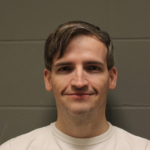
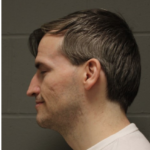
Videos
-
- Video title: 1595: Mormon Church Defends Minnesota Leader of Sexual Assault - Mormon Stories Podcast - 2022-05-17
- Video description: "What would you think if your Church Leaders were on the defendant's witness list of your child's sex abuser? In this episode, we will discuss a disturbing Mormon sex abuse case in which the Branch and Stake presidents submitted affidavits that would have aided the dismissal of new charges brought against Elders Quorum President and registered sex offender Michael Adam Davis. Join us this Tuesday evening as LDS Member Michael Benjamin walks us through the details of this alarming case in which The Church of Jesus Christ of Latter-day Saints, once again, chooses to protect the institution over sexually abused children."
Add information
If someone you know was harmed by the person listed on this page, or if you would like us to add or correct any information, please fill out the form below. We will keep you anonymous. You can also contact us directly.
"*" indicates required fields
Other Mormon sex abuse cases
-
-

- Geoffrey Ashdown (1947 – ) was a Mormon bishop and deputy school principal in Australia; convicted after alleged sexual abuse of two boys; the alleged abuse took place while Ashdown was a bishop; died in 2012
- View report »
-
-
-
- Byron Poelman (1934 – 2014) was a bishop and stake president in Utah and partner in a law firm that represented the LDS church; arrested in 1994 for soliciting a prostitute; pleaded guilty to a class B misdemeanor charge of patronizing a prostitute
- View report »
"President and sister Poelman's lives need to be private now. [...] We are a family. A family keeps things private. A family draws close together. These things are to be kept private." -
-
-
- Thomas Evans-Southall was an LDS bishop in Charlottesville, Virginia; originally from England; accused of sexual abuse; convicted in 2018 and sentenced to two consecutive terms of two years in prison
- View report »
-