
-
-
 Crime: 2000s, 2020s,
 Crime city:
UT - Salt Lake City,
Crime city:
UT - Salt Lake City,
-
- Convicted:
2005, 2024,
- Mission:
 unknown
 Alleged:
4,
Alleged:
4,  Criminal case(s): Convicted, Pleaded guilty,
  Alleged church actions: unknown,
  updated Jul 17, 2026 - request update | add info
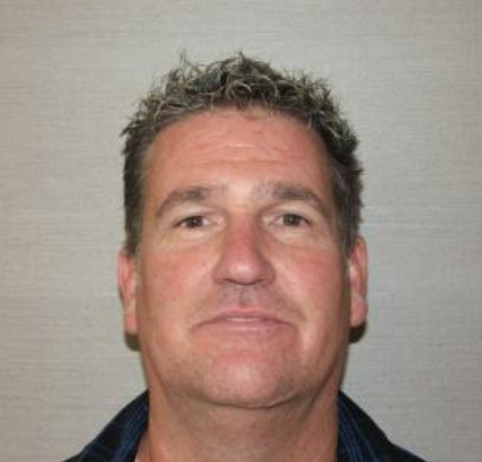
James Eric Verde was a Mormon in Salt Lake City, Utah.
In 2005, Verde was pleaded guilty of:
-SEX ABUSE CHILD – 2nd Degree Felony
Sentenced 1-15 years and received 36 months probation.
In 2024 case # 221912493, Verde pleaded guilt of (this case is linked to case #221912360) :
-UNLAWFUL SEXUAL CONDUCT W/16-17 YEAR OLD – 3rd Degree Felony
Sentenced up to 5 years in Utah State Prison (to run consecutive with sentencing for case #221912360).
In 2024 case # 221912360, at the same time as Verde pleaded guilt of (this case is linked to case #221912493). No information on probation.
-DEALING IN MATERIALS HARMFUL TO MINOR – 3rd Degree Felony (amended to) – Class A Misdemeanor
-SEXUAL BATTERY – Class A Misdemeanor
Sentenced up to 1 year in Utah State Prison (to run consecutive with sentencing for case #221912493). No information on probation
Verde is a registered sex offender.
Verde is currently incarcerated in Utah State Prison as of May 2026.
Have any info on this case? Contact FLOODLIT.
Reader-funded investigative journalism
Help us raise money
FLOODLIT needs to raise funds to cover immediate operating bills and keep our independent newsroom running.
If this case report, our source documents, or our database have been useful to you, please help us.
Donate now →FLOODLIT is 100% reader-funded. Every amount helps.
Sources
- James Eric Verde,
- APPEALED: CASE # 20080842 STATE OF UTAH vs. JAMES ERIC VERDE CASE NUMBER 051401265 State Felony,
- STATE OF UTAH vs. JAMES ERIC VERDE CASE NUMBER 221912493 State Felony This case is linked to the following cases: 221912360,
- James Eric Verde,
- STATE OF UTAH et al. vs. JAMES ERIC VERDE CASE NUMBER 221912360 State Felony This case is linked to the following cases: 221912493,
- STATE v. VERDE (2010) Court of Appeals of Utah. STATE of Utah, Plaintiff and Appellee, v. James Eric VERDE, Defendant and Appellant. No. 20080842-CA.,
- This opinion is subject to revision before final publication in the Pacific Reporter. 2012 UT 60 IN THE SUPREME COURT OF THE STATE OF UTAH ——————— STATE OF UTAH Plaintiff and Respondent, v. JAMES ERIC VERDE Defendant and Petitioner. ——————— No. 20100286 Filed September 25, 2012 ——————— On Certiorari to the Utah Court of Appeals ——————— Third District, West Jordan The Honorable Terry L. Christiansen No. 051401265,
-
1. James Eric Verde
Status : Incarcerated
PHYSICAL DESCRIPTION
DOB : 06/04/1969
Age : 56
Sex : Male
Height : 6'02''
Weight : 210
Race : White
Hair Color : Gray
Eye Color : Brown
Scars & Tattoos:
Tattoo on L_calf (WILEY COYETE
"BFF")
Scar on Arm (16 TITANIUM PLATES IMPLANTED IN ARMS)
Scar on chin (Scar on chin from a motorcycle accident)
Scar on L_wrist (Surgery)
Scar on Face ()
Scar on R_wrist (Surgery)OFFENSES
Offense : 76-5-404.1 - SEXUAL ABUSE OF A CHILD/2ND DEGREE FELONY
Date Convicted : 07/08/2008
Conviction State : Utah
Statute : 76-5-404.1
Date Release : 07/17/2013
Offense Count : 1REGISTRATION DETAILS
Collected From : Utah State Registry
ALIAS
Eric VERDE
James VERDE
John VERDE
John E VERDE
John Eric VERDE -
2. APPEALED: CASE # 20080842 STATE OF UTAH vs. JAMES ERIC VERDE CASE NUMBER 051401265 State Felony
THIRD JUDICIAL DISTRICT - SALT LAKE COUNTY DISTRICT COURT
SALT LAKE COUNTY, STATE OF UTAH
APPEALED: CASE # 20080842
STATE OF UTAH vs. JAMES ERIC VERDE
CASE NUMBER 051401265 State FelonyCHARGES
Charge 1 - 76-5-404.1 - SEX ABUSE CHILD - 2nd Degree Felony
Offense Date: May 01, 2003
Location: 2549 WERST DRY CREEK DRIVE
Plea: July 16, 2013 Guilty
Disposition: July 16, 2013 GuiltySENTENCE PRISON
Based on the defendant's conviction of SEX ABUSE CHILD a 2nd Degree Felony, the defendant is sentenced to an indeterminate term of not less than one year nor more than fifteen years in the Utah State Prison.
The prison term is suspended.
ALSO KNOWN AS (AKA) NOTE
ERIC JAMES VERDEORDER OF PROBATION
The defendant is placed on probation for 36 month(s).
Probation is to be supervised by Adult Probation & Parole.
The imposition of sentence is stayed and the defendant is placed on probation.PROBATION CONDITIONS
No other violations.
Report to AP&P within 24 hours of release from jail.
Enter into and complete any treatment recommended by AP&P.
Notify the court of any address change.
No contact directly or indirectly with the victim.
Abide by all "Group A" sex offender conditions as set by AP&P.
Defendant probation with AP&P for a period of 36 months.
THE COURT ORDERS DEFENDANT RELEASED FROM SALT LAKE COUNTY JAIL ON THIS CASE, FORTHWTIH.
Defendant not to contact victim or victim's family.
Complete psychosexual evaluation and follow through with any treatment recommended.
Abide by all Group A conditions abide by AP&P.
Contact AP&P Agent within 48 hours of release from County Jail.09-27-2013 Filed order: AP&P Progress/Violation Report (Approved and Ordered Considered an alternative event and Mr. Verde to remain on probation with a verbal warning at this time)
12-05-2014 Filed: Order (Proposed) Clarifying Sentence
02-22-2016 Filed: Prob Progress/Violation Rep; Probation to be terminated successfully on 3/17/16 -
3. STATE OF UTAH vs. JAMES ERIC VERDE CASE NUMBER 221912493 State Felony This case is linked to the following cases: 221912360
THIRD JUDICIAL DISTRICT - SALT LAKE COUNTY DISTRICT COURT
SALT LAKE COUNTY, STATE OF UTAH
STATE OF UTAH vs. JAMES ERIC VERDE
CASE NUMBER 221912493 State Felony
This case is linked to the following cases: 221912360CHARGES
Charge 1 - 76-5-401.2(3)(A) - UNLAWFUL SEXUAL CONDUCT W/16-17 YEAR OLD - 3rdDegree Felony
Offense Date: December 01, 2021
Location: Salt Lake County
Plea: January 25, 2024 Guilty
Disposition: January 25, 2024 GuiltySENTENCE PRISON
Based on the defendant's conviction of UNLAWFUL SEXUAL CONDUCT W/16-17 YEAR OLD a 3rd Degree Felony, the defendant is sentenced to an indeterminate term of not to exceed five years in the Utah State Prison.COMMITMENT is to begin immediately. The court will accept payment tendered on the date of sentencing for any amount the defendant owes arising from this order. The court hereby transfers responsibility for collection of any remaining balance of the criminal accounts receivable to the Office of State Debt Collection.
To the SALT LAKE County Sheriff: The defendant is remanded to your custody for transportation to the Utah State Prison where the defendant will be confined.SENTENCE PRISON CONCURRENT/CONSECUTIVE NOTE
Prison sentence to run consecutive to case 221912360. -
4. James Eric Verde
Name: James Eric VERDE Registration #: 10177
Aliases: Eric VERDE
James VERDE
John VERDE
John E VERDE
John Eric VERDE
Status: IncarceratedPhysical Description
• Age: 56 (DOB: 06/04/1969) • Height: 6'02''
• Sex: M • Weight: 210lbs
• Race: White • Eyes: Brown
• Hair: Gray
• Scars/Tattoos: Tattoo on L_calf (WILEY COYETE, "BFF") , Scar on Arm (16 TITANIUM PLATES IMPLANTED IN ARMS) , Scar on chin (Scar on chin from a motorcycle accident) , Scar on L_wrist (Surgery) , Scar on Face () , Scar on R_wrist (Surgery)Address
1480 N 8000 W Salt Lake City, UT 84116
View Map
Other Known Addresses
Offenses
• Description: 76-5-404.1 - SEXUAL ABUSE OF A CHILD/2ND DEGREE FELONY
• Date Convicted: 07/08/2008
• Conviction State: Utah
• Release Date: 07/17/2013
• Details:
• Counts: 1 -
5. STATE OF UTAH et al. vs. JAMES ERIC VERDE CASE NUMBER 221912360 State Felony This case is linked to the following cases: 221912493
THIRD JUDICIAL DISTRICT - SALT LAKE COUNTY DISTRICT COURT
SALT LAKE COUNTY, STATE OF UTAH
STATE OF UTAH et al. vs. JAMES ERIC VERDE
CASE NUMBER 221912360 State Felony
This case is linked to the following cases: 221912493CHARGES
Charge 1 - 76-10-1206(1) - DEALING IN MATERIALS HARMFUL TO MINOR - 3rd Degree Felony (amended to) - Class A Misdemeanor
Offense Date: February 01, 2022
Location: Salt Lake County
Plea: January 25, 2024 Guilty
Disposition: January 25, 2024 Guilty
Charge Subject To Minimum Mandatory SentenceCharge 2 - 76-9-702.1 - SEXUAL BATTERY - Class A Misdemeanor
Offense Date: February 01, 2022
Location: Salt Lake County
Plea: January 25, 2024 Guilty
Disposition: January 25, 2024 Guilty
Case Subject To Minimum Mandatory SentenceSENTENCE PRISON
Based on the defendant's conviction of DEALING IN MATERIALS HARMFUL TO MINOR a Class A Misdemeanor, the defendant is sentenced to an indeterminate term not to exceed one year in the Utah State Prison.Based on the defendant's conviction of SEXUAL BATTERY a Class A Misdemeanor, the defendant is sentenced to an indeterminate term not to exceed one year in the Utah State Prison.
COMMITMENT is to begin immediately. The court will accept payment tendered on the date of sentencing for any amount the defendant owes arising from this order. The court hereby transfers responsibility for collection of any remaining balance of the criminal accounts receivable to the Office of State Debt Collection.
To the SALT LAKE County Sheriff: The defendant is remanded to your custody for transportation to the Utah State Prison where the defendant will be confined.
SENTENCE PRISON CONCURRENT/CONSECUTIVE NOTEThe court orders the prison sentence to run consecutive as to each charge and consecutive to case 221912493.
SENTENCE RECOMMENDATION NOTE
Jail sentence to be served at the Utah State Prison. -
6. STATE v. VERDE (2010) Court of Appeals of Utah. STATE of Utah, Plaintiff and Appellee, v. James Eric VERDE, Defendant and Appellant. No. 20080842-CA.
STATE v. VERDE (2010)
Court of Appeals of Utah.STATE of Utah, Plaintiff and Appellee, v. James Eric VERDE, Defendant and Appellant.
No. 20080842-CA.
Decided: February 11, 2010
Before Judges McHUGH, BENCH, and GREENWOOD.1
Linda M. Jones, Salt Lake City, for Appellant. Mark L. Shurtleff, Atty. Gen., and Marian Decker, Asst. Atty. Gen., Salt Lake City, for Appellee.OPINION
¶ 1 Defendant James Eric Verde appeals from a jury conviction for sexual abuse of a child, a second degree felony, see Utah Code Ann. § 76-5-404.1(2)-(3) (2008), and challenges the trial court's decision to admit evidence of other crimes, wrongs, or bad acts.2 Defendant argues that this bad acts evidence was not admissible pursuant to rule 404(b) of the Utah Rules of Evidence because it was not presented for a proper noncharacter purpose, it was not relevant, and it was more prejudicial than probative. Because specific intent was an element of the crime at issue in this case, we conclude that the trial court properly admitted the bad acts evidence for the proper noncharacter purpose of showing intent and that the evidence was both relevant and probative. We therefore affirm.
BACKGROUND
¶ 2 In 2005, Defendant was charged with sexually abusing N.H., a thirteen-year-old boy. The charges stemmed from an incident that occurred in the summer of 2003, when Defendant allegedly put his hand down N.H.'s pants and fondled N.H.'s genitalia. Defendant pleaded not guilty to the charge.
¶ 3 Prior to trial, the State filed a motion in limine, requesting that the trial court admit testimony from three other males-M.A., J.T.S., and B.P.-who claimed that Defendant had also sexually abused them. In its supporting memorandum, the State proffered the anticipated testimony of N.H. and the three other males. The State argued that the admission of this testimony was proper under rule 404(b) of the Utah Rules of Evidence for the noncharacter purpose of demonstrating Defendant's “knowledge, intent, plan, modus operandi, and/or absence of mistake or accident.” At oral argument, the State emphasized the admissibility of the evidence for the noncharacter purpose of proving modus operandi or specific intent.
¶ 4 After taking the State's motion under advisement, the trial court granted the motion with respect to the testimony of M.A. and J.T.S. but denied the motion as to the testimony of B.P. In a detailed memorandum decision, the trial court determined that the testimony was admissible for the proper noncharacter purpose of showing Defendant's intent “because specific intent is an element of the offense at issue.” The trial court also briefly noted that the testimony would be admissible, in the alternative, for showing “a pattern of behavior ․ [in which] Defendant prepared and planned to meet minor males with a motive of enticing them into sexual relationships.” The trial court did not admit B.P.'s testimony, however, because of concerns regarding the prejudicial effect of cumulative evidence and because it found the six-year time period between B.P.'s alleged abuse and N.H.'s alleged abuse made B.P.'s testimony less probative.
¶ 5 The trial court later denied the State's subsequent motion to admit testimony of an additional male, D.J.W., who claimed to have been sexually abused by Defendant in 2002. Although the trial court found the evidence to be relevant, it determined that the cumulative nature of the evidence would make it more prejudicial than probative.
¶ 6 At trial, N.H. testified that he met Defendant in the fall of 2001 after Defendant moved into a home across the street from N.H.'s home. On the same day they met, Defendant took N.H. to a local carnival. N.H. testified that he went to Defendant's house a few times each month to play basketball or video games. On a few occasions, N.H. was allowed to ride Defendant's 4-wheelers. Defendant would also pay N.H. to do occasional yard work. N.H. stated that during one of his visits, Defendant tried to show him a pornographic magazine.
¶ 7 In the summer of 2003, N.H. went to Defendant's home either to play video games or to watch a movie. N.H. sat on Defendant's couch, and Defendant sat next to him. N.H. testified that Defendant put his hand down N.H.'s pants and touched his penis and testicles. N.H. told him not to do that. Defendant pulled his hand out of N.H.'s pants, said something to the effect of “don't be cool,” and moved to a chair. N.H. finished what he was doing and left Defendant's home. A year and a half later, N.H. told his mother what had happened.
¶ 8 J.T.S. next testified about his interactions with Defendant. He first met Defendant in approximately 2000 when he was fifteen years old. J.T.S. was working as a grocery store bagger, and Defendant was a customer at the store. J.T.S. testified that Defendant would initiate conversations with him when Defendant went through the check-out line. Defendant invited him to play basketball and on one occasion gave him a pair of sunglasses.
¶ 9 J.T.S. quit work at the grocery store and did not see Defendant again until the spring of 2004 when J.T.S. was eighteen years old. Defendant saw J.T.S. at a store and noticed that his car was for sale. Defendant expressed interest in purchasing it and insisted that J.T.S. come to Defendant's house so Defendant could test drive the vehicle. When J.T.S. arrived at Defendant's home, Defendant invited him in, offered him a drink of soda, and showed him around the house. Defendant offered to let J.T.S. live there and briefly talked about the two of them pursuing some sort of out-of-state business opportunity together. J.T.S. testified that Defendant began talking about trust in friendship, specifically that guy friends could touch each other in sexual places and that it did not mean they were gay. As they sat on Defendant's couch, Defendant told J.T.S. that he wanted them to be that type of friends, and he began touching J.T.S.'s knee and thigh. Defendant touched J.T.S.'s penis over and then under J.T.S.'s clothing. J.T.S. attempted to stop Defendant, but Defendant used force and J.T.S. became scared.3 On returning to his own home, J.T.S. told his parents and reported the incident to the police.
¶ 10 M.A. then presented his testimony. He met Defendant at a gym in 2002 when M.A. was eighteen years old. M.A. testified that Defendant approached him, invited him to hang out, and indicated that he had friends M.A.'s age. Defendant obtained M.A.'s phone number and later called him. M.A. described Defendant's tone in the phone calls as aggressive. Defendant, M.A., and a couple other guys met once for lunch and, on a separate occasion, cruised State Street.
¶ 11 In approximately July 2002, Defendant invited M.A. to his house. Upon M.A.'s arrival, Defendant gave M.A. a tour of the house and offered to let M.A. stay there. Defendant told M.A. that he was looking for a little brother with whom he could have a business partnership, have fun, and enjoy life together. M.A. testified that Defendant spoke casually about sexual things, such as describing a penis as just “a piece of skin.” Defendant told M.A. stories about Defendant and Defendant's friend “going out and ․ exposing themselves in public places” and about an incident “in New York ․ [in which] they were both receiving ․ oral sexual pleasure and they were high fiving each other.” Defendant commented that he and his friend were open with their penises and it was not a big deal. Defendant then asked M.A. if he trusted him and proceeded to grab M.A.'s leg, moving his hand close enough to M.A.'s groin to arouse M.A. M.A. testified that at that point, he knew Defendant's intentions and terminated their encounter. M.A. later made a report to the police.4
¶ 12 Defendant also testified at trial. He denied touching N.H., M.A., or J.T.S. in a sexual manner. Although he did not deny being alone with N.H., M.A., or J.T.S. on the dates of the three alleged incidents, he gave a different version of the interactions. Defendant claimed M.A. and J.T.S. initiated the interactions with him, essentially seeking him out. Defendant also suggested that N.H. may have been upset with him for not paying him for catching a stray cat, that N.H. himself often talked about sexual things, and that N.H. exposed himself to Defendant on the day of the alleged incident.
¶ 13 The jury found Defendant guilty of sexually abusing N.H. After the trial court denied Defendant's motion for a new trial, Defendant filed this appeal.
ISSUE AND STANDARD OF REVIEW
¶ 14 Defendant claims that the trial court erred by admitting the testimony of M.A. and J.T.S. and that the error affected the outcome of the proceedings against him. “ ‘[W]e review a trial court's decision to admit evidence under rule 404(b) of the Utah Rules of Evidence under an abuse of discretion standard.’ ” State v. Marchet, 2009 UT App 262, ¶ 19, 219 P.3d 75 (alteration in original) (quoting State v. Nelson-Waggoner, 2000 UT 59, ¶ 16, 6 P.3d 1120). “In doing so, ‘[w]e review the record to determine whether the admission of other bad acts evidence was scrupulously examined by the trial judge in the proper exercise of that discretion.’ ” Id. (alteration in original) (quoting Nelson-Waggoner, 2000 UT 59, ¶ 16, 6 P.3d 1120).
ANALYSIS
¶ 15 Defendant asserts that the bad acts evidence presented at trial should not have been admitted because it served no purpose other than to show a bad character and propensity to commit crime. Rule 404(b) of the Utah Rules of Evidence states, “Evidence of other crimes, wrongs or acts is not admissible to prove the character of a person in order to show action in conformity therewith.” Utah R. Evid. 404(b). Bad acts evidence may be admitted, however, for other purposes, “such as proof of motive, opportunity, intent, preparation, plan, knowledge, identity, or absence of mistake or accident.” Id.
¶ 16 “The Utah Supreme Court has established a three-part test for assessing whether evidence of other crimes, wrongs, or acts is admissible under rule 404(b).” State v. Balfour, 2008 UT App 410, ¶ 22, 198 P.3d 471. First, “the trial court must ․ determine whether the bad acts evidence is being offered for a proper, noncharacter purpose, such as one of those specifically listed in rule 404(b).” Nelson-Waggoner, 2000 UT 59, ¶ 18, 6 P.3d 1120. “Second, the court must determine whether the bad acts evidence meets the requirements of rule 402 [of the Utah Rules of Evidence], which permits admission of only relevant evidence.” Id. ¶ 19. “Finally, the trial court must determine whether the bad acts evidence meets the [probative value] requirements of rule 403 of the Utah Rules of Evidence.” Id. ¶ 20.
¶ 17 Defendant claims that the trial court erred in determining that the bad acts evidence would be admissible for purpose of demonstrating intent. Specifically, Defendant asserts that his intent was never at issue because his defense was that he never touched N.H., not that he touched N.H. but the touching was an accident or that his intentions were noncriminal.
¶ 18 While Defendant may not have directly contested his mental state, intent was clearly at issue. Defendant pleaded not guilty to a specific intent crime, sexual abuse of a child, which required the State to prove beyond a reasonable doubt not only that he “touch[ed] the ․ genitalia of a child” but also that he did so “with intent to cause substantial emotional or bodily pain to any person or with the intent to arouse or gratify the sexual desire of any person.” Utah Code Ann. § 76-5-404.1(2) (2008). “While admissibility [of evidence under rule 404(b) ] depends, in part, upon the defenses raised, the general assumption is that ‘[b]y pleading not guilty, defendant placed all elements of the crime at issue, including ․ intent.’ ” Balfour, 2008 UT App 410, ¶ 23, 198 P.3d 471 (second alteration and omission in original) (quoting State v. Widdison, 2000 UT App 185, ¶ 33, 4 P.3d 100); see also State v. Bradley, 2002 UT App 348, ¶ 23, 57 P.3d 1139 (Davis, J., lead opinion) (“[B]ecause specific intent is an element of the offense, [the defendant]'s intent was at issue during trial.”); State v. Teuscher, 883 P.2d 922, 927 (Utah Ct.App.1994) (“In pleading not guilty, defendant put every element of the charge against her in issue.”).5 Thus, “[w]here specific intent is an element of the crime, the prosecution may introduce evidence of other offenses to establish the element of intent even if the defendant has not” contested his or her mental state. Teuscher, 883 P.2d at 927. We therefore agree with the trial court that the bad acts evidence is admissible for the noncharacter purpose of showing Defendant's intent.
¶ 19 Defendant nonetheless argues that permitting bad acts evidence for the noncharacter purpose of proving specific intent may render such evidence admissible in more than the “rare” or “narrow circumstances” suggested by the Utah Supreme Court. See State v. Reed, 2000 UT 68, ¶ 28 n. 3, 8 P.3d 1025. At some point, the supreme court will undoubtedly weigh in on whether limiting the rule applied here to “specific intent crimes” is narrow enough. This court, however, is bound to follow our prior decisions. See State v. Menzies, 889 P.2d 393, 399 n. 3 (Utah 1994) (“Horizontal stare decisis ․ requires that a court of appeals follow its own prior decisions. This doctrine applies with equal force to courts comprised of multiple panels, requiring each panel to observe the prior decisions of another.”).6 Furthermore, the bad acts evidence must also pass the requirements of rules 402 and 403. The relevancy and probative value requirements of rules 402 and 403 operate to narrow the instances where bad acts evidence will be admissible even in cases involving specific intent crimes.
¶ 20 In this regard, Defendant contends that even if the bad acts evidence had a proper purpose, it was not relevant. “ ‘Relevant evidence’ means evidence having any tendency to make the existence of any fact that is of consequence to the determination of the action more probable or less probable than it would be without the evidence.” Utah R. Evid. 401. In other words, “[e]vidence is relevant if it ‘tends to prove some fact that is material to the crime charged[,] other than the defendant's propensity to commit crime.’ ” State v. Balfour, 2008 UT App 410, ¶ 24, 198 P.3d 471 (second alteration in original) (quoting State v. Decorso, 1999 UT 57, ¶ 22, 993 P.2d 837). Because M.A.'s and J.T.S.'s testimony tended to make the existence of Defendant's intent to commit sexual abuse against N.H. “more probable or less probable than it would be without the evidence,” Utah R. Evid. 401, the trial court did not abuse its discretion in finding it to be relevant to the issue of intent.
¶ 21 Finally, Defendant claims that the probative value of the bad acts evidence was minimal and substantially outweighed by its prejudicial effect. Rule 403 provides that “relevant[ ] evidence may be excluded if its probative value is substantially outweighed by the danger of unfair prejudice, confusion of the issues, or misleading the jury, or by considerations of undue delay, waste of time, or needless presentation of cumulative evidence.” Utah R. Evid. 403. When undertaking this balancing test, we are guided by the factors enumerated in State v. Shickles, 760 P.2d 291 (Utah 1988):
the strength of the evidence as to the commission of the other crime, the similarities between the crimes, the interval of time that has elapsed between the crimes, the need for the evidence, the efficacy of alternative proof, and the degree to which the evidence probably will rouse the jury to overmastering hostility.
Id. at 295-96 (internal quotation marks omitted).
¶ 22 Here, the evidence regarding Defendant's acts against M.A. and J.T.S. was relatively strong given that both M.A. and J.T.S. testified in person. See State v. Marchet, 2009 UT App 262, ¶ 45, 219 P.3d 75 (indicating that bad acts evidence was strong where other alleged victims of the defendant “testified in person at trial and were available for cross-examination”). The three incidents involved a similar pattern of befriending young males,7 inviting them to his home, engaging in recreational activities with them, making statements to invoke trust, suggesting that sexual touching is a normal part of male friendships, and actually touching their genitalia. The time period between the other assaults and the abuse against N.H. was approximately one year, thus making “the evidence ․ sufficiently proximate to warrant its admission.” See id. (noting that the other alleged sexual assaults occurred within one or two years of each other); see also Decorso, 1999 UT 57, ¶ 32, 993 P.2d 837 (indicating that a seven-month interval between alleged crimes was “relatively short”). There was a need for the evidence as it would assist the jury in deciding the issue of specific intent and in assessing the credibility of N.H. and Defendant. See State v. Nelson-Waggoner, 2000 UT 59, ¶ 30, 6 P.3d 1120 (“The need for the bad acts evidence was great; without it, the trial resolved into a contest of credibility between [the] defendant and [the alleged victim].”). In light of the fact that there was no physical evidence of the offense against N.H. or other eyewitnesses, there was limited alternative proof of Defendant's intent. See State v. Bradley, 2002 UT App 348, ¶ 35, 57 P.3d 1139 (“[T]here was no evidence in the record of any alternative proof showing that [the defendant] committed offenses against [the two children] and had the intent to do so. There was no physical evidence of the offenses and there were no eyewitnesses to the offenses besides the child victims themselves.”). Furthermore, given that the acts against M.A. and J.T.S. were relatively similar to the acts against N.H., it was unlikely that the evidence would rouse the jury to overmastering hostility against Defendant. See generally Reed, 2000 UT 68, ¶ 31, 8 P.3d 1025 (“Such evidence of multiple acts of similar or identical abuse is unlikely to prejudice a jury.”).
¶ 23 Finally, we observe that the court conducted a scrupulous examination of M.A.'s and J.T.S.'s testimony. The trial court carefully compared the testimony of each alleged victim, and it explicitly weighed the probative value of the evidence under the Shickles factors. The trial court did not adopt the State's position in its entirety. Instead, the trial court excluded the testimony of B.P. because the remoteness in time diminished its probative value. The trial court also excluded the testimony of D.J.W. due to concerns about the prejudicial effect of cumulative evidence. We conclude that the trial court did not exceed its discretion in admitting the testimony of M.A. and J.T.S. at trial.
CONCLUSION
¶ 24 The trial court did not abuse its discretion in admitting testimony from M.A. and J.T.S. because the bad acts evidence satisfied the requirements of rule 404(b) and the record indicates that the trial court scrupulously examined the evidence. Because Defendant pleaded not guilty to the specific intent crime of sexual abuse of a child, his intent was at issue and the bad acts evidence was admissible to establish that intent. The particular bad acts evidence introduced was relevant and its probative value outweighed its prejudicial effect.
¶ 25 Accordingly, we affirm.
¶ 27 Although I agree that the result reached by the majority is consistent with prior authority of this court, I write separately to express my concern about the need for a disciplined approach to the admission of bad acts evidence.
¶ 28 “Evidence of other crimes, wrongs or acts is not admissible to prove the character of a person in order to show action in conformity therewith.” Utah R. Evid. 404(b). As the majority correctly notes, bad acts evidence may be properly admitted where (1) it is offered for a proper noncharacter purpose, (2) it is relevant, and (3) the probative value of the evidence outweighs any unfair prejudice to the defendant (Three-Part Test). See State v. Nelson-Waggoner, 2000 UT 59, ¶ 18-20, 6 P.3d 1120.
¶ 29 By its terms, rule 404(b) permits bad acts evidence to be admitted for purposes other than to prove the defendant's propensity to commit the criminal act charged. See Utah R. Evid. 404(b). Those alternative purposes include, but are not limited to, “motive, opportunity, intent, preparation, plan, knowledge, identity, or absence of mistake or accident.” Id. Because the defendant pleaded not guilty to sexual abuse of a child, which is a specific intent crime, see Utah Code Ann. § 76-5-404.1(2) (2008), the majority concludes that intent was placed at issue and the bad acts evidence was properly admitted to prove that the defendant had the requisite mental state (Not Guilty Rule), see supra ¶ 24. I write separately because I do not believe that this Not Guilty Rule should be a substitute for a careful application of the Three-Part Test adopted by our supreme court.
¶ 30 In understanding the relationship between the Not Guilty Rule and the Three-Part Test, it is helpful to examine our prior authority. This court first considered a plea of not guilty to a specific intent crime as a basis for admitting bad acts evidence to prove intent in State v. Teuscher, 883 P.2d 922, 926-27 (Utah Ct.App.1994). There, the operator of a home day-care facility was charged with second degree murder after a child in her care died. See id. at 924-25. The trial court allowed the State to introduce evidence of other incidents of abuse to show identity of the perpetrator, intent, and the absence of mistake or accident. See id. at 925. After the jury reached a verdict of guilty on the lesser-included offense of manslaughter, the defendant appealed, claiming that the trial court erred in admitting the bad acts evidence. See id. at 926. In affirming the trial court, we explained our reasoning as follows:
Defendant argues that intent was not an element of the crime for which she was convicted-manslaughter. Defendant was charged, however, with second degree murder, a specific intent crime. “Where specific intent is an element of the crime, the prosecution may introduce evidence of other offenses to establish the element of intent even if the defendant has not placed intent into question.” [People v.] Brown, 199 Ill.App.3d 860, 145 Ill.Dec. 841, 557 N.E.2d [611,] 621 [Ill.App.Ct.1990] (citing United States v. Brantley, 786 F.2d 1322 (7th Cir.1986)). In pleading not guilty, defendant put every element of the charge against her in issue.
Id. at 926-27 (emphasis added) (additional citations omitted). Although we cited favorably to the Not Guilty Rule, we also held that the specific defenses asserted by the defendant in Teuscher had placed intent, identity, and lack of accident at issue. See id. at 928 (noting that the defendant argued that the injuries to the child victim could have been caused by either of her teenaged daughters or when she accidently dropped the child in a playpen). Thus, even without application of the Not Guilty Rule, there were noncharacter purposes for admitting the evidence in Teuscher.
¶ 31 In reaching our decision in Teuscher, we relied upon People v. Brown, [199 Ill.App.3d 860, 145 Ill.Dec. 841] 557 N.E.2d 611, 621 (Ill.App.Ct.1990), an Illinois Court of Appeals decision that, in turn, followed the Seventh Circuit's decision in United States v. Brantley, 786 F.2d 1322, 1329 (7th Cir.1986). See Teuscher, 883 P.2d at 926-27. The year after our decision in Teuscher, the Federal Rules of Evidence were amended to permit the introduction of evidence of a defendant's prior sexual assault or child molestation offense for the purpose of proving any matter to which it is relevant. See Fed.R.Evid. 413 (sexual assault); id. R. 414 (child molestation); id. R. 415 (civil cases involving child molestation or sexual assault).1 Thus, under the current federal rules, evidence involving sexual misconduct, like that offered in this case, “is admissible” 2 to show the defendant's propensity to assault or molest the alleged victim of the current charge. Id. R. 413-415.
¶ 32 Utah has not adopted rules 413, 414, or 415. See Utah R. Evid. 413-415 (indicating that these rule numbers are reserved). Instead, Utah rule 404 was amended in 2008 to add 404(c), which only provides for the introduction of propensity evidence in cases involving the molestation of a child under the age of fourteen. See id. R. 404(c). Consequently, the framework for the admission of bad acts evidence in Utah in cases of sexual misconduct involving a person over fourteen years of age is governed by rule 404(b). Because N.H. was sixteen at the time of the offense, rule 404(c) is not applicable, and the introduction of the bad acts evidence must be evaluated under the more involved analysis required by rule 404(b).
¶ 33 While the federal approach has greatly simplified the analysis in federal sexual misconduct cases, our jurisprudence has been more complicated. One commentator described the Utah approach as follows:
If the prior bad acts involve sexual misconduct, or child abuse, or a combination of both, [the Utah] courts generally find a theory of admissibility, even if no specific theory of admissibility makes sense. The admission of prior bad acts of sexual misconduct offers prime examples of the “smorgasbord approach,” where courts simply provide a long list of permissible uses without attempting to connect the uses with the facts of the case.
R. Collin Mangrum & Dee Benson, Mangrum & Benson on Utah Evidence, 1 Utah Practice 172 (2008-2009 ed.) (emphasis added).
¶ 34 I agree that the Not Guilty Rule, in its broadest sense, does not require the trial court to connect the uses for the evidence with the facts of the case. Nevertheless, my reading of the prior decisions of this court and the supreme court convinces me that in the fifteen years since our decision in Teuscher we have rarely relied solely upon the Not Guilty Rule. Rather, we have also considered whether the specific noncharacter purposes for which the bad acts evidence is offered are responsive to the defenses raised. See State v. Holbert, 2002 UT App 426, ¶ 34-36, 61 P.3d 291 (affirming trial court's admission of bad acts evidence relying on both the Not Guilty Rule and the fact that the evidence was offered for the noncharacter purpose of proving motive); Salt Lake City v. Alires, 2000 UT App 244, ¶ 11, 9 P.3d 769 (affirming trial court's admission of bad acts evidence, noting that the defendant's identity was at issue both because he denied that he was the person who committed the criminal act and because he pleaded not guilty); State v. Widdison, 2000 UT App 185, ¶ 33, 4 P.3d 100 (affirming trial court's admission of bad acts evidence relying on both the Not Guilty Rule and the fact that the defendant had put absence of mistake or accident at issue), aff'd, 2001 UT 60, 28 P.3d 1278. But see Mangrum & Benson at 172-73 (describing the Utah decisions as admitting “prior sexual misconduct evidence with little more justification than a string listing of such factors as intent, motive, plan, and method of operation”).3 There are two notable exceptions in our prior decisions.
¶ 35 In the first case, State v. Balfour, 2008 UT App 410, 198 P.3d 471, we granted interlocutory review of the trial court's denial of the defendant's motion to sever each of the four counts of forcible sexual abuse, involving four different women. See id. ¶ 1. As part of our analysis, we were required to consider whether the defendant would be prejudiced by trying the counts together. See id. ¶ 18; see also Utah Code Ann. § 77-8a-1(4)(a) (2008) (“If the court finds a defendant or the prosecution is prejudiced by a joinder ․ for trial together, the court shall order an election of separate trials of separate counts ․ or provide other relief as justice requires.”). To make that determination, we examined whether the evidence related to the other counts would be admissible under rule 404(b) as bad acts evidence even if the counts were tried separately. See Balfour, 2008 UT App 410, ¶ 21, 198 P.3d 471 (citing State v. Lee, 831 P.2d 114, 118 (Utah Ct.App.1992)). Because the challenge to the trial court's refusal to sever the counts was before us on interlocutory review, the record did not contain the actual defenses asserted by the defendant at his future trial. Therefore, in holding that three of the four counts could be tried together, we relied upon the Not Guilty Rule. See id. ¶ 23. We also noted, however, that the State anticipated that the evidence would be relevant to the noncharacter purposes of demonstrating the defendant's intent, absence of accident or mistake, and the alleged victims' lack of consent. See id. Further, there was no indication that any of these issues were uncontested. See id.
¶ 36 The second decision that warrants consideration in understanding the evolution of our adherence to the Not Guilty Rule is State v. Bradley, 2002 UT App 348, 57 P.3d 1139. Bradley was charged with sexual abuse of his two step-children and a biological son. See id. ¶ 1-8. The counts involving the step-children were severed from the counts pertaining to the biological child. See id. ¶ 8. However, the biological son was permitted to testify during the trial of the charges stemming from Bradley's alleged abuse of the step-children. See id. ¶ 5. Bradley appealed his conviction, claiming that the trial court committed prejudicial error by admitting the bad acts evidence from the biological son. See id. ¶ 12. In the lead opinion from this court, Judge Davis affirmed the trial court's admission of the biological son's testimony, stating, “if specific intent is an element of the offense, prior bad acts may be admissible to establish the element of intent.” Id. ¶ 21. Judge Davis refused to consider Bradley's claim that the victims had fabricated the allegations of sexual abuse as a proper purpose for admitting the evidence because he was “concerned that allowing prior bad acts testimony to rebut a fabrication defense by, in effect, bolstering a victim's credibility would eviscerate[ ] the language and spirit of rule 404(b) in that the doctrine could be invoked in nearly every criminal case.” Id. ¶ 20 n. 7 (alteration in original) (internal quotation marks omitted). Instead, Judge Davis concluded that the bad acts evidence was properly admitted under the Not Guilty Rule. See id. ¶ 22.
¶ 37 Judge Thorne and Judge Orme each concurred separately, agreeing that the evidence was admissible but expressing concern about admitting it pursuant to the Not Guilty Rule when Bradley had not put intent at issue, instead arguing that the incidents alleged by the victims did not happen. See id. ¶ 70, 73 (Thorne, J., concurring specially); id. ¶ 80-81 (Orme, J., concurring). Although Judges Thorne and Orme concluded that the evidence was properly admitted, that conclusion was based on the use of the bad acts evidence to rebut Bradley's claim that the victims had fabricated the allegations of sexual abuse. See id. While the panel in Bradley disagreed about whether the bad acts evidence was admissible to prove intent under the Not Guilty Rule or to rebut Bradley's fabrication defense, each judge was motivated by the concern that rule 404(b) retain some practical utility. See id. ¶ 20 n. 7 (majority opinion); id. ¶ 70, 73 (Thorne, J., concurring); id. ¶ 80-81 (Orme, J., concurring specially).
¶ 38 I agree with the Bradley panel that a request to present bad acts evidence should be carefully considered to avoid further erosion of an already porous rule, see generally State v. Reed, 2000 UT 68, ¶ 28 n. 3, 8 P.3d 1025 (“[W]e note that the circumstances that would allow [evidence of sex crimes against persons other than the complaining witness] to be admitted are rare and require the highest scrutiny of the trial judge.”). I also believe that application of the Not Guilty Rule in the absence of a meaningful evaluation of the relevance of that particular evidence to the matters actually at issue in the case is contrary to that goal. Indeed, the analysis employed by our supreme court supports the conclusion that there must be a link between the matters at issue and the bad acts evidence, even when the defendant contests guilt.
¶ 39 In State v. Widdison, 2001 UT 60, ¶ 45, 28 P.3d 1278, the supreme court affirmed our conclusion that the trial court did not err in admitting bad acts evidence, noting that the defendant had entered a not guilty plea. The Widdison court's reasoning, however, includes an analysis of the relevance of the bad acts evidence to the actual defenses raised:
As explained by the trial court, by pleading not guilty, defendant maintained she was not responsible for Breanna's [ (the child abuse victim) ] death or her injuries. Defendant further claimed that Breanna's injuries were caused by accident when Breanna was caught under her crib mattress or when she lay on toys. Defendant also claimed that Breanna had been in someone else's care when her shoulder was broken and that pneumonia was the sole cause of Breanna's death. Because of defendant's claims, the identity of Breanna's abuser and killer was at issue. Also at issue was the question of whether Breanna's injuries were intentionally or accidentally inflicted. The evidence to which defendant objects was relevant because it was introduced to show that Breanna's injuries were not the result of accident, and that defendant was the one who inflicted Breanna's injuries.
Id. (emphasis added). Notwithstanding the not guilty plea, the supreme court tied the bad acts evidence to the defenses actually at issue before concluding that the evidence was offered for a proper, noncharacter purpose. See id.
¶ 40 Indeed, even the Seventh Circuit, the jurisdiction this court originally followed in Teuscher, seems to have softened its application of the Not Guilty Rule. In United States v. Jones, 455 F.3d 800 (7th Cir.2006), the defendant appealed his conviction of possession with intent to distribute cocaine on the ground that the trial court erred in admitting evidence of a prior drug conviction. See id. at 804, 806. The government offered the evidence and the trial court admitted it “because possession with intent to distribute is a specific intent crime.” Id. at 807. On appeal, the Jones court noted that the mechanical reliance on the Not Guilty Rule by the trial court, although involving a recitation of “the governing principles from our case law,” did not “reflect the sort of critical evaluation of the issue [of whether the evidence was offered for a noncharacter purpose] that we believe ought to be undertaken in determining whether, in an exercise of discretion, such [bad acts] evidence ought to be admitted on the issue of intent.” Id. at 807-08. The Seventh Circuit conceded, however, that “[t]his lapse well may be attributable, in part at least, to our own treatment of such matters on occasion; our cases have not always reflected a critical application of the principles reflected in the case law to the facts of the individual case.” Id. at 808.
¶ 41 Reviewing that prior case law, the Jones court indicated that the admission of prior conviction evidence is justifiable in drug prosecution cases where the defendant admits possession but denies intent to distribute, and where the defendant claims to have been a “clueless bystander” to a drug trafficking scheme. Id. (internal quotation marks omitted). Nevertheless, the federal court of appeals cautioned, “[D]espite the general utility of this evidence to establish intent, it is incumbent on the Government to affirmatively show why a particular prior conviction tends to show ․ volition to commit the new crime.” Id. (alteration in original) (internal quotation marks omitted). The Jones court then examined the record and concluded that the arguments made by defense counsel-that while the defendant controlled a small amount of cocaine, the larger portion of the drug could have been the property of one of the other persons at the scene-fairly placed the defendant's intent at issue. See id. at 808-09. In affirming the decision of the trial court to admit the evidence, the Seventh Circuit criticized the application of the Not Guilty Rule in the absence of a critical evaluation by the trial court, see id. at 807, and the Government's affirmative showing of why the prior conviction is probative of intent in the trial of the new crime, see id. at 808. See generally United States v. Jemal, 26 F.3d 1267, 1272-74 (3d Cir.1994) (discussing different approaches to the Not Guilty Rule applied by the federal circuits). I believe that at least this much is also required in Utah.
¶ 42 Even when the defendant pleads not guilty to a specific intent crime, I would require the trial court to consider the extent to which the noncharacter purpose asserted for admission of the evidence is actually related to a contested issue in the trial of the current crime. See generally State v. Killpack, 2008 UT 49, ¶ 45, 191 P.3d 17 (“[E]vidence of a defendant's ․ bad acts may be admitted if such evidence has a special relevance to a controverted issue and is introduced for a purpose other than to show the defendant's predisposition to criminality.” (internal quotation marks omitted)). In a case like this, where the defendant asserts that the alleged conduct did not occur at all, the connection between intent and the bad acts evidence is more attenuated. Rather than arguing that he accidentally touched N.H., or that he did so without the requisite “intent to cause substantial emotional or bodily pain to any person or ․ arouse or gratify the sexual desire of any person,” Utah Code Ann. § 76-5-404.1(2) (2008), the defendant argued that N.H. fabricated the allegations due to his disappointment over not being paid for finding a stray cat.4 In my view, that difference should be taken into account when assessing whether the evidence should be admitted under rule 404(b). Therefore, I would not allow invocation of the Not Guilty Rule to excuse a careful comparison of the specific bad acts evidence offered with the actual defense asserted.
¶ 43 Here, the defense asserted by the defendant-that N.H. fabricated his story about sexual contact-must also be considered in determining whether the testimony from M.A. and J.T.S. was offered for a noncharacter purpose. While my review of the decisions from the Utah Supreme Court has not revealed a case that has expressly recognized rebuttal of a fabrication defense as a proper 404(b) purpose, the majority correctly notes that Bradley did so hold. See State v. Bradley, 2002 UT App 348, ¶ 70, 73, 57 P.3d 1139 (Thorne, J., concurring); id. ¶ 80-81 (Orme, J., concurring specially). Consequently, I would follow the conclusion of the Bradley majority on this issue that a proper purpose for bad acts evidence is to rebut a defense of fabrication. See State v. Thurman, 846 P.2d 1256, 1269 (Utah 1993) (recognizing that, in most instances, subsequent panels of the court of appeals should follow the decisions of a prior panel). However, but for our prior decisions, I would reverse and remand for a new trial so that the trial court could consider each prong of the Three-Part Test in the context of that purpose, as well as any relevance to the element of specific intent. Thus, I would require the trial court to “connect the uses with the facts of the case.” R. Collin Mangrum & Dee Benson, Mangrum & Benson on Utah Evidence, 1 Utah Practice 172 (2008-2009 ed.).
¶ 44 In conclusion, I believe that the fact a defendant pleads not guilty should not excuse the State from identifying the precise link between the bad acts evidence and a contested issue in the trial of the current crime. In my view, if there is a proper noncharacter purpose, the trial court should then critically consider whether, in fact, the bad acts evidence is relevant to that contested issue. See Utah R. Evid. 402. Last, the trial court should evaluate whether its probative value in relation to the specific defense asserted is outweighed by unfair prejudice to the defendant. See id. R. 403. Without such an intellectually disciplined approach, rule 404(b) will not serve as an effective check on the introduction of bad acts evidence. See generally State v. Reed, 2000 UT 68, ¶ 28 n. 3, 8 P.3d 1025 (noting that the admission of evidence of sex crimes against persons other than the alleged victim is rare). Although that was not done here, I acknowledge that it is not required under the existing authority from this court and, therefore, I must concur with the majority.
FOOTNOTES
2. Due to the lengthy history of this case, several judges presided over the various proceedings. Judge Terry L. Christiansen presided over the pretrial hearings and made the rulings on both of the State's motions in limine. Judge Stephen L. Henriod presided over the trial, and Judge Mark S. Kouris presided over the post-trial matters, including Defendant's motion for a new trial.
3. On cross-examination, defense counsel elicited additional testimony from J.T.S., which included the fact that Defendant performed oral sex on J.T.S., penetrated J.T.S.'s anus with his fingers, and showed him a pornographic magazine.
4. In his 2002 police report, M.A. stated that Defendant had actually touched his penis. At trial, however, M.A. stated he could not precisely recall that part of his encounter with Defendant because of his desire to forget the encounter as well as the passage of time.
5. We recognize that individual members of this court have expressed the view that a not guilty plea, alone, should not place a defendant's intent at issue and that a defendant must explicitly challenge the specific intent element of the crime in order for bad acts evidence to be admissible for the purpose of proving the defendant's specific intent. See State v. Bradley, 2002 UT App 348, ¶ 70, 57 P.3d 1139 (Thorne, J., concurring) (stating that “intent was never really in issue ․ [because the defendant] steadfastly denied that the abuse had ever occurred and claimed that the accusations were most likely fabricated by his ex-wife”); id. ¶ 80 (Orme, J., concurring specially) (“[M]ore should be required [than having specific intent be an element of a crime] in order to view prior bad acts as bearing on intent.”). But see State v. Rees, 2004 UT App 51, ¶ 12 & n. 3, 88 P.3d 359 (mem.) (Thorne, J., dissenting) (“Because intent is always at issue in a specific intent crime, the State's assertion [that its purpose for admitting the prior bad act evidence was to show intent] is sufficient to satisfy the first element [in the rule 404(b) admissibility test]․ Because attempt is a crime of specific intent, the State may properly introduce relevant prior act evidence to demonstrate [the defendant]'s intent in the instant case.” (citation omitted)).
6. In the present case, there is at least one additional ground for admitting the prior bad acts evidence. At trial, Defendant claimed that N.H. had made up the allegation after not being paid for catching a stray cat. The concurring opinions in State v. Bradley, 2002 UT App 348, 57 P.3d 1139, held that prior bad acts evidence is also admissible to rebut the defense of fabrication. See id.¶ 70, 73 (Thorne, J., concurring); id. ¶ 80-81 (Orme, J., concurring).
7. Although M.A. and J.T.S. were young adults and N.H. was a minor child, M.A. and J.T.S. were barely past the age of majority at the time that Defendant made unwanted sexual advances toward them. A more significant age gap between the adult victims and the child victims of the same defendant may diminish the similarity between the crimes and thus diminish the probative value of the evidence. Cf. United States v. Long, 328 F.3d 655, 661 (D.C.Cir.2003) (concluding that defendant's prior uncharged sexual conduct with older boys was properly admitted as probative of his charged sexual conduct with the alleged minor victims because “bad acts evidence need not show incidents identical to the events charges, so long as they are closely related to the offense and are probative of intent rather than mere propensity”).
1. Those rules have been the subject of significant criticism. See Fed.R.Evid. 413 advisory committee's notes.
2. Out of a concern that the “is admissible” language in the rules would excuse the prosecution from meeting the requirements of Federal Rule of Evidence 403, which allows the trial court to exclude evidence if its probative value is outweighed by the risk of unfair prejudice to the defendant, the Supreme Court Advisory Committee proposed that rules 413, 414, and 415 be revised to state “is admissible if it is otherwise admissible under these Rules.” Id. Congress did not make the suggested revision. See Fed.R.Evid. 413-415.
3. The majority also relies upon State v. Marchet, 2009 UT App 262, ¶ 32-40, 219 P.3d 75 (following State v. Nelson-Waggoner, 2000 UT 59, ¶ 25, 6 P.3d 1120). In my view, Marchet simply followed the supreme court's holding in Nelson-Waggoner, see Marchet, 2009 UT App 262, ¶ 32-40, 219 P.3d 75, which recognized proof of lack of consent as a proper purpose for the admission of bad acts evidence under certain circumstances in sexual assault cases, see Nelson-Waggoner, 2000 UT 59, ¶ 25, 6 P.3d 1120. I do not find either case helpful to the question of whether a not guilty plea allows the State to introduce bad acts evidence to prove intent irrespective of the defenses asserted.
4. The defendant, however, did not enter into a stipulation expressly conceding that if the jury believed N.H. the trial court could instruct it to also find the requisite intent. See generally United States v. Jemal, 26 F.3d 1267, 1269 (3d Cir.1994) (“[A] district court should generally refuse to admit evidence of a defendant's prior bad acts to show knowledge and intent when the defendant has proffered a comprehensive and unreserved stipulation that he possessed the requisite knowledge and intent (or other fact sought to be established by the prior bad acts evidence)․”).
BENCH, Senior Judge:
¶ 26 I CONCUR: PAMELA T. GREENWOOD, Senior Judge.
-
7. This opinion is subject to revision before final publication in the Pacific Reporter. 2012 UT 60 IN THE SUPREME COURT OF THE STATE OF UTAH ——————— STATE OF UTAH Plaintiff and Respondent, v. JAMES ERIC VERDE Defendant and Petitioner. ——————— No. 20100286 Filed September 25, 2012 ——————— On Certiorari to the Utah Court of Appeals ——————— Third District, West Jordan The Honorable Terry L. Christiansen No. 051401265
This opinion is subject to revision before final
publication in the Pacific Reporter.
2012 UT 60
IN THE
SUPREME COURT OF THE STATE OF UTAH
———————
STATE OF UTAH
Plaintiff and Respondent,
v.
JAMES ERIC VERDE
Defendant and Petitioner.
———————
No. 20100286
Filed September 25, 2012
———————
On Certiorari to the Utah Court of Appeals
———————
Third District, West Jordan
The Honorable Terry L. Christiansen
No. 051401265
———————
Attorneys:
Mark L. Shurtleff, Att‘y Gen., Marian Decker, Asst. Att‘y Gen.,
Salt Lake City, for respondent
Linda M. Jones, Salt Lake City, for petitioner
———————
JUSTICE LEE authored the opinion of the Court, in which
CHIEF JUSTICE DURRANT, ASSOCIATE CHIEF JUSTICE NEHRING,
JUSTICE DURHAM, and JUSTICE PARRISH joined.
———————
JUSTICE LEE, opinion of the Court:
¶1 James Eric Verde was convicted of sexual abuse of a child.
At trial, the court admitted evidence of two prior uncharged sex-
ual assaults by Verde. On appeal to the court of appeals, Verde
challenged the admissibility of that evidence under Utah Rule of
Evidence 404(b), asserting either that it was not offered for a non-
character purpose or that its probative value was substantially
outweighed by a risk of unfair prejudice. The court of appeals
deemed the evidence admissible for two non-character purposes
and affirmed. We reverse Verde‘s conviction and remand for a
new trial, but leave the door open for the State to offer its evi-
STATE v. VERDE
Opinion of the Court
2
dence on grounds different from those adopted by the court of
appeals or the trial court.
I
¶2 In 2005, Verde was charged with sexually abusing N.H., a
twelve-year-old boy. The charge was based on an incident that
occurred in the summer of 2003, when Verde allegedly put his
hand down N.H.‘s pants and fondled his genitalia. Verde pled not
guilty.
¶3 Prior to trial, the State filed a motion in limine, asking the
trial court to allow testimony from three men who claimed that
Verde had sexually assaulted them when they were eighteen
years old. The State contended that the testimony was admissible
under rule 404(b) for the non-character purposes of demonstrating
Verde‘s ―knowledge, intent, plan, modus operandi and/or ab-
sence of mistake or accident.‖ Verde challenged the admissibility
of the evidence on the ground that it was not relevant to any con-
troverted issues in a manner untethered to his character. The trial
court granted the State‘s motion as to two of the witnesses, con-
cluding that the evidence was admissible to prove Verde‘s specific
intent. The court noted that the evidence could also be admitted to
prove ―a pattern of behavior,‖ and that Verde ―prepared and
planned to meet minor males with a motive of enticing them into
sexual relationships.‖
¶4 At trial, N.H. testified that he met Verde in the fall of 2001
when Verde moved into N.H.‘s neighborhood. According to N.H.,
Verde took him to a carnival on the day they met, and the two
spent extensive time together thereafter—with N.H. playing video
games or basketball at Verde‘s home, riding Verde‘s ATVs, or
working in Verde‘s yard for pay.
¶5 N.H. further testified that Verde sexually abused him in the
summer of 2003 when he was at Verde‘s home. According to
N.H.‘s testimony, Verde sat by N.H. on the couch and put ―his
hand down [N.H.‘s] pants‖ and ―touched [his] penis and testi-
cles.‖ N.H. said that he told Verde to stop, and that Verde said
something like ―don‘t be cool‖ and then moved to a chair. In De-
cember 2004, N.H. reported these events to his mother.
¶6 The State also presented evidence at trial that Verde had
engaged in sexual misconduct with two eighteen-year-old males
Cite as: 2012 UT 60
Opinion of the Court
3
in 2002 and 2004.1 The first witness, J.T.S., testified that Verde first
approached him when he was fifteen years old and working as a
grocery store bagger. J.T.S. claimed that Verde initiated a conver-
sation with him, gave him a pair of sunglasses, and invited him to
play basketball. J.T.S. did not see Verde again until he was eight-
een years old. At that time, Verde expressed interest in a car J.T.S.
was selling and insisted that J.T.S. come to his house so he could
test drive the car.
¶7 J.T.S. testified that he went to Verde‘s home that evening.
When J.T.S. realized that Verde was not interested in purchasing
the car, J.T.S. attempted to leave. Verde then pulled on J.T.S.‘s leg
and refused to let him go. According to J.T.S., Verde then rubbed
J.T.S.‘s leg, unbuttoned his jeans, and groped his genitals. J.T.S.
testified that he tried to stop Verde ―many times,‖ but that he re-
sponded with force, frightening J.T.S. He immediately reported
the incident to the police and his parents, but no charges were
filed.
¶8 M.A. testified to a similar incident. According to M.A., he
met Verde at the gym in 2002 when he was eighteen years old.
Verde allegedly approached M.A. and invited him home, where
Verde groped M.A.‘s groin ―close enough to his genitals to arouse
him.‖ M.H. terminated this encounter and later reported the inci-
dent to police, again without charges ever being brought.
¶9 After the State presented its case, Verde testified on his
own behalf, denying that he ever sat next to N.H. on the couch or
touched N.H. in a sexual manner. Verde presented witnesses who
testified about N.H.‘s lack of credibility, one saying that N.H.
―pathologically lie[d].‖ Verde also testified that he never had any
sexual contact with M.A. or J.T.S.
¶10 The jury found Verde guilty, and he appealed. In the court
of appeals, Verde pressed his argument that the evidence of un-
charged sexual misconduct should not have been admitted be-
cause it served no purpose other than to show that Verde‘s con-
1 The State also sought to elicit testimony from a fourth alleged
victim, D.J. But the court concluded that the probative value of
D.J.‘s duplicative testimony was substantially outweighed by risk
of unfair prejudice and was thus inadmissible under rule 403.
STATE v. VERDE
Opinion of the Court
4
duct conformed to a propensity to commit sexual crimes. State v.
Verde, 2010 UT App 30, ¶ 15, 227 P.3d 840.
¶11 The court of appeals affirmed, holding that the 404(b) evi-
dence was admissible to establish Verde‘s specific intent, or alter-
natively, to rebut Verde‘s theory that N.H. fabricated his story. Id.
¶¶ 18, 19 n.6. Although Verde never actually disputed intent, the
court of appeals deemed the evidence admissible to establish
Verde‘s specific intent, a required element of sexual abuse of a
child, regardless of the nature of the case or Verde‘s defenses. Id.
¶ 18. The court based this holding on the so-called ―not guilty
rule,‖ under which intent is per se controverted once a defendant
pleads not guilty to a specific-intent crime. Id. In light of this hold-
ing, the court of appeals did not address the State‘s alternative ar-
gument that the trial court properly admitted the bad acts evi-
dence for the additional purpose of proving Verde‘s pattern of
conduct, preparation, or plan of enticing and exploiting teenage
males. Yet the court did recognize ―at least one additional ground
for admitting the prior bad acts evidence.‖ Id. ¶ 19 n.6. Because
Verde claimed that N.H. invented the alleged misconduct ―after
not being paid for catching a stray cat,‖ the court held that prior
bad acts evidence was admissible to rebut Verde‘s defense of fab-
rication. Id.
¶12 Judge McHugh concurred, opining that the ―not guilty
rule‖ should not be used as a substitute for a meaningful inquiry
into the actual purpose and relevance of evidence offered under
rule 404(b). Id. ¶ 38 (McHugh, J., concurring). In Judge McHugh‘s
view, the mere fact that ―a defendant pleads not guilty should not
excuse the State from identifying the precise link between the bad
acts evidence and a contested issue in the trial.‖ Id. ¶ 44. Judge
McHugh also acknowledged that under current court of appeals
precedent, see State v. Bradley, 2002 UT App 348, 57 P.3d 1139, the
404(b) evidence could be admitted to rebut Verde‘s fabrication
theory; but for that precedent, however, she would have reversed
and remanded for a new trial. Verde, 2010 UT App 30, ¶ 43
(McHugh, J., concurring).
¶13 Our review of the court of appeals decision on certiorari is
de novo. State v. Levin, 2006 UT 50, ¶ 15, 144 P.3d 1096. That said,
―[t]he correctness of the court of appeals‘ decision turns, in part,
on whether it accurately reviewed the trial court‘s decision under
the appropriate standard of review.‖ Id. A trial court‘s admission
Cite as: 2012 UT 60
Opinion of the Court
5
of prior bad acts evidence is reviewed for abuse of discretion, but
the evidence ―must be scrupulously examined by trial judges in
the proper exercise of that discretion.‖ State v. Decorso, 1999 UT 57,
¶ 18, 993 P.2d 837. Applying these standards, we reverse the court
of appeals‘ holding that the 404(b) evidence was admissible to
prove Verde‘s intent and remand for a new trial, leaving open the
possibility that the trial court could determine that the State‘s evi-
dence is admissible under the ―doctrine of chances‖ as proof that
N.H. did not fabricate Verde‘s act of abuse.
II
¶14 Our analysis must begin with the text of the governing
rules of evidence. The principal rule in play here is 404(b), which
states:
Evidence of other crimes, wrongs or acts is not admissi-
ble to prove the character of a person in order to show
action in conformity therewith. It may, however, be ad-
missible for other purposes, such as proof of motive, op-
portunity, intent, preparation, plan, knowledge, identity,
or absence of mistake or accident.
UTAH R. EVID. 404(b) (2005).2
¶15 Under this rule, the admissibility of prior misconduct evi-
dence depends on its avowed purpose. When such evidence is of-
fered to suggest action in conformity with a person‘s alleged bad
character, it is inadmissible under the rule. When past misconduct
evidence is offered for any other purpose, on the other hand, it is
admissible. The rule lists examples of proper purposes—to estab-
lish motive, opportunity, intent, etc.—but the list is illustrative
and not exclusive. So long as the evidence is not aimed at suggest-
2 We quote the version of our evidentiary rules in effect when
Verde was tried. Though 2011 amendments altered the language
of some rules—including rules 403 and 404—these changes were
intended only ―to make [the rules] more easily understood and to
make style and terminology consistent throughout the rules.‖
See UTAH R. EVID. 404(b) 2011 advisory committee note. So our
analysis here presumably will hold under the newly amended
rules, although our discussion is addressed on its face to the rules
as they stood at the time of trial.
STATE v. VERDE
Opinion of the Court
6
ing action in conformity with bad character, it is admissible under
rule 404(b).
¶16 That much is clear. The difficulty in applying this simple
rule, however, springs from the fact that evidence of prior bad
acts often will yield dual inferences—and thus betray both a per-
missible purpose and an improper one. Thus, evidence of a per-
son‘s past misconduct may plausibly be aimed at establishing mo-
tive or intent, but that same evidence may realistically be expected
to convey a simultaneous inference that the person behaved im-
properly in the past and might be likely to do so again in the fu-
ture. That‘s what makes many rule 404(b) questions so difficult:
Evidence of prior misconduct often presents a jury with both a
proper and an improper inference, and it won‘t always be easy for
the court to differentiate the two inferences or to limit the impact
of the evidence to the purpose permitted under the rule.
¶17 Yet the language and structure of rule 404(b) require the
court to make such distinctions. Fidelity to the rule requires a
threshold determination of whether proffered evidence of prior
misconduct is aimed at proper or improper purposes. See State v.
Nelson-Waggoner, 2000 UT 59, ¶¶ 18–20, 6 P.3d 1120. If such evi-
dence is really aimed at establishing a ―defendant‘s propensity to
commit crime,‖ it should be excluded despite a proffered (but un-
persuasive) legitimate purpose. See State v. Decorso, 1999 UT 57,
¶¶ 21–25, 993 P.2d 837. And even if 404(b) evidence appears to
have a dual purpose—to be aimed at both proper and improper
inferences—it may nonetheless be excluded under rule 403 if its
―probative value is substantially outweighed by the danger of un-
fair prejudice, confusion of the issues, or misleading the jury, or
by considerations of undue delay, waste of time, or needless
presentation of cumulative evidence.‖ UTAH R. EVID. 403 (2005).
¶18 Thus, when prior misconduct evidence is presented under
rule 404(b), the court should carefully consider whether it is genu-
inely being offered for a proper, non-character purpose, or wheth-
er it might actually be aimed at sustaining an improper inference
of action in conformity with a person‘s bad character. And even if
the evidence may sustain both proper and improper inferences
under rule 404(b), the court should balance the two against each
other under rule 403, excluding the bad acts evidence if its ten-
dency to sustain a proper inference is outweighed by its propensi-
ty for an improper inference or for jury confusion about its real
Cite as: 2012 UT 60
Opinion of the Court
7
purpose. Such weighing is essential to preserve the integrity of
rule 404(b). Without it, evidence of past misconduct could routine-
ly be allowed to sustain an inference of action in conformity with
bad character—so long as the proponent of the evidence could
proffer a plausible companion inference that does not contravene
the rule.
¶19 A district court‘s decision to admit evidence under rule
404(b) is entitled to some deference. But such a decision can with-
stand our review only if the evidence falls within the bounds
marked by the legal standards set forth in the rules of evidence.
And the question in this case is whether the State‘s evidence fell
within the permissible range.
¶20 The State seeks to defend the admissibility of the 404(b) ev-
idence offered in Verde‘s trial on three grounds: (a) that it was of-
fered to establish Verde‘s specific intent, (b) that it demonstrated
his plan to engage in criminal activity, and (c) that it was present-
ed to rebut Verde‘s charge of fabrication. We reject the first two
grounds and accordingly reverse and remand for a new trial, as
these were the grounds on which the evidence was admitted at
trial. As to the third ground, we acknowledge that evidence of
Verde‘s prior misconduct could potentially be admitted to rebut a
charge of fabrication, but decline to affirm on that basis in the ab-
sence of any indication in the record that the district court was
asked to conduct the careful weighing required to sustain the ad-
mission of such evidence in a case like this one. Thus, on this is-
sue, we leave it to the district court on remand to decide on the
admissibility of evidence of Verde‘s prior misconduct under the
―doctrine of chances‖ as explained below.
A
¶21 The first ground put forward by the State for admitting ev-
idence of Verde‘s past misconduct is its alleged relevance to his
state of mind in committing the specific intent crime of child sex
abuse. This ground was embraced by the district court and af-
firmed by the court of appeals, which concluded that a not-guilty
plea necessarily puts the question of intent at issue, opening the
door to ―evidence of other offenses to establish the element of in-
tent even if the defendant has not contested his or her mental
state.‖ State v. Verde, 2010 UT App 30, ¶ 18, 227 P.3d 840 (internal
quotation marks omitted). Because Verde entered a plea of not
STATE v. VERDE
Opinion of the Court
8
guilty, the prosecution was required to prove ―not only that he
‗touch[ed] the . . . genitalia of a child‘ but also that he did so ‗with
intent to cause substantial emotional or bodily pain to any person
or with the intent to arouse or gratify the sexual desire of any per-
son.‘‖ Id. (alterations in original) (quoting UTAH CODE § 76–5–
404.1(2)). And because the prior bad acts evidence purportedly
was relevant to Verde‘s intent, the court of appeals upheld its ad-
missibility under the ―not guilty rule.‖ See id.
¶22 We find the premises of the not-guilty rule unpersuasive
and accordingly reject it as a principle of Utah law. A not-guilty
plea technically puts every element of a crime at issue. But the
technical relevance of evidence of a defendant‘s intent is not
enough to justify the admissibility of evidence of prior bad acts
purportedly aimed at establishing intent under rule 404(b).3 Fidel-
ity to the integrity of the rule requires a careful evaluation of the
true—and predominant—purpose of any evidence proffered un-
der rule 404(b). Thus, if proof of intent is merely a ruse, and the
real effect of prior misconduct evidence is to suggest a defend-
ant‘s action in conformity with alleged bad character, the ruse is
insufficient and the evidence should not be admitted. That may be
because the court determines that the true purpose of the evi-
dence is an impermissible one under rule 404(b). Or it could be on
the ground that any permissible purpose is outweighed by its
propensity for an improper inference or for jury confusion about
its real purpose.
¶23 Either way, the admissibility of prior misconduct evidence
cannot be sustained under rule 404(b) on the mere basis of a de-
fendant‘s not-guilty plea. As Judge McHugh noted in her concur-
ring opinion below, the ―not guilty rule‖ is an undisciplined sub-
3 See Tanberg v. Sholtis, 401 F.3d 1151, 1167–68 (10th Cir. 2005)
(other uses of excessive force not admissible to prove intent in civ-
il rights action where officer did not dispute that he intended to
use force); Thompson v. United States, 546 A.2d 414, 422–23 (D.C.
1988) (whether intent is a contested issue ―depends, not on the
statutory definition of the offense, but on the circumstances of the
case and on the nature of the defense[s]‖).
Cite as: 2012 UT 60
Opinion of the Court
9
stitute for careful analysis under rule 404(b).4 ―[M]echanical reli-
ance‖ on the rule does not ―reflect the sort of critical evaluation‖
of the prosecution‘s purpose for offering 404(b) evidence that is
required by the language and structure of the rule.5
¶24 We accordingly repudiate it. Instead of relying reflexively
on the broad implications of a not-guilty plea, courts in Utah
should evaluate the true purpose of evidence of past misconduct,
determining at the threshold whether the evidence is presented
for a proper purpose, or only for the purpose of suggesting an
improper inference of action in conformity with alleged bad char-
acter. And even if the court finds both legitimate and improper
purposes for such evidence, the court should still weigh the prop-
er and improper uses of 404(b) evidence and exclude it under rule
403 where the terms of that rule so require. Applying these stand-
ards, we conclude that the evidence of Verde‘s prior misconduct
was not properly admissible to establish his specific intent—
despite the fact that his not-guilty plea technically put his intent at
issue.
¶25 First, we find it difficult to characterize the true purpose of
the 404(b) evidence introduced at trial as permissibly aimed at es-
tablishing Verde‘s intent. Aside from his not guilty plea, Verde
did not contest intent at trial. See id. ¶¶ 17–18. Instead, his primary
defense was that he never touched N.H.‘s genitalia and that N.H.
fabricated his testimony of that actus reus. Id. In fact, Verde offered
to stipulate to his intent in his response to the State‘s motion in
limine, asserting that ―if the jury concludes that the touching of
N.H. occurred, defendant is willing to stipulate that the defendant
did it with the intent to arouse or gratify the sexual desire of any
person.‖ And, as even the State admits, intent is inferable from
proof that Verde groped N.H.‘s genitalia. In these circumstances,
it‘s hard to imagine a jury that would conclude that Verde com-
mitted the actus reus but with an innocent intent.
¶26 Where intent is uncontested and readily inferable from
other evidence, 404(b) evidence is largely tangential and duplica-
4 State v. Verde, 2010 UT App 30, ¶¶ 27, 29, 227 P.3d 840.
(McHugh, J., concurring).
5 Id. ¶ 40 (internal quotation marks omitted).
STATE v. VERDE
Opinion of the Court
10
tive.6 It is accordingly difficult to characterize its purpose as
properly aimed at establishing intent. In context, it seems much
more likely that it was aimed at sustaining an impermissible in-
ference that Verde acted in conformity with the bad character
suggested by his prior bad acts.
¶27 The State resists this conclusion on the ground that Verde
made no ―enforceable‖ stipulation of intent and could have re-
neged on his pretrial offer. But it was the State that refused
Verde‘s offer to formally stipulate intent, and at oral argument in
this court the State could identify no legitimate reason for reject-
ing that offer. That failure is telling. It reinforces the conclusion
that the prosecution‘s true purpose in offering evidence of Verde‘s
prior misconduct was to invite the jury to make the kind of char-
acter inference that is proscribed under rule 404(b).
¶28 In so concluding, we do not imply that the prosecution
bears an obligation to accept a defendant‘s offer to stipulate.7 To
the contrary, the prosecution retains wide discretion to reject such
an offer, which it might legitimately do, for example, to preserve
the right to present evidence with broad ―narrative value‖ beyond
the establishment of particular elements of a crime. As the United
States Supreme Court put it, ―a naked proposition in a courtroom
may be no match for the robust evidence that would be used to
prove it. People who hear a story interrupted by gaps of abstrac-
tion may be puzzled at the missing chapters‖ in the prosecution‘s
case. Old Chief v. United States, 519 U.S. 172, 189 (1997). Evidence
6 See State v. Shickles, 760 P.2d 291, 295 (Utah 1988) (instructing
courts to examine the prosecution‘s ―need for the evidence‖ when
engaging in rule 403 balancing (internal quotation marks omit-
ted)), abrogated on other grounds by State v. Doporto, 935 P.2d 484
(Utah 1997).
7 See State v. Florez, 777 P.2d 452, 456 (Utah 1989) (affirming the
trial court‘s refusal to order the prosecution to accept a stipulation
because ―[t]he State has the right to prove every essential element
of a crime in the most convincing manner within the bounds of
the rules of evidence and fair play‖); State v. Bishop, 753 P.2d 439,
475 (Utah 1988) (―As a general rule, a party may not preclude his
adversary‘s offer of proof by admission or stipulation.‖), overruled
on other grounds by State v. Menzies, 889 P.2d 393 (Utah 1994).
Cite as: 2012 UT 60
Opinion of the Court
11
may thus be appropriately aimed at completing the ―missing
chapters‖ in the prosecution‘s case, and the prosecution may re-
fuse an offer to stipulate to preserve its ability to tell a complete
story.
¶29 Sometimes, however, the evidence in question has no legit-
imate narrative value, as in cases where it is not plausibly linked
to any charged conduct. That will often be the case for evidence of
prior misconduct. Such evidence may be worse than immaterial to
a legitimate narrative. It may risk creating an alternative, illegiti-
mate narrative—that the defendant has a reprehensible character,
that he probably acted in conformity with it, and that he should
be punished for his immoral character in any event.
¶30 Absent any legitimate explanation for the prosecution‘s re-
jection of the defendant‘s offer to stipulate, we view this rejection
to reinforce the conclusion that the prosecution‘s purpose was not
to tell a legitimate narrative to the jury but instead to present an
improper one. So, while the state was free to reject Verde‘s offer to
stipulate, it was not free to distance itself from the probative im-
plications of that decision, which in our view thoroughly under-
mine the State‘s position on appeal.
¶31 Second, even if the past misconduct evidence in this case
could plausibly be deemed to have been aimed at a legitimate
purpose under rule 404(b), it would still fail under the balancing
framework required under rule 403. Specifically, and for all the
reasons detailed above, we conclude that any legitimate tendency
the 404(b) evidence had to tell a narrative of Verde‘s specific in-
tent was minimal at best. And we likewise conclude that any such
legitimate purpose is far outweighed by the obvious, illegitimate
one of suggesting action in conformity with bad character.
¶32 We accordingly conclude that the district court abused its
discretion in admitting evidence of Verde‘s prior misconduct to
establish his specific intent. That evidence was not plausibly
aimed at a proper purpose, and in any event any such proper
purpose was outweighed by an illegitimate effect.
B
¶33 The second ground put forward by the State for admitting
evidence of Verde‘s prior bad acts is its alleged relevance in
demonstrating his ―plan‖ to ―entic[e] teenage males to be his
friends with the motive of exploiting their trust for his sexual grat-
STATE v. VERDE
Opinion of the Court
12
ification.‖8 This basis was embraced by the district court, but not
addressed by the court of appeals. We reject this as a ground for
admitting evidence of past misconduct in this case, as the evi-
dence presented at trial did not legitimately establish a ―plan‖ but
was instead effectively aimed at demonstrating mere propensity
to act in conformity with bad character.
¶34 Under the classic formulation of the rule, prior misconduct
evidence can demonstrate a ―plan‖ only where the defendant‘s
―preconceived plan . . . encompasses all of the acts‖ in an over-
arching design. DAVID P. LEONARD, THE NEW WIGMORE: A TREA-
TISE ON EVIDENCE: EVIDENCE OF OTHER MISCONDUCT AND SIMILAR
EVENTS § 9.4.2 (2009). This standard requires that
all the crimes—both charged and uncharged—are the
product of some prior, conscious resolve in the accused‘s
mind. The accused formulates a single, overall grand de-
sign that encompasses both the charged and uncharged
offenses. That design is overarching; all the crimes are
integral components or portions of the same plan. Each
crime is a step or stage in the execution of the plan. Each
8 The State also alludes vaguely to the notions that Verde‘s past
misconduct might demonstrate ―preparation‖ for or a ―pattern‖ of
the activity he is charged with in this case, but neither of those ru-
brics fit this case. Evidence of ―preparation‖ would indicate steps
to facilitate the commission of the crime at issue in the trial, as
where a defendant is shown to have stolen a cutting torch that is
used in a subsequent burglary. See Lewis v. United States, 771 F.2d
454, 456 (10th Cir. 1985). ―Pattern‖ evidence, by contrast, is impli-
cated where the uncharged and charged conduct is ―peculiarly
distinctive‖ and thus likely to have been committed by the same
individual. State v. Featherson, 781 P.2d 424, 428–29 (Utah 1989),
abrogated on other grounds by State v. Doporto, 935 P.2d 484 (Utah
1997); see also, e.g., State v. Decorso, 1999 UT 57, ¶¶ 29–35, 993 P.2d
837 (uncharged misconduct evidence admissible to prove identity
because of the ―signature-like‖ similarity between the acts). This
case involves neither preparation nor a pattern of this sort, but at
best a ―plan‖ by the defendant.
Cite as: 2012 UT 60
Opinion of the Court
13
is a means to achieving the same goal.9
¶35 This type of plan evidence is admissible because it is based
on the permissible inference that, regardless of character, a person
who has formulated a plan is more likely to carry out the elements
of the plan. Id. § 9.1.10 Such evidence is thus relevant without im-
plicating a forbidden inference of action in conformity with im-
moral character.
¶36 We adopted this approach in State v. Featherson, 781 P.2d
424, 429 (Utah 1989), abrogated on other grounds by State v. Doporto,
935 P.2d 484 (Utah 1997). There, the defendant was charged with
sexual assault. In the trial on that offense, the court allowed evi-
dence of prior uncharged sexual assaults on the ground that they
demonstrated that the defendant committed each act under a
common plan and thus had the requisite state of mind. Id. at 425,
429. We reversed, concluding that the evidence was inadmissible
because it did not ―qualify as links in a chain forming a common
design.‖ Id. at 429 (internal quotation marks omitted). And absent
such a scheme or plan linking the prior acts and the charged of-
fense, we held that the evidence proved ―only a propensity, pro-
clivity, predisposition or inclination to commit‖ sexual assault,
rendering it inadmissible under rule 404(b). Id. (internal quotation
marks omitted).
¶37 In so holding, we cited favorably People v. Tassell, 679 P.2d
1, 7–8 (Cal. 1984), overruled by People v. Ewoldt, 867 P.2d 757 (Cal.
1994), in which the California Supreme Court adopted the narrow
or classic rule for admissibility of plan evidence. See Featherson,
781 P.2d at 429. The Tassell court concluded that evidence of a
9 Miguel A. Mendez & Edward J. Imwinkelried, People v.
Ewoldt: The California Supreme Court’s About-Face on the Plan Theo-
ry for Admitting Evidence of an Accused’s Uncharged Misconduct, 28
LOY. L.A. L. REV. 473, 480–81 (1995) (footnotes omitted).
10 See also 22 CHARLES ALAN WRIGHT, ET AL., FEDERAL PRACTICE
AND PROCEDURE: EVIDENCE § 5244 (1st ed.) (―The justification for
admitting evidence of other crimes to prove a plan is that this in-
volves no inference as to the defendant's character; instead his
conduct is said to be caused by his conscious commitment to a
course of conduct of which the charged crime is only a part.‖
(footnote omitted)).
STATE v. VERDE
Opinion of the Court
14
common scheme is admissible only if it reveals ―a single concep-
tion or plot of which the charged and uncharged crimes are indi-
vidual manifestations. Absent such a grand design, talk of com-
mon plan or scheme is really nothing but the bestowing of a re-
spectable label on a disreputable basis for admissibility—the de-
fendant‘s disposition.‖ Tassell, 679 P.2d at 5 (citation and internal
quotation marks omitted).
¶38 Tassell was subsequently overruled by Ewoldt, 867 P.2d at
759. In Ewoldt, the court abandoned the requirement that plan ev-
idence reveal ―a single, continuing conception or plot.‖ Id. at 767.
Instead, mere similarity between uncharged and charged acts was
deemed sufficient for admissibility as evidence of a plan—―such a
concurrence of common features that the various acts are natural-
ly to be explained as caused by a general plan of which they are
the individual manifestations.‖ Id. at 770. (internal quotation
marks omitted). Thus, in California, episodes of misconduct un-
linked by any overarching plan are admitted as evidence of a
―general plan‖ and thus that the defendant acted in conformity
with that plan.
¶39 The State heralds the Ewoldt rule as ―the more liberal or
modern view‖ and invites us to adopt it.11 We decline to do so
and instead confirm our holding in Featherson. Evidence of a
―general plan‖ to commit crimes with common features is peri-
lously close to evidence of a general disposition to commit crime.
Any difference between the two concepts ―is extremely subtle and
quite likely to be lost on a jury.‖12 Moreover, while repeated
commission of a crime is only weak evidence of a plan, it gives
rise to a strong—and impermissible—propensity inference. A jury
presented with evidence of repetitive criminal acts under the the-
11 The State also asserts that we adopted this more ―modern‖
view in State v. Nelson-Waggoner, 2000 UT 59, 6 P.3d 1120, but the
best reading of that case is that the evidence was admitted not as
plan evidence, but as evidence rebutting the defendant‘s theory
that the victim fabricated the charged conduct. We discuss this
theory below in paragraphs 44–62.
12 DAVID P. LEONARD, THE NEW WIGMORE: A TREATISE ON EVI-
DENCE: EVIDENCE OF OTHER MISCONDUCT AND SIMILAR EVENTS
§ 9.2.2 (2009).
Cite as: 2012 UT 60
Opinion of the Court
15
ory that the defendant had a ―general plan‖ to commit similar
crimes may find the forbidden inference hard to resist.13
¶40 Under the Utah standard adopted in Featherson and further
clarified and confirmed here, the evidence of Verde‘s prior mis-
conduct was not relevant to establish a ―plan‖ to commit similar
crimes, and its admissibility accordingly cannot be affirmed on
that basis. There is no suggestion of a prior, conscious resolve on
Verde‘s part to formulate an overarching grand design encom-
passing both the charged and uncharged offenses. In fact, the
―victims‖ of Verde‘s past encounters were not even minors like
N.H. was. They were adults when Verde is alleged to have sexual-
ly assaulted them. And of course an attempt to entice an adult in-
to a sexual relationship is hardly equivalent to the sexual entice-
ment of a child. The age difference is highly significant. It under-
mines any suggestion of a plan by Verde to engage in the criminal
conduct he is accused of here.
¶41 While the evidence of Verde‘s prior misconduct only weak-
ly suggests a plan, it would strongly suggest to the jury the likeli-
hood that Verde may have acted in conformity with the bad char-
acter implied by his prior acts.14 Under the circumstances, this
would pose an untenable risk of confusing jurors as to the real
purpose for which the evidence was offered and of swaying jurors
to base a verdict on the strong inference of action in conformity
with bad character. If we adopted the Ewoldt approach of routine-
ly admitting powerful propensity evidence under the guise of
anemic evidence of a plan, we would ―threaten[] to undo the es-
sential protection that the character evidence prohibition is de-
signed to afford an accused.‖15 This we decline to do.
13 See Mendez & Imwinkelried, supra ¶ 34 n.9, at 501–03 (discuss-
ing the ―[i]ntolerable [r]isks [p]osed by the Ewoldt [t]est‖).
14 See id. at 501 (―Under Ewoldt the inference that the accused
committed the charged and uncharged offenses as part of one
plan is so weak as to be unacceptably speculative. . . . In contrast,
a showing of common features is highly probative of the ac-
cused‘s disposition to engage in the type of criminal conduct with
which he is charged.‖).
15 Id. at 500.
STATE v. VERDE
Opinion of the Court
16
¶42 Under Ewoldt, evidence that a defendant had committed
three D.U.I.s on the same road (perhaps even in the same car, with
the same type of alcohol, on the same day of the week) presuma-
bly could be offered to prove the defendant had a plan to drive
while intoxicated. And evidence that a defendant frequently pos-
sessed controlled substances could be offered to prove a plan to
use illegal drugs. The undue prejudice inherent in proof of this
sort of ―general plan‖ will nearly always outweigh any legitimate
probative value, and we accordingly repudiate it.
¶43 In support of its contrary view, the State cites rule 404(c) of
the Utah Rules of Evidence as an example of the ―liberal or mod-
ern‖ rule set forth in Ewoldt. That provision, as the State notes, ex-
pressly endorses the admission of evidence of certain prior bad
acts similar to the crime in question—those involving ―acts of
child molestation‖ in a ―case in which a defendant is accused of
child molestation.‖ UTAH R. EVID. 404(c)(1). That provision, how-
ever, only undermines the State‘s position. It does so by confirm-
ing that any liberalizing trend toward greater admissibility of pri-
or bad acts evidence may be accomplished through express
amendments to our rules of evidence, see FED. R. EVID. 413, 414,
415, an avenue that counsels against the distortion of the other-
wise general rule against propensity inferences under rule 404(b).
We accordingly adhere to the rule embraced by this court in
Featherson, 781 P.2d at 429; see supra ¶¶ 34–37, a standard the State
cannot satisfy here.
C
¶44 Lastly, the State contends that its 404(b) evidence was ad-
missible to prove that Verde committed the actus reus in question
by rebutting Verde‘s theory that N.H. fabricated his testimony of
the sexual assault. The fabrication question was an issue at trial. In
his opening statement, Verde‘s counsel asserted that N.H. was a
―pathological liar‖ who had invented his account of Verde‘s sexu-
al abuse. The State countered by pointing to evidence of Verde‘s
prior sexual assaults, which in its view made it more likely that
N.H.‘s testimony was, in fact, truthful. On appeal, the court of ap-
peals majority concluded that rebutting the defense of fabrication
was an ―additional ground for admitting the prior bad acts evi-
dence,‖ State v. Verde, 2010 UT App 30, ¶ 19 n.6, 227 P.3d 840 (cit-
ing State v. Bradley, 2002 UT App 348, 57 P.3d 1139), a conclusion
adopted by Judge McHugh in her separate concurrence, id. ¶ 43
Cite as: 2012 UT 60
Opinion of the Court
17
(McHugh, J., concurring) (―[A] proper purpose for bad acts evi-
dence is to rebut a defense of fabrication.‖).
¶45 In defending the admissibility of the prior misconduct evi-
dence on this basis, the State reasons that ―while it may be plausi-
ble that one victim might fabricate such charges, it is highly un-
likely that three [victims] would independently fabricate‖ similar
accounts of unwanted sexual contact. In response, Verde argues
that uncharged misconduct evidence offered to rebut a claim of
fabrication is inadmissible because it ―qualifies as evidence of
propensity.‖
¶46 As a threshold matter, we acknowledge the theoretical pos-
sibility that evidence of prior misconduct could be admitted un-
der rule 404(b) to establish commission of a criminal actus reus by
rebutting a charge of fabrication. Because this argument was not
presented by the State in Verde‘s trial, however, we reject it as a
ground for affirmance. To provide guidance for the parties on re-
mand and to explain our basis for reversing the court of appeals,
we clarify the legal standards that govern in this area.
¶47 In some circumstances, evidence of prior misconduct can
be relevant under the so-called ―doctrine of chances.‖ This doc-
trine defines circumstances where prior bad acts can properly be
used to rebut a charge of fabrication. It is a theory of logical rele-
vance that ―rests on the objective improbability of the same rare
misfortune befalling one individual over and over.‖16 Under this
analysis, the State suggests that evidence of past misconduct may
―tend[] to corroborate on a probability theory‖ that a witness to a
charged crime has not fabricated testimony, because it is
―[un]likely . . . that [several] independent witnesses would . . .
concoct similar accusations.‖
¶48 One court explained the thinking behind this theory as fol-
lows:
[S]uppose you lose your horse; you find it in the posses-
sion of A.; he asserts that he took the horse by mistake;
but you find that about the same time he took horses be-
longing to several others; would not the fact that he took
16 Mark Cammack, Using the Doctrine of Chances to Prove Actus
reus in Child Abuse and Acquaintance Rape: People v. Ewoldt Revis-
ited, 29 U.C. DAVIS L. REV. 355, 388 (1996).
STATE v. VERDE
Opinion of the Court
18
others about the same time be proper evidence to be
considered in determining whether the particular taking
was or not by mistake? The chances of mistake decrease
in proportion as the alleged mistakes increase.17
A parallel explanation has been offered in terms more directly ap-
plicable here:
When one person claims rape, the unusual and abnor-
mal element of lying by the complaining witness may be
present. But when two (or more) persons tell similar sto-
ries, the chances are reduced that both are lying or that
one is telling the truth and the other is coincidentally
telling a similar false story.18
¶49 This reasoning starts with the low baseline probability that
a man would take a horse by mistake or that an innocent person
would be falsely accused of sexual assault—or, to cite additional
examples from actual cases, that a child would die in her sleep19
or that a spouse would drown in the bathtub.20 The second step in
the analysis considers the effect on these already low probabilities
of additional, similar occurrences: As the number of improbable
occurrences increases, the probability of coincidence decreases,
and the likelihood that the defendant committed one or more of
the actions increases.21 An innocent person may be falsely accused
or suffer an unfortunate accident, but when several independent
17 United States v. Russell, 19 F. 591, 592 (W.D. Tex. 1884); see also
LEONARD, supra ¶ 39 n.12, § 7.3.2 (citing United States v. Russell).
18 People v. Balcom, 867 P.2d 777, 787 (Cal. 1994) (Arabian, J., con-
curring).
19 See United States v. Woods, 484 F.2d 127, 135 (4th Cir. 1973)
(―[W]e think that the evidence would prove that a crime had been
committed because of the remoteness of the possibility that so
many infants in the care and custody of defendant would suffer
cyanotic episodes and respiratory difficulties if they were not in-
duced by the defendant‘s wrongdoing . . . .‖).
20 See the English ―Brides in the Bath‖ case, Rex v. Smith, 11
Crim. App. 229, 84 L.J.K.B. 2153 (1915).
21 1 EDWARD J. IMWINKELRIED, UNCHARGED MISCONDUCT EVI-
DENCE § 4:01 (rev. ed. 2004).
Cite as: 2012 UT 60
Opinion of the Court
19
accusations arise or multiple similar ―accidents‖ occur, the objec-
tive probability that the accused innocently suffered such unfor-
tunate coincidences decreases.22 At some point, ―‗[t]he fortuitous
coincidence becomes too abnormal, bizarre, implausible, unusual
or objectively improbable to be believed.‘‖ State v. Johns, 725 P.2d
312, 322–23 (Or. 1986) (quoting 8 EDWARD J. IMWINKELRIED, UN-
CHARGED MISCONDUCT EVIDENCE § 5:05 (1984)).23
¶50 Propensity inferences do not pollute this type of probabil-
ity reasoning. ―The question for the jury is not whether the de-
fendant is the type of person‖ who, for example, ―sets incendiary
fires or murders his relatives. The question is whether it is objec-
tively likely that so many fires or deaths could be attributable to
natural cases. It is that objective unlikelihood that tends to prove
human agency, causation, and design.‖24 The inferences required
follow this pattern:
– evidence of prior similar tragedies or accusations;
– an intermediate inference that the chance of multiple simi-
lar occurrences arising by coincidence is improbable; and
– a conclusion that one or some of the occurrences were not
accidents or false accusations.25
¶51 Under this pattern, prior misconduct evidence may tend to
prove that the defendant more likely played a role in the events at
22 See LEONARD, supra ¶ 39 n.12, § 7.3.2 (discussing Wigmore‘s
classic example of a hunter ―mistakenly‖ shooting toward a hunt-
ing partner multiple times).
23 Or, as one court put it: ―The man who wins the lottery once is
envied; the one who wins it twice is investigated.‖ United States v.
York, 933 F.2d 1343, 1350 (7th Cir. 1991), overruled on other grounds
by Wilson v. Williams, 182 F.3d 562, 567 (7th Cir. 1999).
24 1 IMWINKELRIED, supra ¶49 n.21, § 4:01.
25 See Edward J. Imwinkelried, An Evidentiary Paradox: Defending
the Character Evidence Prohibition by Upholding a Non-Character The-
ory of Logical Relevance, the Doctrine of Chances, 40 U. RICH. L. REV.
419, 436 (2006).
STATE v. VERDE
Opinion of the Court
20
issue than that the events occurred coincidentally.26 And because
the evidence tends to prove a relevant fact without relying on in-
ferences from the defendant‘s character, the evidence is potential-
ly admissible. True, there is a risk of an undue inference that the
defendant committed each act because of the defendant‘s immoral
character, but a permissible inference is also possible—under the
inferential chain outlined above.
¶52 Many courts, in Utah and elsewhere, have employed this
―doctrine of chances‖ reasoning to analyze the relevance of un-
charged misconduct evidence when a defense of fabrication has
been raised. In State v. Bradley, for example, our court of appeals
reasoned that evidence of a prior, independent allegation of sexu-
al assault decreased the probability that the charged sexual assault
was fabricated, as the defendant claimed. 2002 UT App 348, ¶ 28,
57 P.3d 1139. In the court‘s view, the defendant‘s fabrication ―the-
ory [was] diminished by [the uncharged conduct evidence] be-
cause it is more difficult to believe that [two] mothers were moti-
vated to, and were successful in, convincing their children to fab-
ricate the allegations of sexual abuse.‖ Id.
¶53 Probability reasoning is also the best understanding of our
analysis in State v. Nelson-Waggoner, 2000 UT 59, 6 P.3d 1120.
There we noted the similarities among the testimony of two wom-
en who alleged that the defendant had previously raped them and
the testimony of the victim of the charged rape. Id. ¶ 25. And we
concluded that the uncharged misconduct evidence was probative
of whether the defendant engaged in forceful and nonconsensual
sex with the victim because it ―laid out a pattern of behavior.‖ Id.
While we did not explicitly refer to the doctrine of chances, the
relevance of the evidence in that case was based on the low prob-
ability that multiple victims would independently accuse the de-
fendant of similar assaults. Many other courts have adopted the
doctrine in these and similar contexts.27
26 See id. at 436–39 (examining the doctrine‘s non-character ra-
tionale and refuting arguments that character inferences and im-
plicit improbability reasoning both ultimately require a jury to use
a ―defendant‘s subjective character as a predictor of conduct‖).
27 See, e.g., Westfield Ins. Co. v. Harris, 134 F.3d 608, 615 (4th Cir.
1998) (―[T]he more often an accidental or infrequent incident oc-
Cite as: 2012 UT 60
Opinion of the Court
21
¶54 The court of appeals in this case affirmed the admissibility
of evidence of Verde‘s prior misconduct on an alternative ground
resting on a vague notion of this doctrine of chances. Without de-
nominating the doctrine as such or elaborating on its elements, the
court of appeals held that the evidence was admissible to rebut
Verde‘s charge of fabrication. Verde, 2010 UT App 30, ¶¶ 19 n.6,
43. The State urges the same result here, asserting that Verde‘s
prior acts properly rebut his charge of fabrication because they are
―completely independent of the witness to the charged crime and
to each other.‖
¶55 We find the grounds put forward by the State and adopted
by the court of appeals insufficient on the current record to affirm
the admissibility of evidence of Verde‘s prior misconduct. A
charge of fabrication is insufficient by itself to open the door to
evidence of any and all prior bad acts. As with other questions
arising under rule 404(b), care and precision are necessary to dis-
tinguish permissible and impermissible uses of evidence of prior
bad acts, and to limit the factfinder‘s use of the evidence to the us-
es allowed by rule.
¶56 We accordingly reverse the court of appeals‘ decision on
this issue and in so doing offer some clarifying limitations on the
use of evidence to rebut a charge of fabrication to guide the par-
ties and the district court on remand. The relevant limitations are
curs, the more likely it is that its subsequent reoccurrence is not
accidental or fortuitous.‖); United States v. York, 933 F.2d 1343,
1350 (7th Cir. 1991) (discussing the doctrine of chances and rea-
soning that ―[i]t is not every day that one‘s wife is murdered; it is
more uncommon still that the murder occurs after the wife says
she wants a divorce; and more unusual still that the jilted hus-
band collects on a life insurance policy with a double-indemnity
provision.‖), overruled on other grounds by Wilson v. Williams, 182
F.3d 562 (7th Cir. 1999); People v. Everett, 250 P.3d 649, 656–58 (Co-
lo. App. 2010) (examining and applying the doctrine of chances);
Wynn v. State, 718 A.2d 588, 607 (Md. 1998) (examining the doc-
trine of chances, collecting cases applying the doctrine, and ex-
plaining that ―[i]t is the objective implausibility of the occurrence,
sans nefarious activity, which rebuts the claim of an innocent oc-
currence‖); State v. Johns, 725 P.2d 312, 321–27 (Or. 1986) (examin-
ing and applying the doctrine of chances).
STATE v. VERDE
Opinion of the Court
22
found in the prevailing case law on the doctrine of chances, which
we adopt and explain in the paragraphs that follow.
¶57 Under the doctrine of chances, evidence offered to prove
actus reus must not be admitted absent satisfaction of four founda-
tional requirements,28 which should be considered within the con-
text of a rule 403 balancing analysis. First, materiality: The issue
for which the uncharged misconduct evidence is offered ―must be
in bona fide dispute.‖29 We have examined this requirement above
and need not address it further here. See supra ¶¶ 21–32.
¶58 Second, similarity: ―Each uncharged incident must be roughly
similar to the charged crime.‖30 The required similarity here need not
be as great as that necessary to prove identity under a ―pattern‖
theory. But there must be some significant similarity between the
charged and uncharged incidents to suggest a decreased likeli-
hood of coincidence—and thus an increased probability that the
defendant committed all such acts:
[T]he more similar, detailed, and distinctive the various
accusations, the greater is the likelihood that they are not
the result of independent imaginative invention. It is less
likely that two accusers would independently manufac-
ture similar stories that are detailed and unusual than
that they would coincidentally tell the same common-
place lie.31
¶59 Any prescription of ―a threshold of similarity for admitting
similar accusations evidence is inevitably imprecise.‖32 But we can
say that the similarities between the charged and uncharged inci-
28 See Edward J. Imwinkelried, The Use of Evidence of an Accused’s
Uncharged Misconduct to Prove Mens Rea: The Doctrines Which
Threaten to Engulf the Character Evidence Prohibition, 51 OHIO ST. L.J.
575, 588–92 (1990); Cammack, supra ¶ 47 n.16, at 404; see also Ever-
ett, 250 P.3d at 658–70 (adopting and applying the foundational
requirements suggested in Imwinkelried, supra ¶ 50 n.25, at 589).
29 Imwinkelried, supra ¶ 57 n.28, at 592.
30 Id. at 595.
31 Cammack, supra ¶ 47 n.16, at 404.
32 Id. at 405.
Cite as: 2012 UT 60
Opinion of the Court
23
dents must be ―sufficient to dispel any realistic possibility of in-
dependent invention.‖33 All of the incidents must at least ―fall into
the same general category.‖34
¶60 Third, independence: Where the prior uncharged conduct
is an accusation of sexual assault, each accusation must be inde-
pendent of the others. This is because ―the probative value of sim-
ilar accusations evidence rests on the improbability of chance rep-
etition of the same event.‖35 And the existence of collusion among
various accusers would render ineffective the comparison with
chance repetition.
¶61 Fourth, frequency: The defendant must have been accused
of the crime or suffered an unusual loss ―more frequently than the
typical person endures such losses accidentally.‖36 It is this infrequen-
cy that justifies the probability analysis underlying the doctrine of
chances: ―The probability that any given individual who might be
accused of rape or child abuse will be falsely accused of those
crimes is low. . . . Given the infrequent occurrence of false rape
and child abuse allegations relative to the entire eligible popula-
tion, the probability that the same innocent person will be the ob-
ject of multiple false accusations is extremely low.‖37
¶62 Because the trial court is in a superior position to make an
initial exercise of discretion to conduct the weighing called for
under rules 404(b) and 403, we remand this case for a new trial. At
the retrial of this matter, if the state chooses to pursue this theory,
the district court should use the standards we have articulated to
decide whether evidence of Verde‘s uncharged sexual assaults
may be presented to the jury. Thus, the district court will have to
weigh carefully the materiality of and the similarities and the dif-
ferences between Mr. Verde‘s alleged advances to and sexual
33 Id. at 405–06.
34 Imwinkelried, supra ¶ 57 n.28, at 590.
35 Cammack, supra ¶ 47 n.16, at 402; see also id. at 397–04 (ex-
plaining the ―product rule‖ used in calculating probabilities and
the necessity of independent events for purposes of the product
rule).
36 See Imwinkelried, supra ¶ 57 n.28, at 590.
37 Cammack, supra ¶ 47 n.16, at 396–97.
STATE v. VERDE
Opinion of the Court
24
abuse of a twelve-year-old child and the alleged unwanted ad-
vances to and touching of two adults. And it will have to consider
the independence and the frequency of such alleged acts. Though
we have articulated standards to help the parties engage in these
discussions on remand, we do so without opining on the admissi-
bility of the prosecution‘s prior misconduct evidence under the
―doctrine of chances.‖ We also emphasize that our opinion is not
at all aimed at influencing the district court or at expressing a
view on the ultimate viability of this theory on remand.
III
¶63 We conclude that the court of appeals erred in affirming
the admissibility of evidence of Verde‘s uncharged misconduct
offered to prove his specific criminal intent, which was not a legit-
imately disputed issue at trial. We likewise hold that the State‘s
evidence was not admissible to prove that Verde acted in con-
formity with a plan to entice and abuse young men, as the evi-
dence did not demonstrate that Verde entertained a preconceived,
overarching design to commit the acts in question. We according-
ly reverse and remand for a new trial, leaving open the possibility
that the district court may deem the prior misconduct evidence
admissible under the ―doctrine of chances,‖ as that theory is ex-
plained above.
——————
Documents
Have docs or info? Add information
Criminal case documents
Floodlit does not have a copy of a related probable cause affidavit. Please check back soon or contact us to request that we look for one.Civil case documents
Floodlit does not have a copy of a related civil complaint. Please check back soon or contact us to request that we look for one.Other documents
Floodlit does not have a copy of any other related documents. Please check back soon or contact us to request that we look for some.
Add information
If someone you know was harmed by the person listed on this page, or if you would like us to add or correct any information, please fill out the form below. We will keep you anonymous. You can also contact us directly.
"*" indicates required fields
Other Mormon sex abuse cases
-
-

- Richard Sampson (1945 – ) was a Mormon bishop, stake high council member and doctor in Provo, Utah; was director of medical affairs for the LDS Missionary Training Center; allegedly sexually abused at least seven children; convicted and sentenced in 2014 to one to 15 years in prison for child sexual abuse; as of 2024, was out on parole living in Holladay, Utah
- View report »
-
-
-

- James Carnegie was a Mormon bishop in Silverdale, Washington in the mid-1980s (Silverdale 3rd Ward, Silverdale Washington Stake); convicted in 2009 and sentenced to jail for child molestation
- View report »
-
-
-
- Steven Murdock (1963 – ) was a Mormon stake high council member and former LDS bishop in Holladay, Salt Lake County, Utah; allegedly sexually harassed multiple women in his ward while he was their bishop (he was bishop from 2013 to 2017); in 2019, was caught taking photos of a young woman in a dressing room in Tennessee; pleaded guilty in November 2019; sentenced in 2019 to one year probation, 48 hours community service
- View report »
-